Get Full Government Meeting Transcripts, Videos, & Alerts Forever!
Get email alerts on the Natural Resources topic
No spam. Unsubscribe anytime.
Rules Committee reports closed rule to consider S.J. Res. 11, a CRA measure targeting BOEM’s marine archaeological rule
Summary
The House Rules Committee approved a closed rule to bring S.J. Res. 11 — a Congressional Review Act resolution to nullify a Bureau of Ocean Energy Management rule on marine archaeological resources — to the House floor.
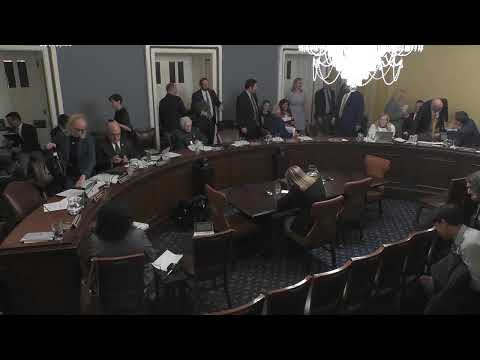
The House Rules Committee voted to report a closed rule to the floor to consider S.J. Res. 11, a Congressional Review Act resolution that would nullify a Bureau of Ocean Energy Management rule concerning protection of marine archaeological resources in offshore oil and gas activity.
Supporters — including Rep. Bruce Westerman (R‑Ark.), appearing on the committee’s Natural Resources panel — argued the BOEM rule replaces a flexible, risk‑based approach with a sweeping mandate that forces companies to prepare costly archaeological reports and high‑resolution geophysical surveys for all exploration and development plans, even where no archaeological risk is identified. Westerman told the Rules Committee the rule “mandates costly time‑intensive archaeological reports for all oil and gas exploration or development plans” and that BOEM’s change “would increase compliance costs and drive up energy prices.”
Witnesses and members on the opposing side, including Representative Jennifer Elfreth (R‑Md.), said the rule codifies industry standard practices intended to prevent inadvertent destruction of shipwrecks and other cultural resources and can save companies time and money by avoiding costly stops to operations if resources are discovered during drilling. Elfreth cited the Mica shipwreck, which she said was bisected by an ExxonMobil pipeline in 2001 and cost the company roughly $250,000 in subsequent fees and survey work; she argued that pre‑drilling surveys can prevent such outcomes.
Committee discussion touched on the legal framework: witnesses noted that Section 106 of the National Historic Preservation Act provides a review process to protect archaeological resources and that BOEM’s rule seeks to bring clarity and consistency to how operators meet those obligations. Witnesses also gave a BOEM estimate that the total annual financial impact to the industry from the rule would be less than $400,000, a figure proponents said is modest compared with industry profits.
The Rules Committee motion reported the closed rule that bundles S.J. Res. 11 with two other CRA measures. The motion was adopted in committee and reported to the floor; the clerk announced a recorded tally of 8 yeas and 3 nays. The committee’s closed rule waives points of order, provides one hour of general debate controlled by Natural Resources leadership or their designees, and provides one motion to commit for the Senate joint resolution.
Supporters told the committee the rule protects U.S. energy production by removing duplicative or overly broad agency requirements. Opponents said codifying survey standards is modest in cost, protects cultural resources and helps companies avoid the greater costs of halting operations to mitigate damage found after the fact. The rule had passed the Senate with bipartisan support, committee members noted; the transcript records debate over whether the BOEM rule will save money or impose undue burdens on smaller operators.
The Rules Committee’s action moves S.J. Res. 11 to the House floor under a closed rule; any final action on the joint resolution would require a House vote.