Get Full Government Meeting Transcripts, Videos, & Alerts Forever!
Get email alerts on the Committee Work Plan topic
No spam. Unsubscribe anytime.
Finance committee begins annual work‑plan, flags P‑STEP expansion, fee reviews and school financial health
Summary
The Portland City Council Finance Committee on Thursday moved to shape its work plan for the coming council year, identifying priorities that include expanding the P‑STEP tax‑relief program, reviewing various fees and fines, and monitoring school financial health.
The Portland City Council Finance Committee on Thursday moved to shape its work plan for the coming council year, identifying a short list of priorities the committee may pursue after the FY26 budget process is complete.
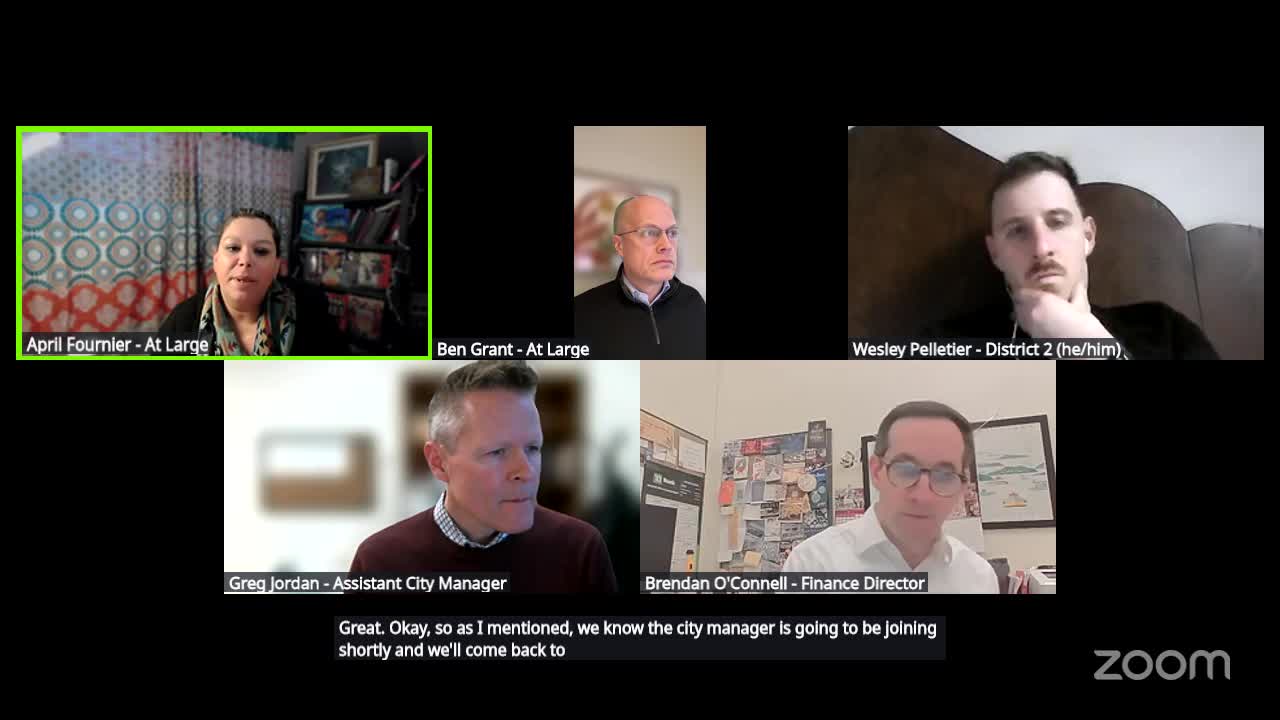
Chair April Fournier led a discussion about topics members raised at the committee’s Feb. 13 meeting and invited councilors and staff to add items. “So setting that groundwork, I would love to open this up to my fellow committee members as well as our guests,” Fournier said.
Councilor Sarah McNevich urged the committee to consider changes to parking‑ban penalties: “I was just, in light of the current conversation about the parking ban and the issues with getting cars towed during the ban, I didn't know if there's any appetite to reconsider the ticket fees during a snow ban and making it more in line with what it might cost to get one's car out of the towing situation,” McNevich said.
Finance Director Bridal O’Connell told the committee staff would bring auditors’ findings and updates on school financial statements for the committee’s review: “We will be looking at whether the committee makes it a goal or not, is the financial health of the school department,” she said, adding that auditors will present results and the superintendent will provide updates on corrective work at the schools.
Other subjects identified for possible committee follow‑up included an expansion of the city’s P‑STEP tax‑relief program, continuation or evaluation of an existing pilot program, vacancy fees, cruise‑ship disembarkment fees, and a broader review of fees and fines (including rent‑control compliance enforcement) across departments. Fournier said the committee intends to make SMART goals — specific, measurable, attainable, realistic and time‑bound — and to leave some capacity to respond to unanticipated state or federal developments.
Next steps: Fournier said staff would summarize the discussion in a memo and produce a work‑plan timeline for the fiscal year. “I will summarize this into a memo to you, and then we'll try and lay out the work plan in terms of timing over the course of the fiscal year,” she said. Committee members were asked to send questions or requests for detailed backup to staff ahead of the March 13 meeting so staff could prepare answers.
Meeting business: The committee approved the Feb. 13 minutes by voice vote; the motion was moved by Councilor Ben Grant and seconded by Councilor Wes Pelletier.