Get Full Government Meeting Transcripts, Videos, & Alerts Forever!
Get email alerts on the Environmental Regulation topic
No spam. Unsubscribe anytime.
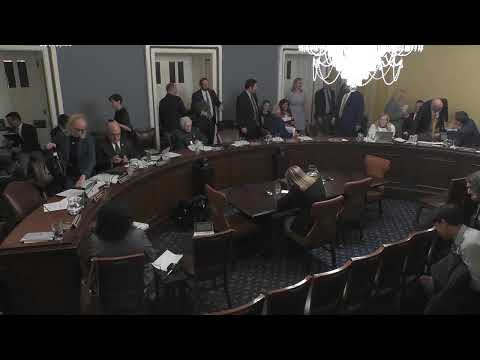
Rules Committee advances H.J. Res. 61 under closed rule to nullify EPA NESHAP for rubber tire manufacturing
Summary
The Rules Committee approved reporting a closed rule to consider H.J. Res. 61, a Congressional Review Act resolution to nullify the EPA's National Emission Standards for Hazardous Air Pollutants (NESHAP) for rubber tire manufacturing; supporters said the rule would raise costs and is duplicative, while opponents said it protects public health.
The House Rules Committee voted to report a closed rule to bring H.J. Res. 61 to the House floor. The joint motion bundled consideration of H.J. Res. 61 with two other CRA measures; the committee recorded the motion as approved by voice and then recorded roll call (8 yeas, 3 nays).
H.J. Res. 61 targets an Environmental Protection Agency rule setting national emission standards for hazardous air pollutants from rubber tire manufacturing. Proponents of repeal argued the EPA rule imposes unnecessary burdens on U.S. tire plants, could increase costs and energy use, and may lead to job losses or offshoring. Opponents said the rule reduces carcinogenic emissions and protects nearby communities’ health.
Why it matters: Tire manufacturing facilities process hazardous materials; the EPA's rule sets limits and compliance requirements intended to reduce hazardous air pollutants (HAPs). Nullifying the rule could change regulatory obligations for a subset of domestic tire plants and affect emissions controls and monitoring.
Committee testimony and exchanges highlighted the core disputes. Chairman Guthrie, speaking in support of CRA measures, said the EPA’s NESHAP “put forth in the waning days of [the prior] administration will add emissions limits for total hydrocarbons to the existing national standards for hazardous air pollutants … To meet these limits, facilities will need to install regenerative thermal oxidizers or RTOs, which require significant amounts of natural gas to combust pollutants.” Guthrie also cited a 2020 EPA risk assessment that he said found industry HAPs under acceptable thresholds.
Rep. Morgan Griffith, who led the motion in Rules, and other supporters raised concerns that the EPA had not quantified public health benefits and that the rule could impose equipment and energy costs that damage domestic production. Griffith told the committee he had been told the agency was “not able” to quantify whether hazardous air pollutants would be reduced by the rule.
Opponents pressed the committee on public‑health grounds. Ranking Member Frank Pallone said H.J. Res. 61 “would hamstring EPA's ability to protect the public from the most harmful air pollutants” and warned that rescinding the rule would harm communities downwind from tire plants. Democratic members cited testimony that U.S. tire manufacturers emit carcinogenic emissions and raised asthma and cancer concerns for nearby residents.
The committee’s reported closed rule waives points of order against consideration, sets one hour of debate to be divided between the Energy and Commerce leaders or their designees, and provides one motion to recommit. The closed rule was adopted as part of the omnibus motion; the clerk recorded the committee vote as 8–3.
The transcript reflects disagreements both on the technical merits of the EPA rule (including whether it would reduce hazardous air pollutants or could increase CO2 because of increased fuel use in controls) and on process (Democrats objected that Energy and Commerce had not used regular order). The outcome of any House floor votes on H.J. Res. 61 was not included in the committee record.