Citizen Portal

Rules Committee approves closed rule to bring H.J. Res. 42 to House floor to repeal DOE appliance certification provisions

2476567 · March 3, 2025

Get AI-powered insights, summaries, and transcripts

Subscribe
AI-Generated Content: All content on this page was generated by AI to highlight key points from the meeting. For complete details and context, we recommend watching the full video. so we can fix them.

Summary

The House Rules Committee voted to report a closed rule that will allow floor consideration of H.J. Res. 42, a Congressional Review Act measure that would nullify a Department of Energy rule on certification, labeling and enforcement for certain appliances and commercial equipment.

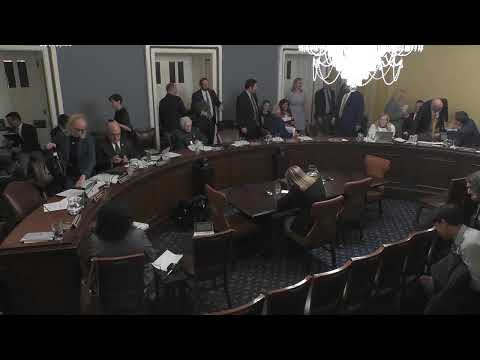
The House Committee on Rules on Thursday approved a closed rule to bring H.J. Res. 42 to the House floor for consideration. The motion, offered by Rep. Morgan Griffith (R‑Va.), passed in a recorded vote the committee clerk reported as 8 yeas and 3 nays.

The resolution, introduced under the Congressional Review Act, would nullify a Department of Energy final rule that adds or amends certification, labeling and enforcement provisions for roughly 20 product categories, including dishwashers, central air conditioners, heat pumps and clothes washers. Supporters said the DOE provisions increase costs and paperwork for manufacturers and consumers; opponents said rolling back the rule would undercut energy‑efficiency gains and public benefit.

Why it matters: The DOE rule affects compliance and market certification for common household and commercial appliances. Repeal under the Congressional Review Act would prevent the agency from enforcing those specific provisions and could influence how manufacturers test and label products sold in the U.S.

During the Rules Committee hearing, Chairman Brett Guthrie, chairman of the House Energy and Commerce Committee, testified in support of disapproval. “H.J. Res. 42 … seeks to repeal another Biden–Harris rule that increases red tape and cost for manufacturers and ultimately American consumers,” Guthrie said, adding that DOE’s changes to certification and reporting will impose “nearly 3,000 hours of additional paperwork” and will increase annual costs for manufacturers. Guthrie also said the final rule covered a wide set of appliances and “will further solidify the disaster standard promulgated under the last administration.”

Opponents on the panel framed the resolution as harmful to consumers and public interest. Ranking Member Frank Pallone (D‑N.J.) testified that he “strongly oppose[d] both of these resolutions,” arguing that efficiency standards protect consumers and public health and that the certification provisions do not amount to harmful overreach. Pallone read into the record a letter from the Association of Home Appliance Manufacturers saying that “consistent clear transparent certification criteria are a critical part of the program.”

Committee members debated both the substance of the DOE rule and the process by which the resolutions had reached the Rules Committee. Democrats repeatedly pressed that Energy and Commerce had not taken the measures through regular order (no subcommittee markup and no full committee markup), and they asked for future oversight of agency actions affecting NIH, veterans’ care and other subjects unrelated to the DOE rule. Republicans said the measures were needed to relieve regulatory burdens on U.S. manufacturers and preserve jobs in districts with appliance and related manufacturing.

The Rules motion that was reported is a closed rule: it waives points of order and sets one hour of general debate for H.J. Res. 42 (divided between Energy and Commerce leaders) and provides one motion to recommit. The committee recorded the motion as adopted; the clerk reported 8 yeas and 3 nays. The rule also bundles consideration of two other Congressional Review Act measures (H.J. Res. 61 and S.J. Res. 11) under closed rules for the floor.

The floor schedule and any amendments beyond the single motion to recommit will depend on House leadership and the Rules Committee’s management. The resolution itself, if passed by the House and the Senate and signed (or allowed to take effect), would nullify the DOE provisions identified in the joint resolution. At the time of the committee meeting, no House floor vote outcome was available.

Votes at the Rules Committee: The motion to report the closed rule (covering H.J. Res. 42 among other measures) was moved by Rep. Morgan Griffith and carried by recorded vote; the clerk announced 8 yeas, 3 nays.