Get Full Government Meeting Transcripts, Videos, & Alerts Forever!
Get email alerts on the Wildfire Mitigation Utilities topic
No spam. Unsubscribe anytime.
Oregon lawmakers hold informational hearing on utility wildfire plans, liability and a proposed safety-certificate bill
Summary
Legislators, the Oregon Public Utility Commission, utilities and consumer advocates discussed wildfire mitigation spending, safety audits, potential liability protections and the idea of a compensation fund during a March 3 House Judiciary informational hearing on House Bill 3666 and related policies.
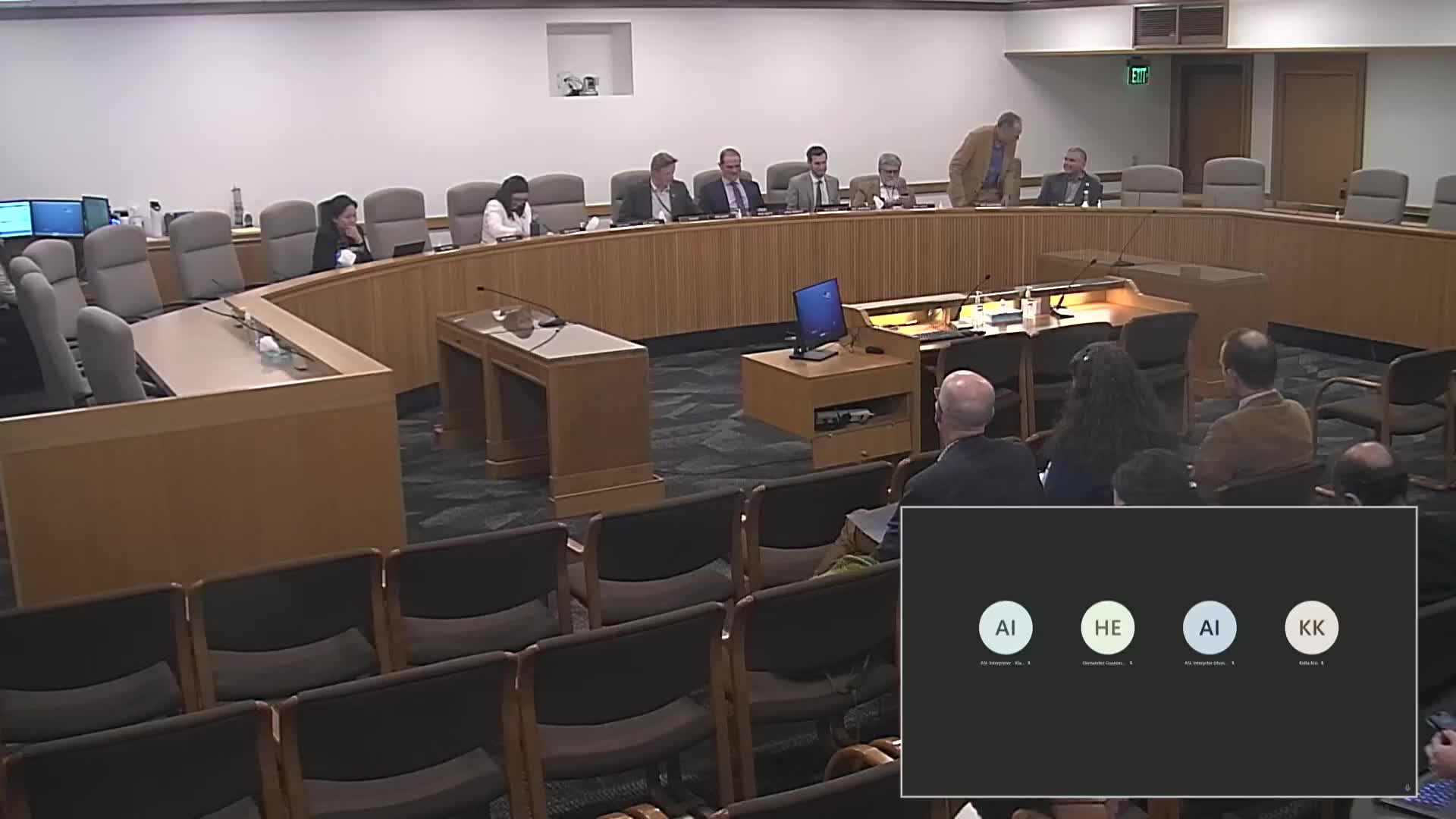
The House Judiciary Committee on Monday held an informational hearing that focused on utility wildfire mitigation plans, rising mitigation costs, and proposals to create a safety‑certificate process and a potential compensation fund for wildfire victims.
Chair Jared Croft opened the March 3 hearing by describing a broad set of goals: ensuring “safe, reliable, clean, and affordable energy,” reducing wildfire risk and examining how utility rates reflect those costs. He said the session would build on prior work and national conversations about utilities’ obligations and the legal implications if utilities fall short of high safety standards.
Nolan Moser, executive director of the Oregon Public Utility Commission (PUC), gave a primer on the commission’s roles in rate‑making and safety oversight. “Our mission is to ensure that the rate payers for these utilities have access to safe, reliable, and fairly priced utility services that advance state policy and promote the public interest,” Moser said. He explained that investor‑owned utilities must justify spending through contested general rate cases and that wildfire mitigation measures have become a major component of recent filings.
PUC Commissioner Letha Taney summarized the agency’s work on wildfire mitigation dating back to 2019. “We began in 2019, asking the utilities to bring to us in public meeting the wildfire mitigation plans that they had developed,” Taney said, adding that Oregon’s utilities were judged by a Stanford analysis to be “at the forefront nationally” in preparedness. Taney described a three‑year plan cycle the PUC is moving toward, more consistent data standards and work on a centralized data repository to evaluate utility actions and their cost‑effectiveness.
Officials and advocates discussed the scale and distributional effects of mitigation spending. Taney said expected utility spending for wildfire mitigation through 2028 will be at least $1,700,000,000 for investor‑owned utility customers, with per‑customer impacts varying because some utilities cover many more line miles per customer than others.
Bob Jenks, executive director of the Oregon Citizens’ Utility Board (CUB), and Jennifer Hillhart, CUB policy and program director, pressed for stronger oversight and data from utilities. Hillhart said independent evaluators had found that the wildfire mitigation plans filed in 2022 lacked the data needed to assess risk and the cost‑effectiveness of proposed mitigations. “CUB will continue to advocate that we need to have robust wildfire mitigation plan analyses, thorough review and ... ensure the utilities are using the best risk reduction methods, most cost effective,” Hillhart said.
A Portland General Electric (PGE) representative described PGE’s operational approach, including weather stations, cameras and use of public safety power shutoffs (PSPS) when conditions meet established thresholds. He said PGE now designates 12 high‑fire‑risk zones that cover roughly 2% of its customers and about 9% of distribution circuits, and noted the company has performed PSPS events since Labor Day 2020. “If we meet that condition for the wind, humidity, temperature in those areas with that fuel, we will shut it down,” the PGE speaker said.
Michael Warra of the Stanford Woods Institute for the Environment reviewed liability options used in other states and cautioned that any safety‑certificate regime requires significant auditing resources. Warra described California’s approach, which pairs a safety certificate with a large wildfire compensation fund and a prudency review at the utilities commission; that model aims to balance investor confidence with accountability. “The compliance function, the audit function is extremely staff intensive,” Warra said.
Committee members and witnesses repeatedly stressed limits of utility control: utilities can mitigate risks tied to their own infrastructure, but they cannot eliminate ignitions caused by factors outside their control, such as failing trees beyond rights‑of‑way or extreme weather. Witnesses also noted downstream effects on credit ratings, insurance availability and borrowing costs when utilities face large wildfire liabilities.
No formal committee action was taken. Members discussed House Bill 3666, which would establish a safety‑certificate process and related auditing and accountability measures, and asked witnesses about design details, potential legal effects in tort litigation, resources for auditing municipal and cooperative utilities, and whether a compensation fund is feasible in Oregon. The committee concluded the hearing and scheduled continuation for the next day to hear additional panels.
Ending: The hearing consolidated technical testimony from regulators, consumer advocates, utilities and academic researchers. Lawmakers signaled interest in a framework that strengthens PUC auditing and enforcement of wildfire mitigation plans, considers liability protections tied to verified compliance, and examines whether some form of compensation fund is needed—all without specifying changes to law at this session.