Get Full Government Meeting Transcripts, Videos, & Alerts Forever!
Get email alerts on the Education Workplace Safety topic
No spam. Unsubscribe anytime.
Committee hears bill to create statewide school workplace safety reporting system
Summary
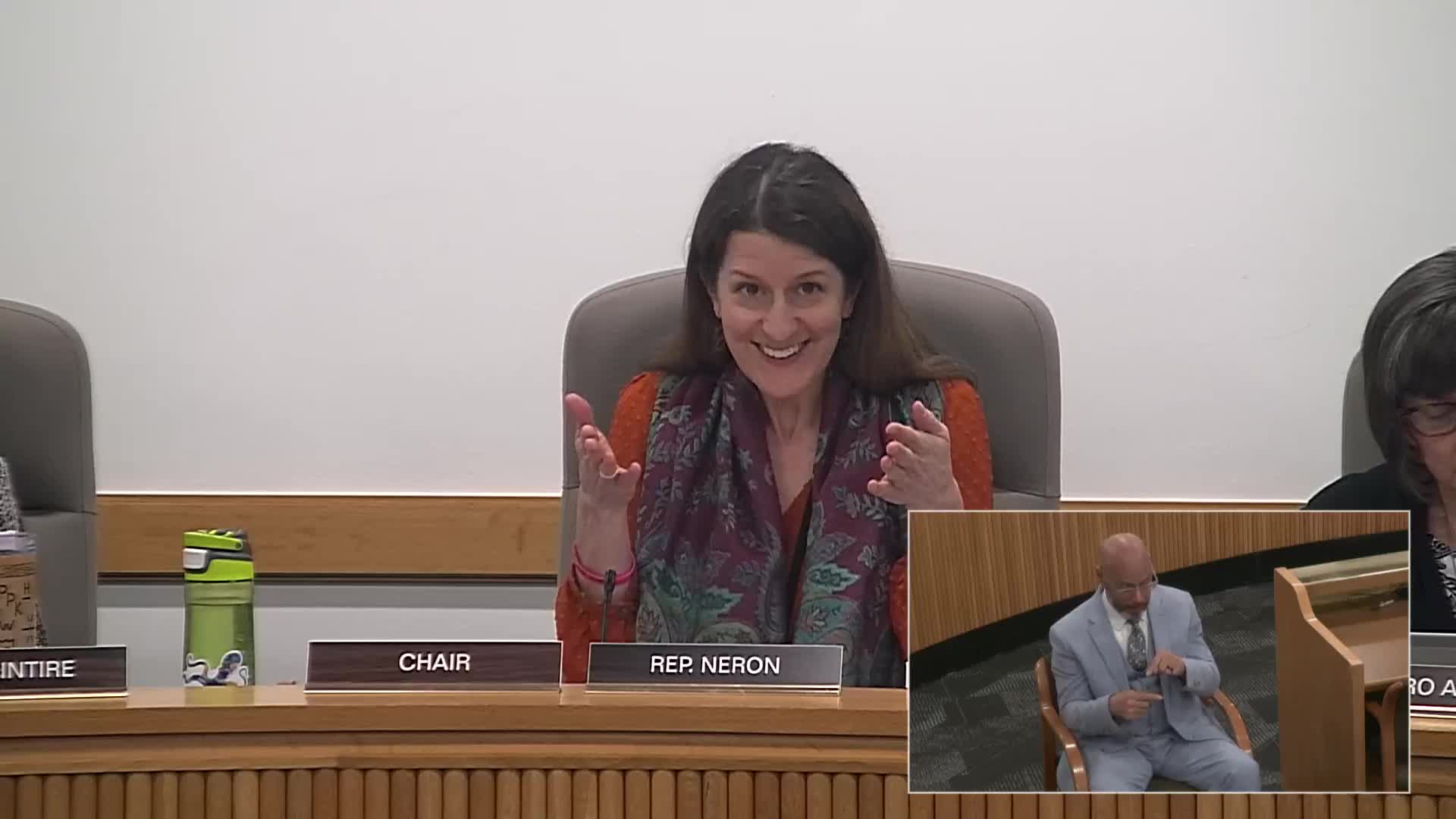
State Representative Courtney Neuron, chair of the House Committee on Education, opened a March 3 public hearing on House Bill 3,357, which would require the Oregon Department of Education, in consultation with the Department of Consumer and Business Services, to create an online method for recording school workplace safety incidents involving school or education service district employees.
State Representative Courtney Neuron, chair of the House Committee on Education, opened a March 3 public hearing on House Bill 3,357, which would require the Oregon Department of Education, in consultation with the Department of Consumer and Business Services, to create an online method for recording school workplace safety incidents involving school or education service district employees.
Supporters, led by educators and the Oregon School Employees Association, told the committee that current reporting is inconsistent, difficult to access and understates the frequency of staff injuries. Representative Leslie Munoz, a sponsor, said: “We cannot fix what we do not measure,” and described the measure as a “simple and necessary step” to give policymakers usable data.
The bill would specify the data to be collected, require the method to be easy to use and accessible in multiple formats and languages, minimize duplicative reporting, include safeguards against bias, and require local school boards’ policies to align with the new reporting requirements. Munoz and other witnesses said the proposal would not collect student identifying information.
Terri Harris Jones, state vice president of the Oregon School Employees Association and a primary-school librarian in Coos Bay, told the committee that district counts “never added up” with what she and members experience. Jones said staff often avoid district forms because of time, fear of reprisal, difficulty finding the form and concerns about student privacy. She urged lawmakers to approve a universal, easy-to-use reporting option.
Several classified staff described barriers in practice. Misty Talarico, an OSEA zone director and special-education aide, recounted being “hit, kicked, bit, and permanently injured while protecting my one-on-one student,” and said supervisors had discouraged filing reports or made the form hard to access. Logan McKenzie Gilbert Renner, an educational assistant and chapter vice president, said training and the length of existing reporting processes make staff reluctant to file reports during busy school days.
OSEA and other witnesses said a standard, statewide web form would let employees report directly and allow analysts to identify trends, including near misses and environmental hazards, that districts currently miss. Lisonbee Bowden, an IT worker who has helped districts move reporting off paper, urged the committee to include near-miss reporting in the incident definition so hazards can be addressed before harm occurs.
Representatives of school districts and associations raised implementation concerns. Morgan Allen of the Coalition of Oregon School Administrators and Adrienne Anderson of the Oregon School Boards Association said the bill, as drafted, creates new data collections without funding for districts or the department, removes a technical advisory committee and does not define “workplace safety incident.” Both cautioned that small districts could face privacy risks if incident details are publicly accessible at the school level without deidentification.
Iris Hodge, government relations and communications director for OSEA, said the bill is modeled on a reporting system the Oregon Nurses Association uses with the Oregon Health Authority and that the proponents aim to minimize administrative burden by letting employees submit reports directly rather than routing them through clerical offices or human resources.
Committee members and witnesses agreed on the need for more conversations about whether the reporting system should be housed at ODE or DCBS, what precise data fields are required, how the public-facing components would work and whether the bill requires additional funding. Representative Greg Smith said he hopes the committee will pass the bill to Ways and Means for funding consideration.
No formal vote was taken during the hearing. Committee members signaled interest in follow-up meetings and technical amendments to clarify definitions, data access and funding timelines.