Get Full Government Meeting Transcripts, Videos, & Alerts Forever!
Get email alerts on the Utility Rate Transparency topic
No spam. Unsubscribe anytime.
Panel hearing on bill to bar utilities from charging ratepayers for lobbying and advertising draws supporters and utility opposition; hearing continued
Summary
A public hearing on Senate Bill 88 drew broad testimony on March 3 as advocates urged lawmakers to bar utilities from charging ratepayers for advertising, lobbying and certain legal expenses while industry witnesses said the Public Utility Commission already has authority to police such charges.
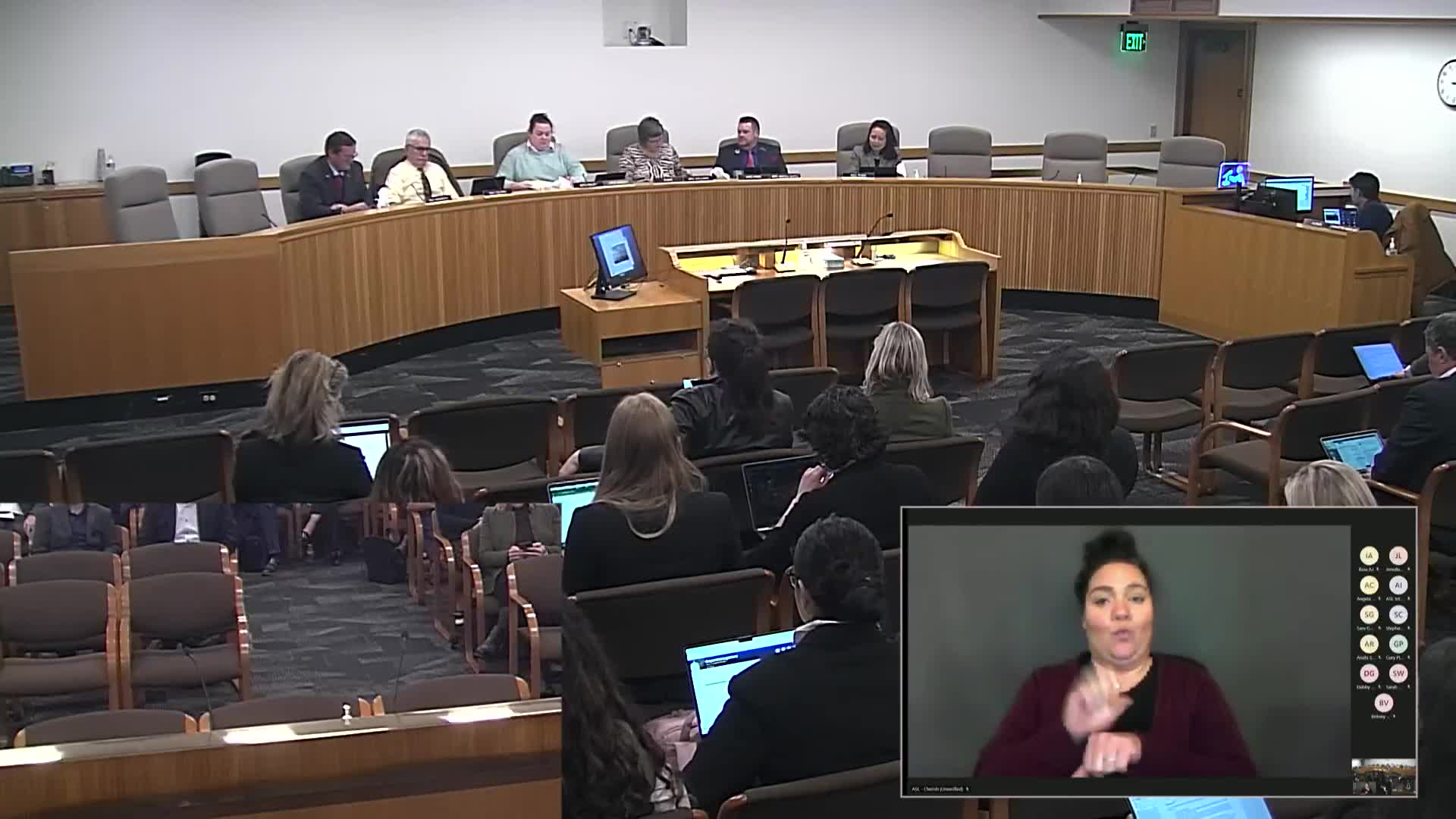
The Senate Energy and Environment Committee on March 3 heard more than three dozen in-person and virtual witnesses on Senate Bill 88, a measure that would limit the costs an electric or gas utility may recover from ratepayers for advertising, political influence activity, litigation penalties and certain compensation, require annual reporting to the Public Utility Commission and allow civil penalties for recovery of unallowable costs.
Proponents — including consumer advocates, environmental groups and community organizations — told the committee that utilities have passed a range of nonessential corporate expenses onto customers and urged legislation to increase transparency and hold investor-owned utilities accountable. Sarah Walkley of the Oregon Citizens' Utility Board told the committee that the bill would shift incentives by imposing penalties greater than the unallowed costs and would reduce the need for advocates to scour lengthy rate-case records to find expenditures that should not be on customer bills. "Senate Bill 88 understands that the customer is not being centered in the rate making process," Walkley said on the record.
Climate Solutions, the Green Energy Institute at Lewis & Clark Law School, Verde and a coalition of environmental and community groups also testified in support. Claire Prijota of Climate Solutions described SB 88 as "one of the tools" needed to address a sizable increase in household utility bills and said it would clarify what belongs on customer bills and what should be borne by shareholders. Kara Sailor of the Green Energy Institute cited statutes and examples from other states and urged the committee to adopt a bright-line approach so ratepayers are not charged for branding, lobbying or litigation that does not directly benefit customers. Community groups including Unite Oregon, Unite Oregon Climate and Environmental Justice, Oregon League of Conservation Voters, Rogue Climate, Oregon Just Transition Alliance and others told the committee that their members are experiencing steep bill increases and urged action to prevent ratepayer funds from covering corporate political activity and advertising.
Utility representatives and trade associations testified in opposition. Alan Spector, manager of external affairs for Cascade Natural Gas, said existing law and PUC rules already give the commission authority to review contested-case costs and that the bill would create redundant reporting requirements and a presumption of bad faith. "Section 3 appears redundant to existing PUC efforts," Spector said, adding that mandatory reporting on nonrecoverable activities would impose administrative costs that do not reduce customer bills. Northwest Natural's Zach Kravitz described the regulatory process as highly transparent and characterized the utility's filings as thousands of pages of testimony and data requests that the PUC already reviews; he and others raised constitutional concerns, including First Amendment and due-process implications.
Northwest Gas Association and other industry witnesses warned the bill could chill legitimate communications and create legal exposure for regulated utilities. Opponents also told the committee the principal drivers of recent rate increases are inflation, insurance and safety investments rather than the categories targeted by the bill.
Committee chair remarks and procedural outcome: Chair Solman said the measure is not intended to produce large, immediate bill reductions but to improve transparency about what costs may be included in customer rates. After more than two hours of testimony and questioning, the committee did not vote on the bill. Chair Solman said the hearing would continue and be carried over to a subsequent session (committee staff indicated an informational session was being rescheduled to Wednesday), that the written record would remain open through 3 p.m. Wednesday for additional testimony and that utilities were asked to provide follow-up materials (including a requested table of regulatory citations and examples). The chair said she wanted adequate time for questions and to allow coalition witnesses to coordinate testimony.
Next steps: The committee carried SB 88 forward for additional review and scheduled continuation of the hearing; no committee recommendation or vote was recorded on March 3.