Get Full Government Meeting Transcripts, Videos, & Alerts Forever!
Get email alerts on the Long Term Care Ombudsman Budget topic
No spam. Unsubscribe anytime.
Subcommittee Hears House Bill 5020 Budget for Long‑Term Care Ombudsman; Focus on permanent public‑guardian staff, volunteers and oversight gaps
Summary
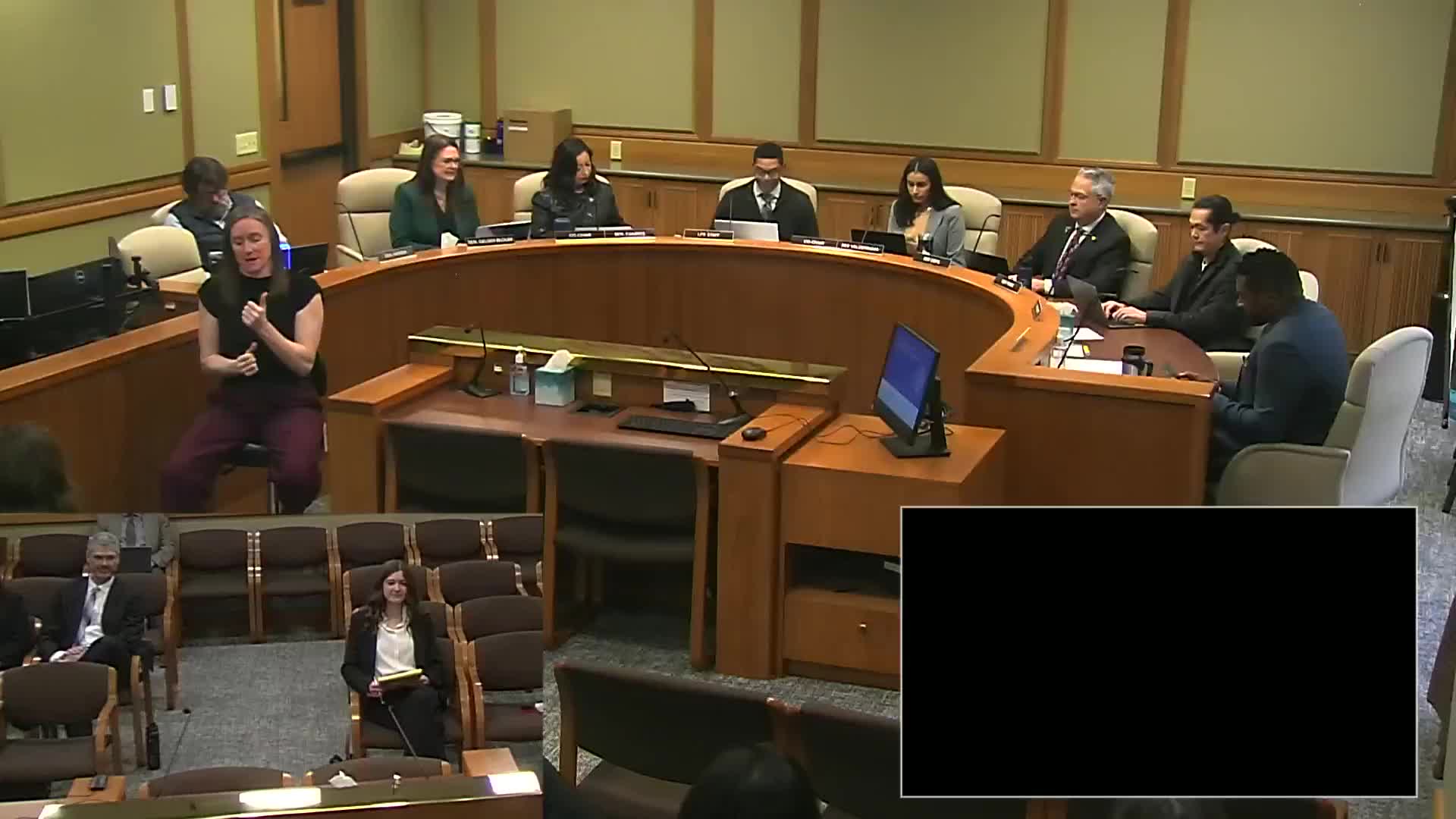
The Joint Subcommittee on Human Services on March 3, 2025 opened a public hearing on House Bill 5020, the governor’s recommended 2025–27 budget for the Oregon Long Term Care Ombudsman (LTCO), where agency leaders described staffing needs, volunteer shortfalls and work to address regulatory gaps after a recent facility death.
The Joint Subcommittee on Human Services on March 3, 2025 opened a public hearing on House Bill 5020, the governor’s recommended 2025–27 budget for the Oregon Long Term Care Ombudsman (LTCO), where agency leaders described staffing needs, volunteer shortfalls and work to address regulatory gaps after a recent facility death.
Kendra Beck, a Department of Administrative Services chief financial office analyst, provided an overview of LTCO’s recommended budget and funding sources. “Oregon's Long Term Care Ombudsman's mission is to protect individual rights, promote independence, and ensure quality of life for Oregonians living in long term care and residential facilities and for those with decisional limitations,” Beck said. She told the committee the agency’s budget is “largely supported by general fund, which makes up 92% of total agency revenues.”
Dr. Nasreen Khan, deputy director at LTCO, described the governor’s recommended total for the agency as $17,550,000 for the 2025–27 biennium and said the package balances operational costs with targeted investments. “The governor's recommended budget of 17,550,000.00 reflects both necessary cost adjustments and targeted investments that will strengthen our programs, enhance service delivery and support long term gain sustainability for us,” Dr. Khan said. She said the remaining roughly 8% of LTCO revenue comes primarily from federal Older Americans Act and Senior Medicare Patrol grants passed through the Oregon Department of Human Services.
Fred Steele, LTCO director and state long term care ombudsman, described the agency’s three program areas — the Long Term Care Ombudsman program, the Residential Facility Ombudsman program, and the Oregon Public Guardian (OPG) program — and said the governor’s budget includes one package to convert five limited‑duration OPG positions to permanent status. Kendra Beck had earlier noted those five positions had been created in 2024 as limited duration; Dr. Khan and Steele said making them permanent is intended to maintain continuity of services for complex hospital discharges and ongoing caseloads.
Steele and Dr. Khan outlined operational details and risks: LTCO’s current service level for 2023–25 was reported as about $15.64 million, the 2025–27 request rises to $17.55 million primarily for personnel and services and supplies, and the recommended budget includes roughly $200,000 in rent savings after the agency moved into a DAS‑owned building (from roughly 5,500 to 1,700 square feet). Steele also said that LTCO counts roughly 55,000 Oregonians across its three programs as its population of concern.
A major theme of the hearing was volunteers. Steele described LTCO as a volunteer‑based program and said volunteers conduct the bulk of facility visits. He said the agency currently has about 110 active volunteers, covering roughly 34% of congregate care settings, and estimated the program needs roughly 300–350 volunteers to achieve broader coverage. He told the committee the volunteer base dropped after the COVID‑19 pandemic and that recruitment and retention remain challenging.
Steele described common complaint types and outcomes handled by the LTCO program, with eviction or “move‑out” notices among the most frequent issues. He said the agency reports an overall resolution rate that counts partial or full resident‑satisfaction outcomes; in explanation he said it means “we've resolved at least a portion of what the resident's asking.”
Steele also described an instance that pushed the agency to use its investigatory authority over another public agency after a resident’s death at Mount Hood Senior Living. He said that review exposed gaps in regulatory follow‑through and prompted a program assessment of the Department of Human Services’ licensing and oversight processes. Senator Gelserbloemen and others praised recent leadership responses from licensing staff and the department’s willingness to pursue a program assessment.
Leslie Sutton, residential facility ombudsman, presented a separate overview of work in developmental‑disability and mental‑health residential settings. She said the Residential Facility Ombudsman (RFO) serves about 11,000 Oregonians in roughly 3,219 homes and facilities and that the program’s case volume and the number of facilities covered have grown substantially since the program was created in 2013. Sutton said the RFO served 2,041 individuals and visited 543 facilities in calendar 2024 and that the office has five deputy ombudsmen and one program coordinator; she noted no sustained staff increase has accompanied the growth in homes and cases.
Sutton described top issues in RFO cases — choice of residence, control over daily schedule and activities, move‑out notices, food and drink choices, and respectful treatment — and said those concerns reflect state and federal rights for residents. The RFO reported that for 2024 it responded to 91% of new requests within two business days (above a 90% target) but visited 17% of homes in the year compared with a 30% annual target.
Committee members, including Representative Nelson and Representative Scharf, asked about volunteer recruitment, funding sources for the “other funds” portion of LTCO revenue, and the definition of complaint resolution. Agency staff clarified the 8% of other funds came primarily from Older Americans Act funding and a Senior Medicare Patrol program passed through Oregon Department of Human Services, and explained resolution as at least partial resolution to resident satisfaction.
No formal action or vote on House Bill 5020 occurred at the hearing; committee members closed the public hearing and adjourned. The committee indicated the public guardian program will present additional details at a subsequent hearing.
Ending: Agency staff requested support for making five OPG positions permanent, continued state general‑fund support for core staff and volunteer recruitment, and follow‑up work on oversight and data‑tracking improvements; the public guardian program presentation was scheduled for the committee’s next meeting.