Get Full Government Meeting Transcripts, Videos, & Alerts Forever!
Get email alerts on the Local Improvement Districts topic
No spam. Unsubscribe anytime.
Senate committee adopts amendment and advances bill to authorize intergovernmental governance of local improvement districts
Summary
The Senate Committee on Housing and Development adopted an amendment and voted to advance Senate Bill 967, which authorizes intergovernmental agreements to govern local improvement districts within a city's urban growth boundary.
The Senate Committee on Housing and Development adopted an amendment and voted to advance Senate Bill 967, a measure that would authorize intergovernmental agreements for governance of local improvement districts located in unincorporated areas within a city's urban growth boundary.
The bill’s dash-2 amendment clarifies that local governments may enter agreements governing improvement districts that have not yet been formally adopted by the jurisdiction, requires that improvements comply with a city’s comprehensive plan when located in that city, and states that creating a local improvement district does not change allowable land uses in the district.
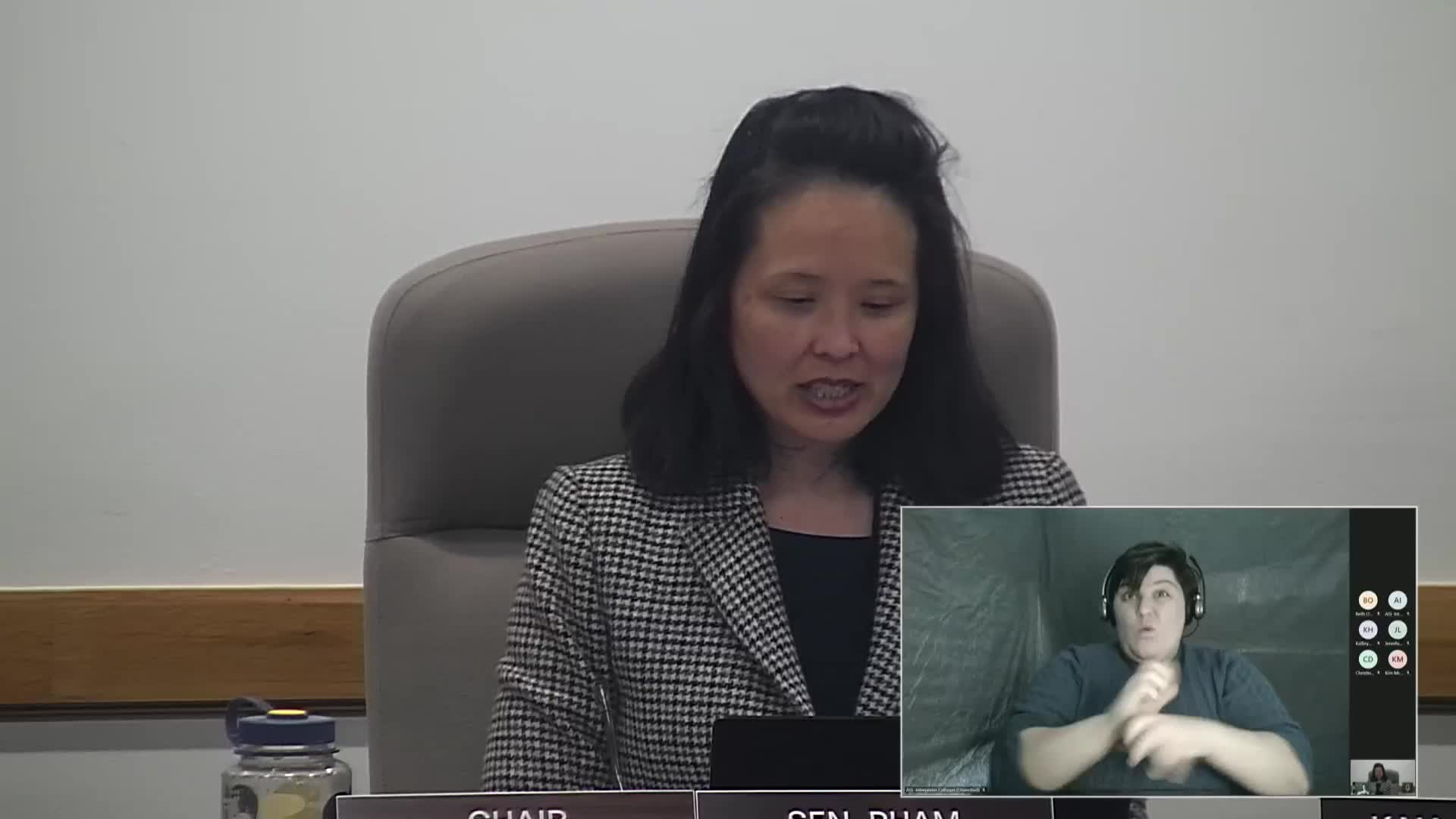
Committee staff read the bill summary at the start of a work session. Vice Chair Anderson moved adoption of the dash-2 amendment and the committee recorded no objections; the amendment was adopted. Anderson then moved the bill, as amended, to the Senate floor with a “do pass” recommendation. The clerk called the roll and five senators voted aye: Senator Broadbent, Senator Nash, Senator Patterson, Vice Chair Anderson and Chair Pham. The motion passed.
During discussion a committee member described the bill as a local tool requested by the city of Bend to allow counties and cities to enter intergovernmental agreements to form local improvement districts that build public-works-scale infrastructure in the area between annexed parcels and the urban growth boundary. Proponents said the tool could “unlock needed housing” by funding infrastructure to support development inside the urban growth boundary.
No amendments that changed the bill’s substantive scope were recorded during the committee’s action; the committee closed the work session after appointing Senator Broadbent to carry the bill on the Senate floor.
The committee’s action was procedural: the bill now goes to the floor with the committee’s recommendation. The transcript includes the committee roll call and the formal motions adopting the amendment and forwarding the measure.