Get Full Government Meeting Transcripts, Videos, & Alerts Forever!
Get email alerts on the Oregon Buys Procurement topic
No spam. Unsubscribe anytime.
DAS: Oregon Buys covers solicitations but five agencies, SPOTS cards and user adoption complicate full spend reporting
Summary
DAS told the Joint Committee on Ways and Means subcommittee on General Government on March 3 that Oregon Buys’ phase 1 solicitation and award features are active across all 80 agencies, but five agencies have exceptions to phase 2 and many transactions occur via SPOTS purchasing cards, complicating a full accounting of state procurement spend.
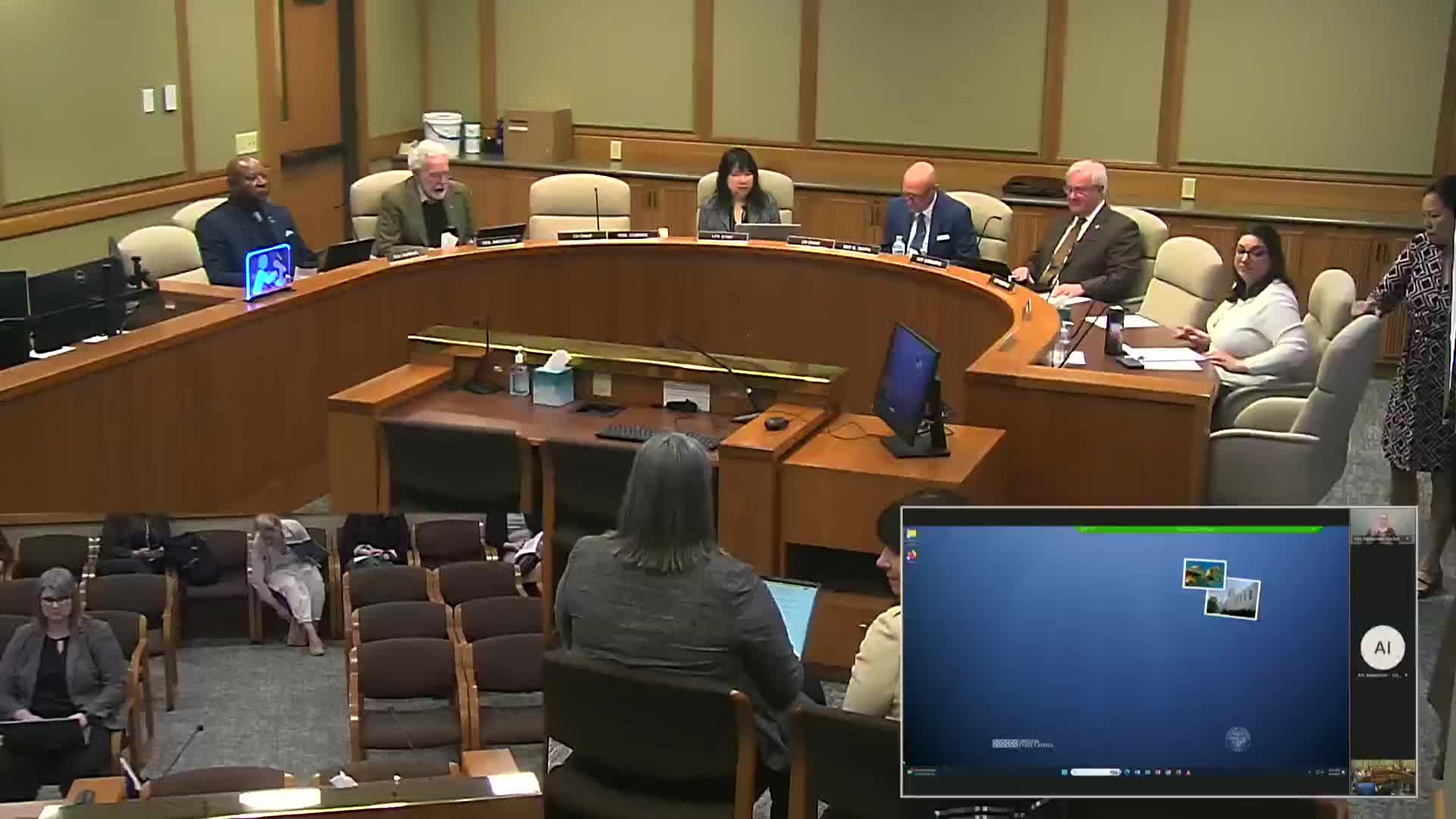
Department of Administrative Services Chief Administrative Officer Debbie Dennis told the Joint Committee on Ways and Means subcommittee on General Government on March 3 that the Oregon Buys procurement system has completed phase 1 and that the state is still working to capture a complete view of total state spending.
“We finally went completely live in the system with all of our agencies in September of 2023,” Dennis said. “There are 2 primary categories of spend that are not captured in Oregon Buys.”
Dennis said all 80 agencies adopted phase 1, the posting-of-solicitations and contract-award functionality, but five agencies have exceptions for phase 2 (purchase orders, invoicing, receiving and requisitions). Those agencies are the Oregon Department of Fish and Wildlife, the Oregon Employment Department, the Oregon Department of Transportation (ODOT), Oregon Parks, and the Department of Corrections.
She described reasons for each exception: Fish and Wildlife and the Employment Department requested extra time to implement phase 2; ODOT cited its separate statutory authority and longstanding highway procurement system (AASHTOWare) used for highway projects and asked for 12–18 months to assess migration; Oregon Parks uses a distributed inventory system that the agency says provides functionality Oregon Buys does not; and the Department of Corrections operates integrated inventory and warehousing systems that would be disrupted by duplicative entry, so it is delivering quarterly data reports to DAS.
On ODOT, Dennis said the agency uses AASHTOWare for highway contracting and “asked for 12 to 18 months to get used to using Oregon Buys and then they would do an assessment to determine whether they could…transfer over and use it for highway spend.” She said DAS has not yet received the assessment results and that ODOT has requested a continued exception to use its industry-specific software for highway spend.
SPOTS cards and uncaptured spend: Dennis told the committee that a second major gap in Oregon Buys data is transactions conducted via SPOTS cards, a corporate-style purchasing card. DAS uses SPOTS cards to pay invoices (including some already-connected purchase orders), utilities, travel and incidental purchases. Dennis said agencies can now mark in Oregon Buys when a purchase order has been paid outside the system, but the SPOTS-card transaction data has not yet been fully analyzed.
“We use SPOTS cards for incidental purchases,” she said, and explained that many local suppliers do not self-register in Oregon Buys, making use of the procurement system infeasible for small, immediate purchases. Dennis said DAS receives enterprise SPOTS statements monthly and plans a data project to analyze that card data to capture spend not in Oregon Buys and to identify compliance gaps.
Rebates and vendor selection: Committee members asked where SPOTS-card rebates go. Dennis said each agency receives its own rebate, typically quarterly, and DAS receives an enterprise rebate that is used to offset DAS business-service rates. She said the SPOTS program was procured via a formal RFP and that she believed (subject to follow-up) the current product uses U.S. Bank Visa cards.
Metrics and KPM #8: Representative Smith and others asked about KPM number 8, the key performance measure tracking the percent of state procurement spend facilitated through Oregon Buys. Dennis said measuring adoption is difficult while exceptions and SPOTS-card transactions remain outside Oregon Buys and while agency data projects are ongoing. “We know what's in Oregon Buys, and we're wrapping our arms around what's outside of Oregon Buys,” she said; DAS will combine exception data, SPOTS statements and financial-system transactions to report reliably on the KPM once those datasets are reconciled.
Data ingest and follow-up: Dennis described written agreements with each exception agency that provide DAS access to necessary data and noted that the Department of Corrections will send quarterly data via a secure transfer. For Oregon Parks, she said the agency bulk-uploads price-agreement data to DAS so that some purchases are present in Oregon Buys; DAS has a written agreement that the agency will provide a full data dump on request.
Committee members asked whether DAS intends to charge agencies for extra analytic work to merge non-Oregon-Buys data; Dennis said the department has not considered charging and will use existing business- and data-analyst resources to integrate the information.
Operational adoption: Dennis said some phase-2 difficulties reflect change management and user experience: end users must now request purchases through Oregon Buys rather than emailing a staff member to request a chair or small item, which some users find clunky. She characterized the issue as adoption rather than technical impossibility.
Numbers and context: Dennis summarized that five agencies have ongoing exceptions to phase 2 and that DAS has full phase-1 adoption across 80 agencies. She said the state enterprise still lacks a single comprehensive dataset of procurement spend until SPOTS-card and exception-agency data are fully integrated and analyzed.
Next steps: Committee members requested follow-up information on the SPOTS-card vendor, typical card terms and the annual-percentage-rate structure, and Dennis said she would provide those details. DAS also listed the SPOTS-card data analysis and the reconciliation of non-Oregon-Buys financial-system transactions as priorities to allow accurate reporting of KPM #8.