Get Full Government Meeting Transcripts, Videos, & Alerts Forever!
Get email alerts on the Elections Data Integrity topic
No spam. Unsubscribe anytime.
Secretary of State and DMV outline fixes after Oregon Motor Voter pause; data transfers resumed
Summary
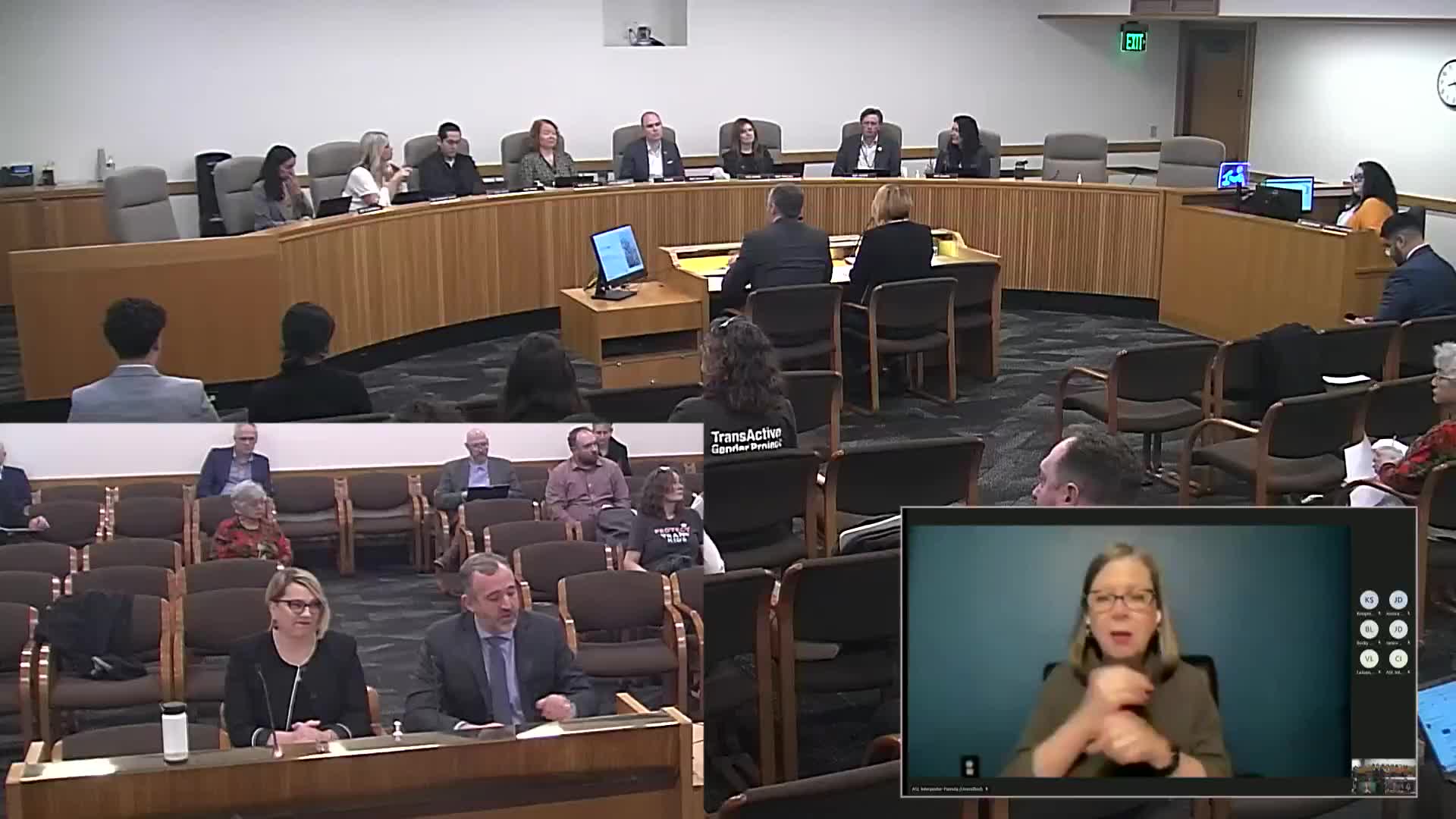
Deputy Secretary Michael Kaplan and Elections Director Dina Dawson briefed the House Committee on Rules on March 3 about staffing, major IT projects, and controls put in place after Oregon Motor Voter (OMV) transmission errors. DMV and ODOT described technical fixes, training and auditing steps; Deloitte and a DAS audit are reviewing the program.
The Oregon House Committee on Rules heard an informational briefing on March 3 from the Secretary of State’s Office, the Department of Motor Vehicles and the Oregon Department of Transportation about election operations, the paused and now-resumed Oregon Motor Voter (OMV) data transfers, and related IT and oversight work.
Deputy Secretary of State Michael Kaplan told the committee the Elections Division is guided by “integrity, accountability, and competence,” and that the office is “committed to continuous improvement.” Elections Director Dina Dawson described the division’s mission “to build Oregonians' trust in the electoral process by ensuring the conduct of uniform, reliable, accessible, secure, transparent, and accurate elections.”
The briefing summarized three program areas driving current work: replacing the statewide voter registration and election management system (OCVR), implementing House Bill 4024’s new campaign finance tracking system, and restarting automatic voter registration after a governor-ordered pause. Kaplan said the office faces a backlog of campaign finance investigations, strained relationships with county clerks and near-term deadlines for multiple projects.
On the OMV file transfers, witnesses said the pause followed discovery of entry and configuration errors at DMV that produced miscodings, including an issue that treated U.S. nationals from American Samoa as U.S. citizens. DMV Administrator Amy Joyce told the committee staff reviewed about 1,400,000 records and implemented mitigations; she said, “we found some additional errors and again notified Secretary of State,” and that the governor paused OMV while the agencies and outside reviewers assessed the data.
ODOT and DMV described the technical and process changes now in place before transmissions resumed on Feb. 26. Deputy Kaplan outlined three control mechanisms: random sampling of files returned to ODOT for verification, a daily control file comparing counts sent and received, and an annual joint review panel with Secretary of State staff and county clerks. ODOT’s Travis Brower said the department hired “for the first time a voter registration integrity analyst” to oversee the work and described a three-part review that includes a Deloitte data-integrity review, a data-quality maturity assessment, and a DAS audit due April 30.
Deloitte’s report, delivered to ODOT the week before the hearing, identified 14 opportunities to improve data integrity and recommended reducing manual entry and improving analytic capabilities; Brower summarized the result as a conditional endorsement of the controls already implemented while urging sustained investment to automate or replace some manual checks.
Both agencies described continuing monthly sampling of incoming OMV transactions. DMV reported that since adopting mitigations it has sampled at least 500 records per month and that four monthly samples showed zero errors; DMV also described specific UI and process changes including separating document types into distinct screens and daily manager checks of scanned documents. Joyce said the department made changes to identify documents that prove U.S. citizenship separately from those that do not and added an indicator for U.S. nationals from American Samoa.
Elections Director Dina Dawson highlighted staffing and program risks inside the Secretary of State’s Elections Division: 35 full‑time staff, with her direct supervision of 11 staff and another 23 overseen by the deputy director; an ongoing backlog in campaign finance investigations; and concern about the 2021‑onward OCVR replacement project, which had been projected to go live by mid‑2025. She said, “this system is the backbone of elections and we will continue with our due diligence to ensure that we have a system that meets the needs of local election officials and Oregonians.”
Committee members pressed for specifics about how DMVs’ source‑document handling and retention work with state and federal rules. DMV said it scans and retains source documents for Real ID transactions (retained for at least 10 years) and uses a handwritten entry that is scanned for standard (non‑Real ID) transactions because state law limits retention of certain source documents. Members also asked about whether OMV re‑registered existing voters or altered party affiliation; the Secretary of State’s staff said they have not found systematic overwrites of party data and that counties would void and reissue ballots when a registration change occurs during an active election.
Several committee members voiced concern about timing: the external DAS audit and other reviews were still in progress at the time of the hearing, and members noted a public trust deficit. Kaplan said the office understood the trust problem and asked for time to implement fixes, while Dawson and ODOT representatives described continuing work with county clerks, expert reviewers and auditors.
No formal actions or votes took place; the session was an informational briefing and the committee moved on to a public hearing afterward.