Get Full Government Meeting Transcripts, Videos, & Alerts Forever!
Get email alerts on the Education topic
No spam. Unsubscribe anytime.
Senate committee hears bill to bar discriminatory book removals and boost library support
Summary
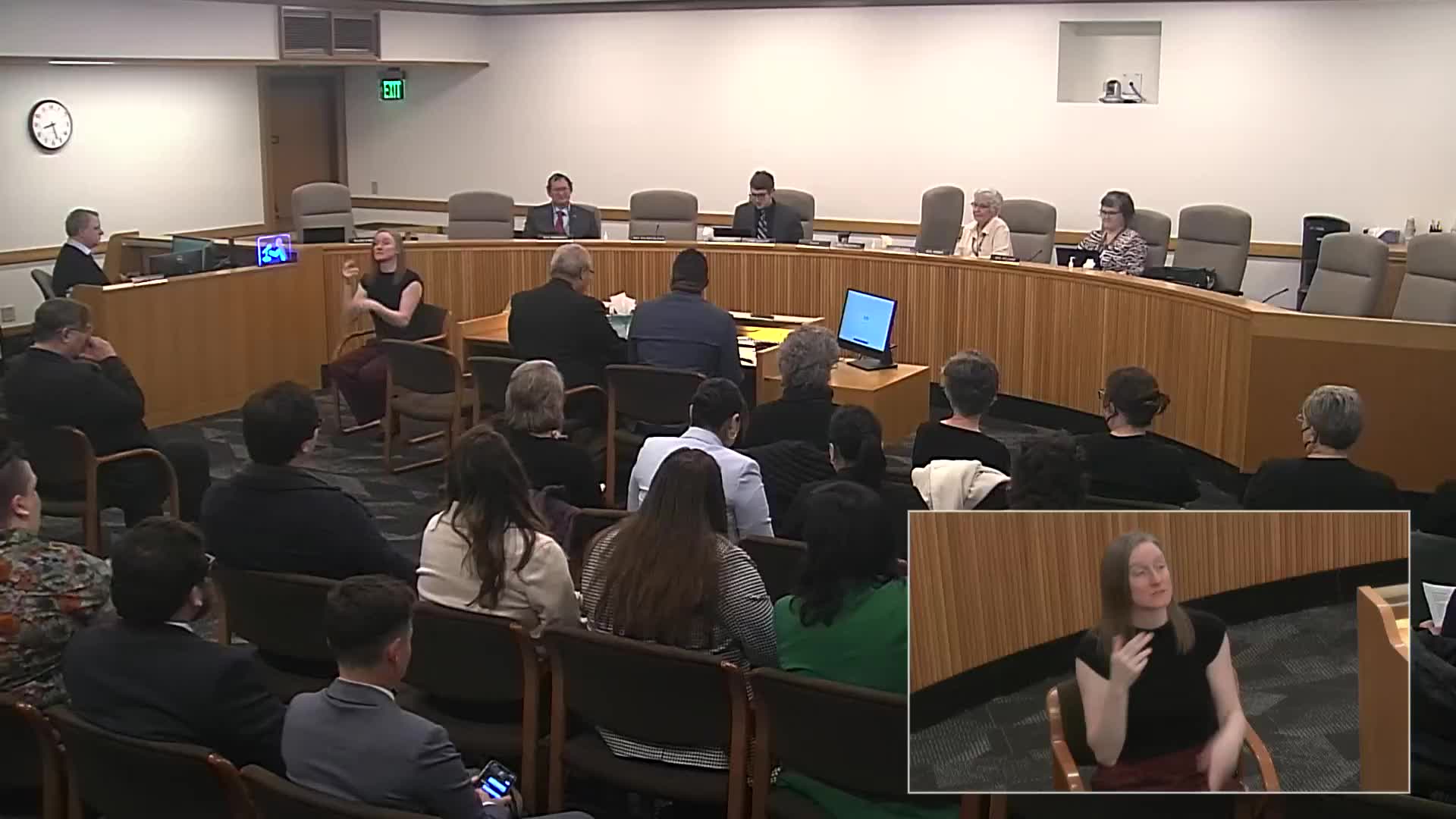
Senate Bill 1098, a measure to bar discriminatory removal of school and library materials and to provide Department of Education support for librarians, drew librarians, teachers and civil-rights advocates to the Senate Committee on Education on March 3.
Senate Bill 1098, presented to the Senate Committee on Education March 3, would prohibit removal or restriction of school and library materials on the basis of discrimination — including race, national origin, color, religion, sex, gender identity, sexual orientation, disability and other categories — and would establish a Department of Education position to provide professional support for school librarians navigating challenges.
Sen. Lou Frederick, chair of the committee, framed the bill as a defense of “the freedom to read,” saying it “allows and celebrates the freedom to read. Not telling people what it is that they should read.” House co-sponsor Rep. Travis Nelson told the committee the bill “sets forth a clear mandate that explicitly protects Oregon students and the educational materials made available to them from discrimination.”
School librarians, educators and civil-rights advocates described a surge in book challenges and the consequences of ad-hoc removals. Anne Reyes Frazee, president of the Oregon Library Association and a high school librarian, told the committee that “official challenges have increased by 231% with 151 books challenged last year alone,” and that nearly half of affected libraries were school libraries. She urged creation of an ODE position to provide sustained guidance for school library staff.
Multiple witnesses described local cases. Troy Soules, an English teacher at Canby High School, said a 2023 challenge sought removal of 34 titles and that the district temporarily removed the books outside its own established review process; the district later returned most titles but one remained removed and the school librarian resigned. Joel Eckdahl, another Canby English teacher, said the removal sent a message to marginalized students that “their stories and identities” were being erased and that “the district turned our marginalized students into social pariahs.”
Civil-rights and legal witnesses framed the measure as clarifying existing protections. Mariana Garcia Medina of ACLU of Oregon told the committee that while Oregon law generally requires inclusive selection of instructional materials, SB 1098 would make explicit that viewpoint-based or identity-based removals violate anti-discrimination principles; local boards would retain authority to consider age appropriateness, obscenity and educational value during transparent review processes.
Supporters urged the committee to act to protect students’ access to information and to shield librarians from harassment as challenges increase. Speakers described patterns in which a small number of organized challengers drive multiple removal attempts and in which librarians and staff face threats while attempting to follow policy. Testimony also included personal accounts from students, parents and authors about the impact of removing representative books on youth well-being and belonging.
The committee received oral testimony but recorded no formal vote on SB 1098 at the March 3 hearing. Chair Frederick closed the public hearing and noted the record would remain open for written testimony; committee staff said written testimony would be accepted for 48 hours from 8:00 a.m. on the day of the hearing.