Get Full Government Meeting Transcripts, Videos, & Alerts Forever!
Get email alerts on the Sports Infrastructure Stadium topic
No spam. Unsubscribe anytime.
Portland Diamond Project presents stadium vision, urges SB 5 modernization and state support
Summary
Presenters from the Portland Diamond Project, local leaders, labor and tourism groups described plans for a proposed Major League Baseball ballpark at Zydell Yards and asked the legislature to modernize SB 5 and consider state support to help the project compete with other candidate cities.
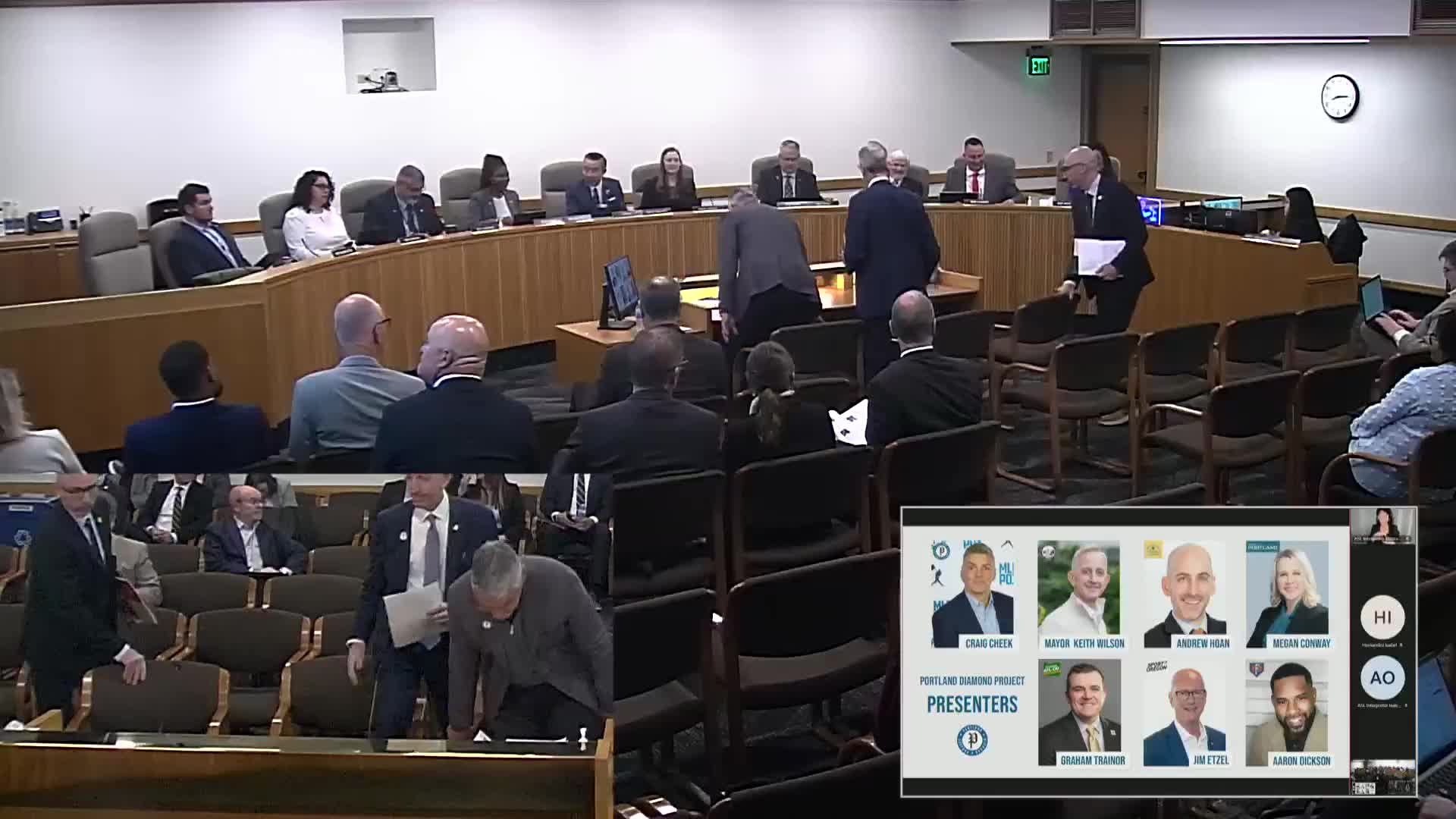
Representatives of the Portland Diamond Project (PDP), local leaders and industry groups told the House Committee on Economic Development, Small Business, and Trade that a Major League Baseball franchise and a proposed waterfront ballpark at Zidell Yards could deliver sizable economic and civic benefits for Portland and the state — and that the state should modernize SB 5 to help finance a portion of the project.
Craig Cheek, founder of the Portland Diamond Project, told the committee PDP has a purchase-and-sale agreement for 31 acres at Zidell Yards and presented a conceptual plan for a 32,000-seat, retractable-roof ballpark. Cheek said the project team expects the stadium to be a year-round civic asset and estimated construction costs between $1.8 billion and $2.0 billion; he said adding a retractable roof would raise costs another $300 million to $400 million but would provide game certainty and year-round use.
Mayor Keith Wilson of Portland, who joined PDP representatives at the table, framed the stadium as an economic development and civic pride project for the entire state. He said Portland remains the state’s economic center and argued a Major League Baseball franchise would help attract and retain firms and visitors. Travel Portland’s new CEO, Megan Conway, and Sport Oregon’s CEO, Jim Edsall, described potential tourism and economic impacts; Edsall cited an estimate that a Portland MLB franchise could draw roughly 2.3 million fans a year in attendance and that the state’s sports ecosystem represents billions of dollars in economic output.
Speakers from organized labor and community groups said PDP has already committed to labor agreements. Graham Trainor, president of the Oregon AFL–CIO, said PDP signed a labor harmony agreement with nearly 20 unions and committed to a project labor agreement for construction; he described that as a foundation to create family-sustaining jobs in construction and operations. Aaron Dixon, executive director of Friends of Baseball (a nonprofit), and others discussed the project’s potential philanthropic and youth-program benefits.
PDP urged the legislature to modernize SB 5, a 2003 statute authorizing a bonding structure based in part on player wages, to reflect current player salaries and construction costs. Cheek said PDP seeks modernization that would produce roughly $850 million in bonding capacity under a modernized SB 5; he described bonds as revenue-backed by aggregated withholding taxes on higher-paid employees and visiting players, not a direct new tax on residents. PDP representatives said private capital, city infrastructure commitments, tax increment and other sources would make up the remaining funding for the stadium.
Committee members asked about public safety, transportation, accessibility, construction sourcing and how the state would see a return on investment. PDP and city officials said Zidell Yards benefits from existing transit, streetcar and tram infrastructure and that the team was engaging transportation consultants and TriMet, Metro and ODOT. PDP said it plans to work with local construction contractors and named Hoffman Construction and Colas Construction as local firms engaged in planning. No formal legislative request or bill text beyond the SB 5 modernization discussion was introduced in the informational meeting; the committee closed the informational session after questions.