Get Full Government Meeting Transcripts, Videos, & Alerts Forever!
Get email alerts on the Timber Harvest Sustainable Levels topic
No spam. Unsubscribe anytime.
Counties, industry and conservationists spar over bill requiring 10‑year sustainable harvest level for state forests
Summary
Supporters say House Bill 3103 would provide budgeting certainty and transparency for counties and mills; opponents warn it could undermine habitat conservation plans and long‑term carbon and water protections. Committee held a lengthy public hearing and took no formal vote.
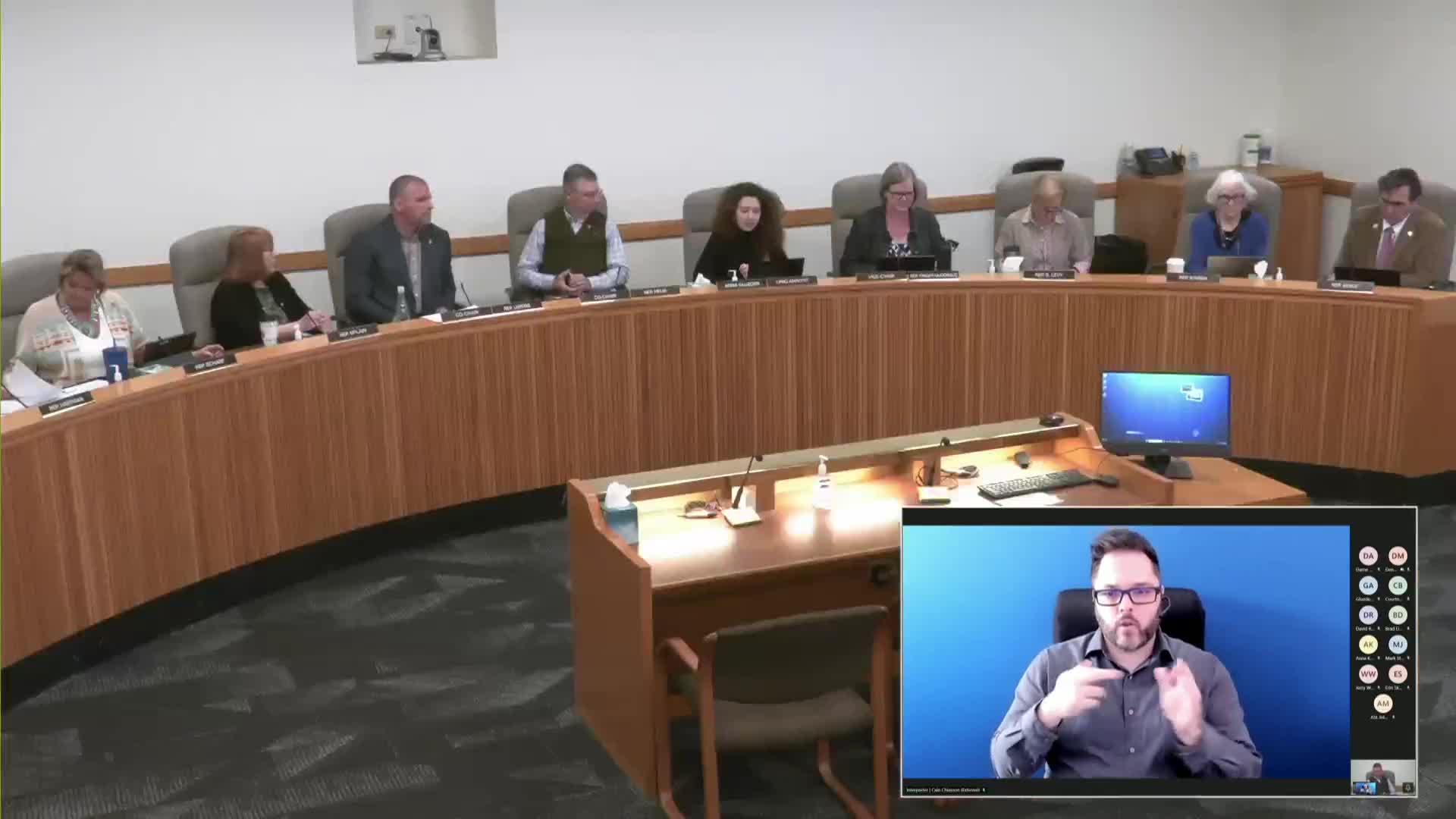
House Committee on Agriculture, Land Use, Natural Resources, and Water held a full public hearing March 3 on House Bill 3103, a bill that would require the State Forester to calculate and adopt by rule a 10‑year sustainable timber harvest level for state forest lands and to annually report timber sales against that level.
Supporters, including county officials, timber purchasers and forest industry groups, said the measure is a governance and transparency tool needed after what they described as fluctuating harvest projections that have strained local budgets and timber‑dependent economies. Brandon Persinger, executive director of the Council of Forest Trust Land Counties, told the committee the bill would restore “a level of certainty” in budgets for counties that deeded lands to the state under ORS chapter 530. Michael Eiesen of the Oregon Forest Industries Council said the measure does not mandate a numerical harvest level but requires the Oregon Department of Forestry (ODF) to adopt and manage to a stated level and explain adjustments.
Opponents — including conservation groups and some coastal residents — urged rejection or substantial amendment. Rand Schenck of MCAT (Mobilizing Climate Action Together) told lawmakers HB 3103 risks reversing recent gains in forest carbon sequestration and could jeopardize protections for species and water. Michael Lang of Wild Salmon Center said sustainable harvest requirements already exist in state rules and warned that the bill’s current language could be read to supersede other plans and policies, including components of the statewide Habitat Conservation Plan (HCP).
Key details from testimony and committee discussion
- What the bill would require: ODF to calculate a sustainable harvest level at least once every 10 years, adopt it by rule, manage available state forest land to that level to the extent consistent with other legal requirements, and annually report timber sales relative to the sustainable harvest level. (Explained by committee staff during the bill summary.)
- Revenue and budget context: Speakers noted an agreed revenue split under the state trust arrangement (63.75% of receipts to counties; 37.25% to ODF) and said counties rely on timber receipts for public services including law enforcement, jails, schools and fire districts. Several county commissioners and trust‑land advocates said recent harvest projection changes created acute budget shortfalls in affected counties.
- Conservation and legal concerns: Opponents argued the dash‑1 amendment before the committee still contains language that could be read to allow the harvest rule to control or override other plans and rules; they urged clearer protections to ensure the HCP, the Forest Practices Act and future board rules remain effective. Some witnesses also opposed the judicial‑review provisions that would create standing for challenges to ODF’s compliance.
- Agency and industry perspectives: Industry witnesses and timber purchasers said repeated downward revisions to ODF harvest projections have harmed mills and supply chains and stressed the need for a reliable supply forecast. Several proponents said the dash‑1 amendment was intended to preserve ODF discretion and to allow adjustments for wildfire, storms or disease.
Committee action and next steps
The committee closed the public hearing on HB 3103 at the end of the March 3 session and adjourned; no work‑session vote to advance the bill occurred that day. Sponsors and multiple parties said they intend to continue negotiations on the dash‑1 language; several testified they remain open to amendments addressing standing, interaction with the HCP and how to account for catastrophic events.
Why it matters
State forests were deeded to Oregon counties for long‑term management under ORS chapter 530; some counties rely heavily on forest receipts for essential services. Any change that affects harvest levels or the predictability of harvests can materially affect county budgets, timber mills, and rural employment. At the same time, state and federal conservation commitments and the need to address carbon sequestration and water quality are central concerns for opponents.
The committee did not vote March 3; sponsors indicated they will continue discussions with ODF, industry, counties and conservation groups to refine the draft and address outstanding concerns.