Get Full Government Meeting Transcripts, Videos, & Alerts Forever!
Get email alerts on the State Police Budget topic
No spam. Unsubscribe anytime.
Oregon State Police budget bill funds trooper hires, high-visibility unit and land acquisitions
Summary
Lawmakers opened an informational hearing on House Bill 5029, the Oregon State Police budget, which preserves most operations while adding targeted funding for trooper recruitment, a high-visibility enforcement unit, an overdose‑investigation team and land purchases for two replacement patrol facilities.
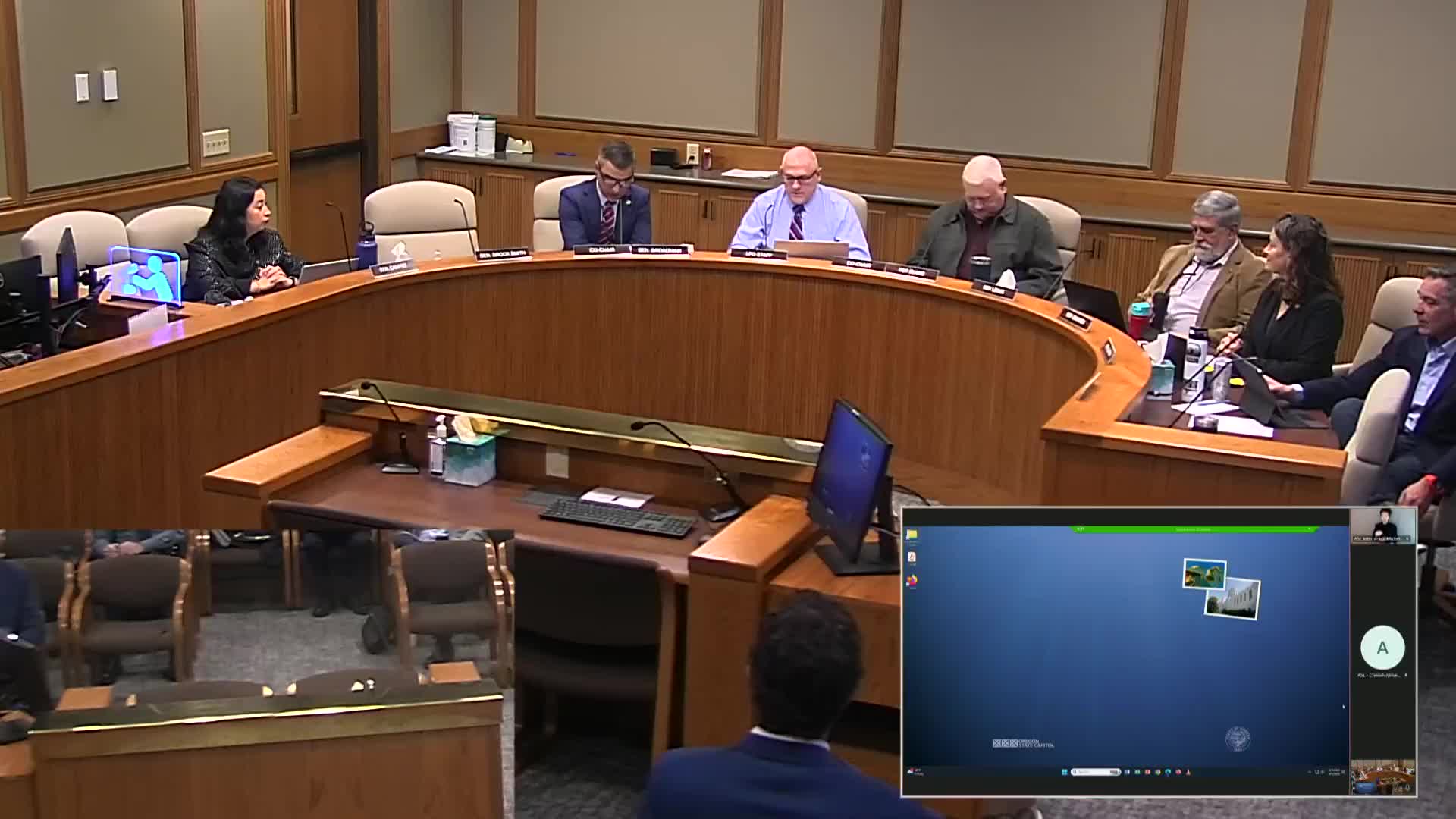
SALEM, Ore. — The House Public Safety Subcommittee opened an informational hearing March 3 on House Bill 5029, the Oregon State Police (OSP) budget bill for the 2025–27 biennium. Agency leaders told lawmakers the governor’s proposal largely maintains current service levels while adding targeted public-safety investments, trooper positions and land‑acquisition authority for replacement facilities in Coos Bay and Ontario.
The governor’s proposal totals about $705.7 million and funds roughly 1,393 positions, compared with the 2023–25 legislatively approved budget of about $702.8 million and 1,377 positions, Oregon State Police officials said. “First is related to trooper retention and recruitment. That’s an ongoing concern that should be kept in mind as we move forward,” Jonathan Bennett of the Department of Administrative Services told the committee.
Why it matters: OSP provides statewide patrol, major-crime investigations, forensic services, the state medical examiner’s office and other functions. About three‑quarters of the agency’s revenues are proposed as general‑fund support; personal services and operating costs make up the vast majority of spending. Committee members pressed agency leaders about staffing, forensic backlog reduction and the impact of new spending on highway safety and overdose investigations.
Top proposals and details
- Trooper staffing and recruitment: Agency leaders said the governor’s budget maintains overall trooper staffing and adds positions intended to reduce historical vacancy rates. Superintendent Casey Codding said OSP set targets and expanded training classes, including coordinating with the Department of Public Safety Standards and Training to run two academy classes a year. OSP reported a decline in average patrol sworn vacancies from about 86 per month last biennium to about 61 per month so far this biennium.
- High‑Visibility Enforcement Unit (HVEU): The governor’s budget converts a 2023 pilot into ongoing funding for a dedicated enforcement unit focused on highway safety, impaired driving and dangerous driving behavior. The budget request funds 16 positions for the unit (12 troopers, two sergeants, one lieutenant and one administrative specialist) and includes a $7,099,410 general‑fund package for the unit, agency staff said.
- State Overdose Response Team (SORT): The governor’s proposal includes one‑time general‑fund support of $713,000 for SORT, described as funding for one detective trooper and one sergeant to investigate overdose deaths and pursue higher‑level dealers linked to fatal overdoses.
- Capital and facilities: The budget requests Article XI‑Q bond proceeds or bond authority to buy land for replacement patrol facilities in Coos Bay and Ontario. OSP listed $7 million in land‑acquisition authority (roughly $3.5 million each) as part of the capital request and noted ongoing debt service related to previously approved capital projects.
- Forensics and medical examiner workload: Committee members heard that OSP continues work to reduce the sexual‑assault kit backlog and improve turnaround times. Agency presenters said the goal is to have fewer than 150 kits in the system with processing turnaround of 30–60 days. The state medical examiner’s office remains an area of concern after a late‑2024 report linked to House Bill 4003; OSP told lawmakers the office’s staffing and resources have not kept pace with population growth.
- Technology and data systems: OSP officials described recent upgrades and planned replacements for key systems used statewide, including LEHI (law enforcement data), the firearms instant check system (FIX), a laboratory information management system (LIMS) and a computerized criminal history unit. Sean Joyce, director of Criminal Justice Information Systems, said automated fingerprint processing and the WebQ firearms queue have improved markedly, noting web‑queue transactions now clear in hours rather than days.
- Revenue mix and program limits: Presenters reiterated that about 77% of the agency’s revenues come from general‑fund appropriations, with smaller shares from lottery transfers (Measure 76), federal grants and fees for services. OSP also detailed a roughly $27.5 million debt‑service obligation tied to prior Article XI‑Q bonds used for capital projects.
Operational highlights and outcomes discussed
- Narcotics interdiction and K‑9s: Patrol leaders said OSP canine teams and targeted interdiction contributed to large seizures statewide. Captain Evan Suther told the committee OSP K‑9 teams were “responsible for preventing over 2,000,000 doses of fentanyl from reaching our communities in the last couple of years.”
- Crash reduction and traffic work: Patrol officials said preliminary 2024 data show about a 5% reduction in fatal crashes on state highways where OSP has primary responsibility. The agency credited data‑led enforcement, regional saturations and the HVEU pilot for part of the improvement.
What lawmakers asked for or directed
Legislators pressed for additional data on trooper distribution across counties, commercial motor vehicle safety on I‑84 and details on how OSP allocates resources where local agencies cannot provide coverage. Co‑chairs and members asked for follow‑up materials on recruitment composition (lateral hires versus new recruits), county‑level workload and heavy‑truck inspection outcomes; OSP offered to provide those data in future briefings.
No formal action recorded
The March 3 hearing was an informational briefing; the transcript records no committee vote or motion on House Bill 5029. The subcommittee paused the hearing and scheduled continuation of the OSP overview for the next day.
Ending note
OSP officials said the agency intends to continue reducing forensic backlogs, recruit and retain sworn and professional staff, and advance technology upgrades while the Legislature considers HB 5029. The subcommittee will receive further division‑level presentations when the hearing resumes.