Get Full Government Meeting Transcripts, Videos, & Alerts Forever!
Get email alerts on the Transportation Safety topic
No spam. Unsubscribe anytime.
Advocates press Portland council for Vision Zero after three pedestrian deaths
Summary
Bicycle, trail and neighborhood advocates urged the Portland City Council to adopt a Vision Zero policy, strengthen complete-streets enforcement and improve sidewalk snow clearing after three recent pedestrian fatalities.
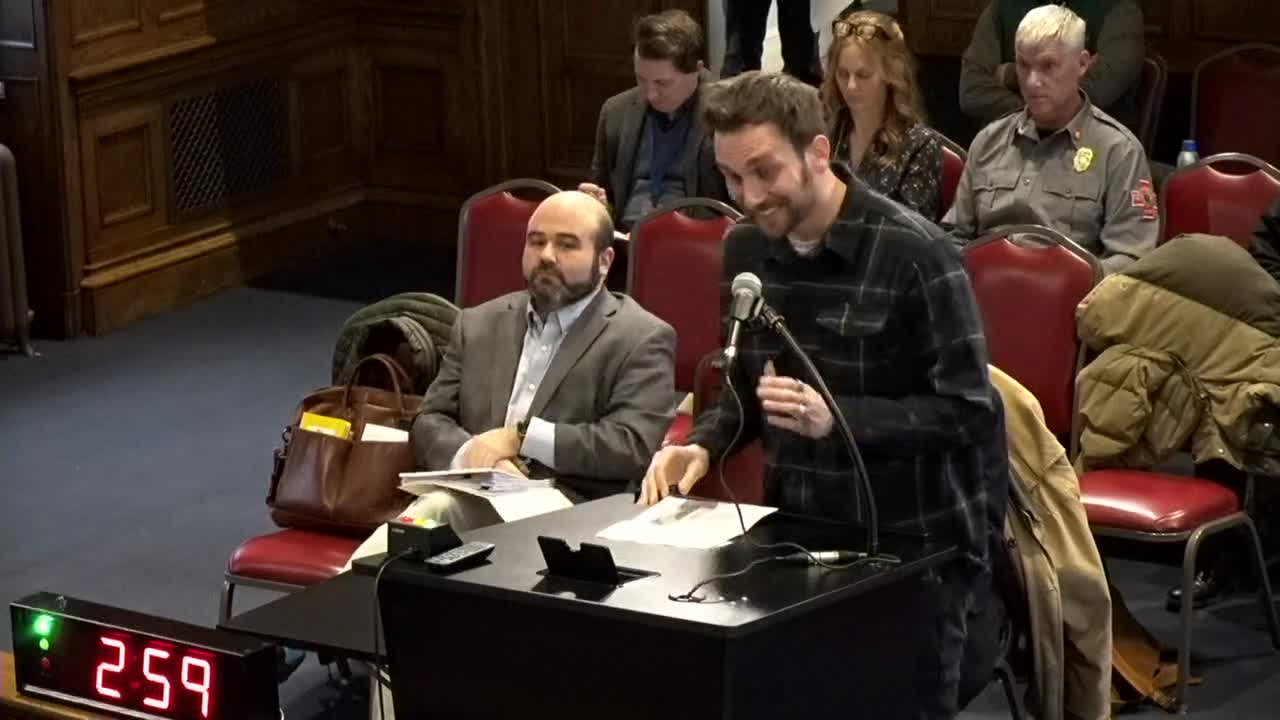
Advocates told the Portland City Council on multiple public-comment turns that three pedestrian deaths in recent months show a need for urgent city action to improve street and sidewalk safety. Bicycle Coalition of Maine executive director Andrew Zarrow, Portland Trails chair John Cashmore and other residents called for a stronger Vision Zero policy, improved data collection and stepped-up sidewalk maintenance ahead of winter.
Speakers said the deaths are avoidable and linked to street design, enforcement gaps and winter maintenance. “In just three months, three pedestrians have been killed on Portland's streets,” Andrew Zarrow said, asking the council to “work with the Bicycle Coalition of Maine and your neighborhood associations and your constituents to adopt a comprehensive Vision 0 policy” and to strengthen the city’s 2012 complete-streets ordinance.
The concern extended beyond vehicle design. Zach Barrett said people sometimes walk in roadways because sidewalks become impassable after snow and ice accumulates; he urged regular sanding and salting of sidewalks and noted new sidewalk snow-removal equipment had helped. John Cashmore of Portland Trails described Riverton Square (Forest and Riverside) as a “focus area” where riders, pedestrians, schools, shelters and a public-housing facility share space with inadequate crossing and bicycling infrastructure.
Public commentators linked safety and equity, saying lower-income neighborhoods, seniors and people with disabilities are disproportionately affected by dangerous corridors such as Franklin Street, Riverside and Outer Brighton Avenue. Commenters urged the council to prioritize infrastructure fixes, targeted enforcement and data improvements that show who is most at risk.
Councilors did not take a legislative vote on Vision Zero during the meeting; speakers asked that staff return proposals and data for council review and partnership opportunities.
The council did hear related operational items later in the session (snow equipment, street maintenance and grants) but made no new policy adoption on Vision Zero at this meeting. Advocates said they will offer technical assistance and asked the council to include the coalition in future planning and data efforts.