Get Full Government Meeting Transcripts, Videos, & Alerts Forever!
Get email alerts on the Environmental Health Fees topic
No spam. Unsubscribe anytime.
Lee County to hold public hearing on overhaul of environmental health fees; vote postponed
Summary
Lee County public-health officials presented a proposal to replace occupancy-based restaurant and hotel fees with risk-based tiers and to update septic and other environmental fees that have not changed since 2004. Commissioners agreed to a public hearing on Feb. 24 and tabled a vote until after the hearing.
Lee County public-health officials told the County Commission they will ask the commission to approve a standardized, restructured schedule of environmental health fees and requested a public hearing on Feb. 24 before any vote.
County Administrator for Public Health James Harden and District Environmental Services Director Wes Rogers said the county’s current fee schedule — unchanged since February 2004 — is confusing and uneven and that the proposed schedule shifts some fees from an occupancy basis to risk- and service-based tiers.
The proposal would replace occupancy-based restaurant fees with four risk categories tied to how often kitchens must be inspected. Harden said restaurants currently charged by maximum seating could pay for an occupancy they rarely reach; under the new plan “we’ve moved that to a category 1, 2, 3, and 4, which basically is the risk of that kitchen and how often that we have to inspect those kitchens.” Rogers described Category 2 as businesses preparing already-cooked foods (examples given included gas-station pizza), Category 3 as full-service or fast-food restaurants that prepare foods and use utensils, and Category 4 for higher-risk preparation such as sushi.
Harden and Rogers said inspection frequency will remain separate from the annual fee; for example, a Level 2 kitchen inspected twice per year would pay a single annual fee appropriate to its category. Hotel fees would move from an occupancy-plus-per-room surcharge to tiered flat rates; Harden said the top proposed hotel tier would cap at $300 per year whereas some Lee County hotels currently pay nearly $700–$800 annually under the old formula.
Septic and other permitting fees would also be reorganized. Rogers said septic permits are calculated by gallons per day and that the proposal groups “small flow systems” together and separates larger engineered systems. Rogers explained conventional septic permits currently cost $50 and are proposed to increase to $100 for conventional permits; homeowners pay that fee once at permitting, while commercial permits and some larger systems carry recurring or state-level fees. Rogers added that large engineered “performance” systems are subject to a separate statewide three-year inspection requirement handled under state permitting.
Harden said the health department briefed Auburn and Opelika city councils, the local chambers of commerce and the state restaurant association ahead of the county discussion to avoid surprising municipal restaurant owners. He asked the commission to schedule a formal public comment period so residents and businesses can review the proposed changes and comment.
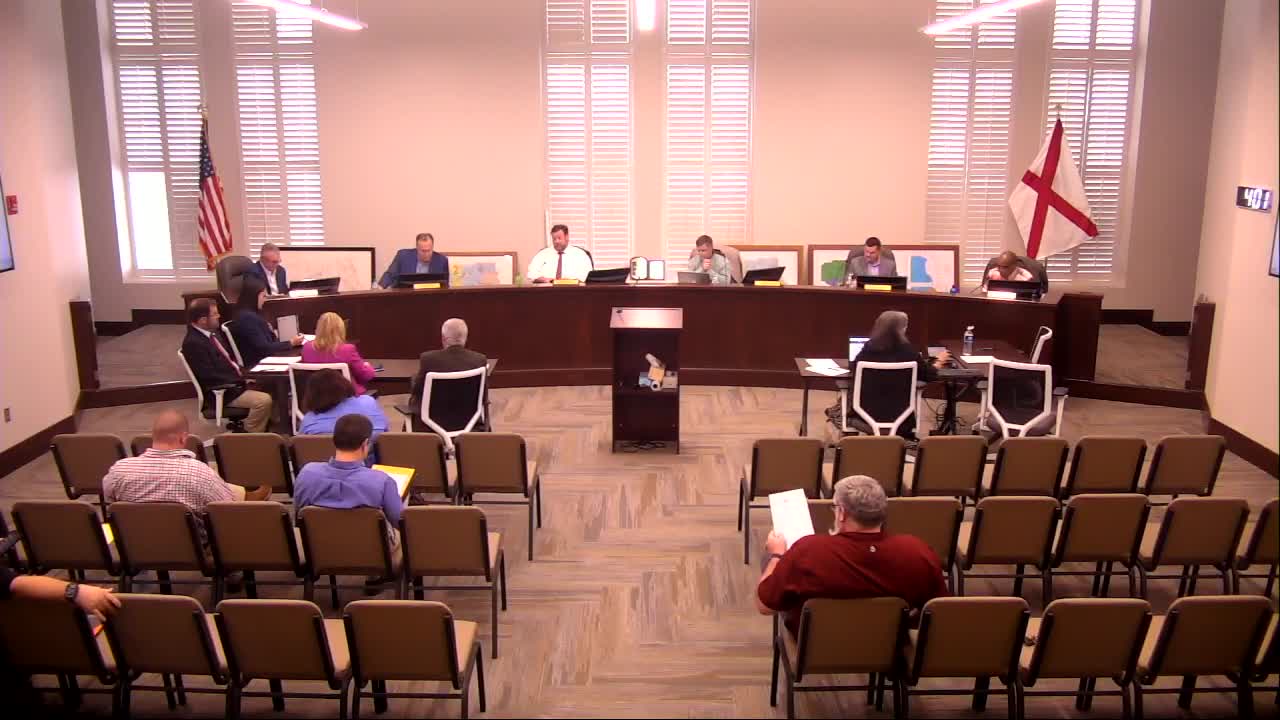
Commissioners agreed not to vote on the fee schedule at the work session and set a public hearing for Feb. 24; Harden said he would attend that meeting to answer questions. The commission’s action at the work session was to table any vote to allow for the advertised hearing and public comment.
Why it matters: The proposal changes how restaurants, hotels and septic-system owners are charged for county environmental services. Some businesses would pay less under the new tiers, others more; homeowners seeking septic permits could see a higher one-time fee. A public hearing will allow residents, business owners and municipal governments to provide input before the commission votes.
Next steps: The county will publish notice of the Feb. 24 public hearing. Harden and Rogers said they will be available at that hearing to answer questions; commissioners will consider the fee schedule after the hearing.