Get Full Government Meeting Transcripts, Videos, & Alerts Forever!
Get email alerts on the Transportation Urban Transit topic
No spam. Unsubscribe anytime.
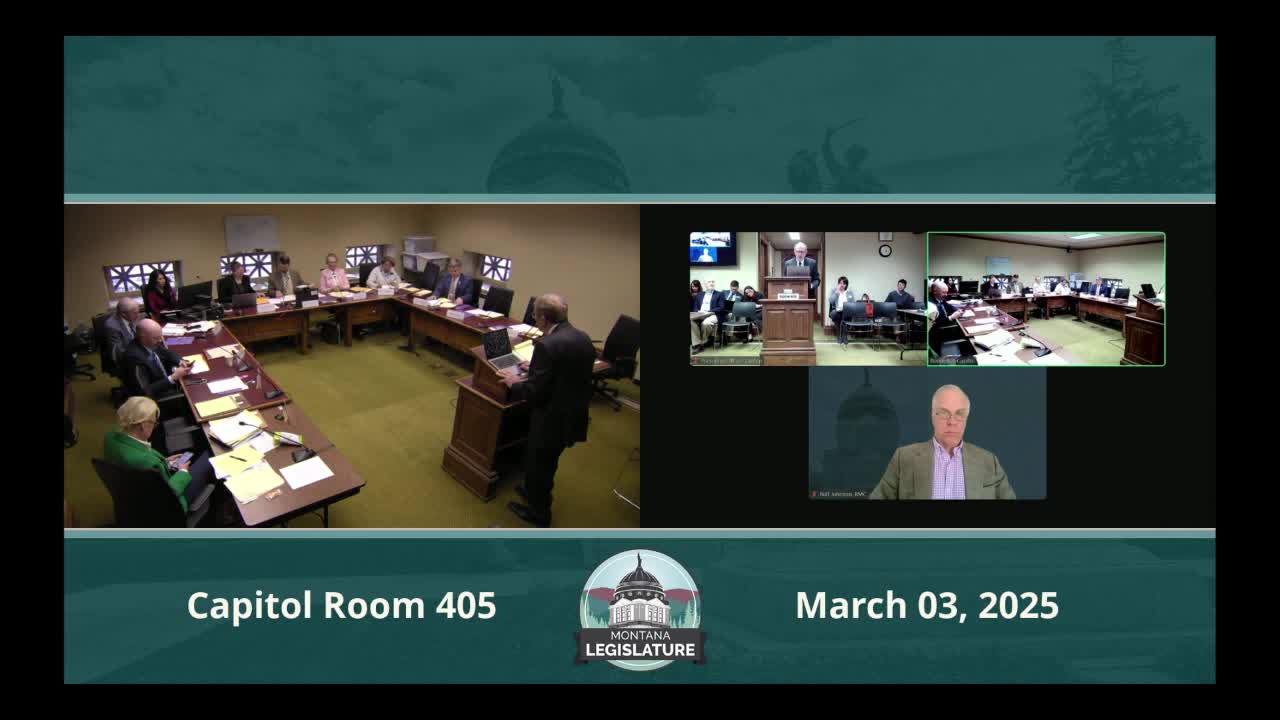
Committee grills SB 510 over elected boards, service obligations and opt-out rules for urban transportation districts
Summary
Senator Willis Kurdy introduced SB 510, which would change governance and financial rules for urban transportation districts, including elected boards and opt-out rules for areas not receiving service.
Senator Willis Kurdy introduced Senate Bill 510, which proposes several changes to Montana’s urban transportation district (UTD) law, including: requiring UTDs to be governed by elected boards in some cases, clarifying the definition of "direct transit service," and preventing areas that do not receive service from being held responsible for district indebtedness after five years.
"If you're going to charge for service, then you should be able to provide the service," Senator Kurdy said, describing constituent complaints from his district about neighborhoods that have remained taxed but without transit service for years.
Multiple transit districts and local governments opposed the bill in detailed testimony. David Kack, coordinator for the Big Sky Transportation District, said the measure creates uncertainty for districts that cover multiple counties and for seasonal services: "Direct transportation service ... our service in Big Sky is very seasonal," he said, adding that an election requirement and an unclear definition of "direct service" could create practical problems.
Witnesses representing the Gallatin Valley, Mountain Line (Missoula), Great Falls Transit District and other districts warned elected-board requirements and opt-out rules would undermine planning, create funding instability, and could force service cuts.
Sebastian Strauss, chair of Mountain Line's board, told the committee Mountain Line could lose as much as 20% of its property-tax revenue under the bill and would have to cut service and lay off staff. "By prohibiting cities and counties from adding parcels to the urban transportation district upon annexation or subdivision, new growth will not pay for any of the transit service that it receives," Strauss said.
Opponents also raised logistical concerns about petitions and map-making. Several witnesses noted that Montana statute already provides a petition process for adding or removing real property from a district (committee members and witnesses repeatedly cited statutory provisions in the 7-14-2 series), and they argued local planners and district boards should manage boundary and service issues rather than a statewide statutory change.
Proponents and some constituents argued the bill is a necessary remedy for residents taxed for transit they do not receive. Senator Curti read constituent comments describing Missoula-area households charged hundreds of dollars annually for a district that has not provided service to their neighborhood for more than a decade; one constituent said they pay about $550 a year for transportation services that do not exist for them.
Committee members asked clarifying questions about how district maps are drawn and how UTDs determine whether an area receives "direct service." Witnesses said map development and boundary decisions are local planning matters that involve outreach and technical planning; several witnesses said expansion or annexation should be planned collaboratively and can require years to implement.
The committee took executive action on SB 510. Vice Chair Beard moved a do-pass motion; on roll call the motion failed (committee reported 4 yes, 7 no). A subsequent motion to table the bill carried and SB 510 was placed on the table.
Votes at a glance (SB 510)
- Motion: Do pass SB 510 (mover: Vice Chair Beard). Result: Failed on roll call (committee recorded 4 yes votes, 7 no votes). - Motion: Table SB 510 (mover: Vice Chair Beard). Result: Passed (SB 510 placed on the table).
Why it matters
UTDs are used by Montana municipalities and counties to coordinate transit, plan routes and levy property taxes in district areas. Opponents said the bill would make long-term planning harder and could shift costs onto remaining taxpayers if areas successfully opt out; proponents said the bill forces accountability when districts charge properties but do not deliver service.
What remains unresolved
Key open issues include how to define "direct transit service" in statute, how to treat gated developments and private communities that restrict access (witnesses discussed the Yellowstone Club example), and whether elected boards are preferable to appointed boards in varying local contexts. Several witnesses asked for more precise statutory language before statewide changes are enacted.
Sources and testimony
Testimony listed above came from Senator Willis Kurdy (sponsor), David Kack (Big Sky Transportation District), representatives of Gallatin Valley transit, Bruce Grubbs (vice chair, Gallatin Valley UTD), Sam Momeyer (City of Missoula), Jennifer Olsen (Montana League of Cities and Towns), Nadine Hanning (Great Falls Transit District), Sebastian Strauss (Mountain Line), Dan Doyle (citizen), and Jennifer Boyer (Gallatin County Commissioner). The committee held a roll-call vote that resulted in SB 510 failing a do-pass motion and later tabling the bill.
Ending
Committee members split over whether the problems highlighted by constituents require statewide statutory change or local corrections to UTD governance and planning. After testimony from multiple UTDs and local governments, the committee tabled SB 510 pending further work.