Get Full Government Meeting Transcripts, Videos, & Alerts Forever!
Get email alerts on the Public Health Nicotine Tax topic
No spam. Unsubscribe anytime.
Senate committee approves nicotine product tax bill in 6–5 vote; supporters cite youth prevention, opponents warn regressivity
Summary
Senator introduced a wholesale tax on newer nicotine products (e‑liquids and pouches) to fund prevention programs; the Senate committee voted 6–5 in favor of a do‑pass recommendation after testimony from public‑health groups, retailers and industry representatives.
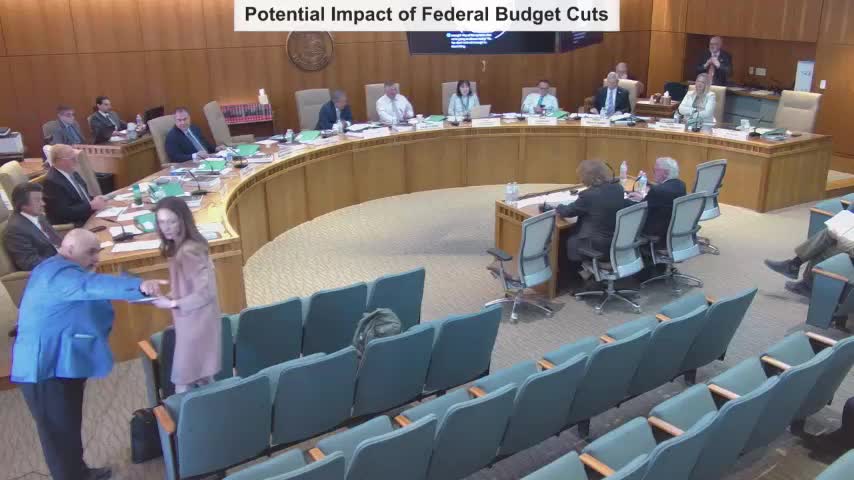
SANTA FE — The Senate finance committee voted 6–5 to give a do‑pass recommendation to a bill that would impose a new wholesale tax on certain nicotine products (electronic nicotine delivery systems and nicotine pouches) and deposit revenue into a nicotine prevention and control fund administered by the Department of Health.
Senator James Hickey (sponsor) told the committee the measure targets newer nicotine products and synthetic‑nicotine formulations rather than traditional cigarettes and that revenue would pay for prevention programs. “If we can get school‑aged individuals to not take up nicotine as it now comes in incredible forms … we can help people who, after they develop the addiction pathways, not move on to alcohol or other substance abuse,” Hickey said.
Public‑health groups supported the proposal. Mahesh Sita of the American Heart Association told the committee there is “an e‑cigarette epidemic in our schools” and urged lawmakers to include synthetic‑nicotine products in the tax. Linda Siegel of the American Cancer Society said the bill’s definition changes and inclusion of synthetic nicotine were important to cover new market products.
Retailers and industry representatives opposed the measure, saying higher taxes would be regressive and could drive consumers to the black market or to out‑of‑state and tribal sales. Art Hall of Native Trading Associates, a long‑time Albuquerque retailer, said tobacco taxes “affect the most financially vulnerable the most,” and asked the committee to reject the bill. Representatives from Philip Morris/TríStrategies and Altria argued the bill could deter adult smokers from switching to lower‑risk alternatives and noted potential federal and FDA distinctions for certain products.
Economic testimony and enforcement questions
Bridal Gray, an economist with the Legislative Finance Committee, provided an elasticity estimate included in the fiscal note. Gray explained that the estimate used by staff implies the proposed price increase would reduce consumption only modestly at the population level: a 10% price increase would reduce overall consumption by about 0.5%. Gray said that elasticity estimates are population‑wide averages and can differ by age group and by length of use.
Committee members debated the bill’s goals and likely effects. Some senators emphasized the bill as a public‑health measure to prevent youth uptake; others expressed concern that the tax would be regressive, encourage black‑market activity, or hurt small retailers and border communities.
A roll‑call vote produced six affirmative and five negative votes. The committee reported the bill with a do‑pass recommendation and a 6–5 tally.
Votes at a glance
Motion: Do pass recommendation on the nicotine product tax bill Mover: Senator Steinborn Second: Senator Trudeau Vote tally: 6 yes, 5 no Roll call (as read in committee): - Yes: Senator Gonzales; Senator Padilla; Senator Steinborn; Senator Trujillo; Senator Shandoh; Senator Muñoz (6) - No: Senator Brandt; Senator Campos; Senator Lanier; Senator Tobias; Senator Woods (5)
Next steps
The bill was reported out of the finance committee with a do‑pass recommendation; it will return to the Senate calendar for further consideration. Committee discussion flagged enforcement and cross‑border/tribal sales as outstanding issues and committee members suggested follow‑up language or enforcement provisions might be needed in subsequent committee work.
Ending
Supporters said the tax revenue — estimated in the bill’s fiscal note at roughly $5–10 million annually depending on rates and behavior — would fund a new nicotine prevention and control fund at the Department of Health; opponents warned the tax would be regressive and could push transactions out of the state tax base.