Get Full Government Meeting Transcripts, Videos, & Alerts Forever!
Get email alerts on the Federal Budget Cuts topic
No spam. Unsubscribe anytime.
Legislative analysts warn New Mexico could face roughly $1.5 billion hole if proposed federal cuts proceed
Summary
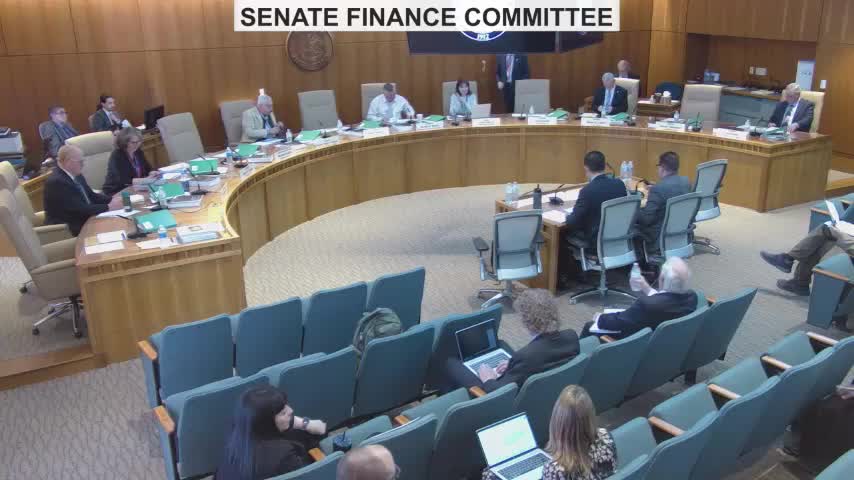
Legislative Finance Committee economists warned the Senate finance committee that proposed federal spending and tax changes could strip hundreds of millions — and, under some scenarios, more than $1 billion — from New Mexico’s budget, with Medicaid and school meals singled out as among the most exposed programs.
SANTA FE — Legislative Finance Committee analysts told the Senate finance committee that proposed federal spending and tax changes under a recent House framework could create substantial budget and revenue risks for New Mexico, and urged state leaders to begin planning now.
“I’d start off by saying there’s a lot of uncertainty right now,” said Ismael Torres, chief economist for the Legislative Finance Committee, who led the staff presentation. Torres said the committee’s early, proportional modeling of the House concurrent budget resolution produced a scenario in which New Mexico could face about $1.4 billion in general-fund losses under a recessionary scenario and roughly $1.5 billion in general‑fund backfill needs in the coming year if several program reductions were enacted.
The warning matters because New Mexico receives a relatively large share of federal employment and program dollars. “We could expect a reduction in personal income taxes [and] gross receipts taxes from the consumption, the lost consumption on those wages,” Torres said, noting federal payroll reductions and tariff-driven slowdowns could have knock-on effects locally.
Why it matters
The Legislative Finance Committee (LFC) split the risk analysis into revenue risks — changes in state-collected taxes driven by macroeconomic effects — and budget risks, where federal dollars that flow to the state for specific programs could be reduced or restructured. The staff analysis uses the House concurrent budget resolution passed Feb. 25 as the initial template and applies committee-level targets to estimate exposure.
Medicaid and health funding were the largest single exposure on LFC’s slides. LFC staff showed that New Mexico’s Medicaid program has a high federal match and projected total Medicaid spending of about $11.4 billion; a roughly 12–13% proportional reduction in federal Medicaid dollars could translate to about $1.1 billion less federal revenue for the state under the model. The presentation also highlighted potential reductions to SNAP and school-meal community eligibility provisions, which could shift tens of millions of dollars to the state if the federal thresholds revert to pre‑pandemic levels.
What agencies told the committee
A Department of Transportation representative told the committee that about $540 million a year comes to the state in FHWA apportionment funds and that those apportionments were not the immediate concern. The representative said competitive, climate-focused programs created under the Bipartisan Infrastructure Law (BIL) — for example CMAQ and NEVI formula funding tied to carbon-reduction goals — were more exposed.
“Right now, given the transition, our immediate concern rests with the final execution of federal grants that have already been awarded to the Department of Transportation,” that representative said.
Health-sector leaders urged caution. Michael Richards, senior vice president of the University of New Mexico Health Sciences Center and CEO of the UNM Health System, said UNM receives about $246 million a year in federally funded research and roughly $864 million a year in Medicaid reimbursement across numerous programs. “We will ultimately be providing [care], but without any reimbursement,” Richards said, describing the health system’s thin margins and the risk to academic medical center supplemental payments that require annual renewal with CMS.
Gina de Blasio, secretary‑designate for the Department of Health, said the department’s public‑health budget is roughly $266 million, about $187 million of which is non‑general‑fund federal grant support. “We have been in contact with the CDC and they’ve been extremely supportive,” she said in describing federal collaboration on the state’s recent measles outbreak.
Hospital and other sector impacts
Troy Clark, president and CEO of the New Mexico Hospital Association, highlighted last year’s Healthcare Delivery and Access Act funding (about $1.5 billion a year) that needs annual renewal through CMS and said the renewal was still pending. Clark told the committee that the persistence of that funding is a separate but compounding risk to hospitals if other cuts materialize.
Other presenters — including university and research representatives — described program‑by‑program exposures (NIH/NSF research grants, certain USDA and USAID programs, Title V/VI supports for minority‑serving institutions and SNAP for students and staff), and cited early stop‑work orders on some USAID work as an example of immediate disruptions.
Committee discussion and next steps
Committee members pressed staff on assumptions (for example, whether Forest Service layoffs and contractor losses were included) and asked for more granular scenarios. Ismael Torres said the LFC can refine the estimates as federal details emerge and recommended use of reserves to buy time for strategic planning. Chair members and staff discussed possible immediate measures such as targeted audits to maximize federal drawdowns and identification of non‑recurring funds that could be conserved.
The chair announced organizational steps to help the Senate process the information: LFC will provide updates and scenario modeling; staff indicated some agencies are already pursuing retroactive reimbursements and improved drawdown practices; and the chair said subcommittees on language and capital/reoccurring appropriations would be formed to vet bills and special appropriations language as the session proceeds.
No formal committee votes were taken on budget actions during the briefing. LFC staff emphasized the analysis is an early, proportionalized exercise intended to show magnitude rather than definitive, line‑by‑line program cuts. Torres emphasized: “the devil’s always in the details,” and said final impacts will depend on which specific cuts are enacted and how any federal implementation is phased.
Ending
Committee leaders instructed staff to continue refining scenarios and to report back as federal negotiations produce clearer directives. Several senators urged more immediate internal audits to ensure the state has claimed all federal dollars to which it is already entitled. The LFC said it will supply updated estimates and potential backfill strategies as information becomes available.