Get Full Government Meeting Transcripts, Videos, & Alerts Forever!
Get email alerts on the Boards And Commissions topic
No spam. Unsubscribe anytime.
House committee advances bill to remove race and gender membership requirements for state boards
Summary
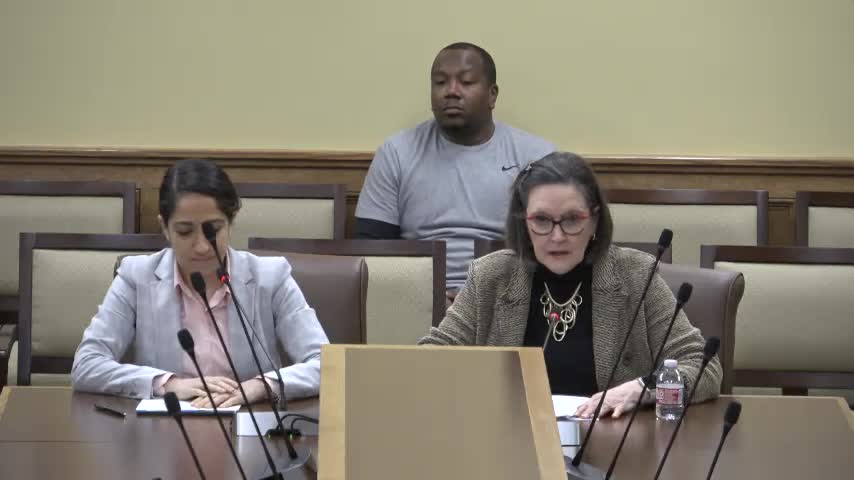
Representative Carolyn Brown (R., Dist. 67) presented House Bill 13‑65 to the House State Agencies Committee and the panel voted to pass the bill out of committee.
Representative Carolyn Brown (R., Dist. 67) presented House Bill 13‑65 to the House State Agencies Committee and the panel voted to pass the bill out of committee.
The measure would remove race- and gender‑based membership qualifications from 22 code sections that set composition or representational goals for boards, task forces and commissions. "This is a very simple bill," Brown said in opening remarks, saying it "simply removes racial and gender quotas" and ties the change to the Fourteenth Amendment's guarantees of equal protection.
Supporters: legal challenge risk and constitutional argument
Laura D'Agostino of the Pacific Legal Foundation, a witness for the bill, told the committee her organization is litigating and has litigated similar quotas in other states. She said statutes that require appointing authorities to base appointments on race or gender create legal exposure and treat citizens as members of a class rather than as individuals. "Statutes that require appointing authorities to discriminate against their own citizens when making appointments to public boards is one area where we are actively litigating cases," D'Agostino said, referencing recent litigation in other states and a 2023 Arkansas matter involving the social work licensing board.
Committee concerns: cultural competency, geographic distribution and targeted commissions
Several committee members asked detailed questions about specific code sections the bill would change. Representative Clowney pressed the sponsor on whether the bill removed provisions meant to ensure cultural competency and protect minority‑health considerations; Clowney said, "I haven't heard from a single Arkansan who is harmed by the status of the law as it is right now," and asked for concrete examples of local harm. Representative Collins asked why language requiring equitable geographic representation for community college boards would be struck, and whether removing that language risks concentrating appointees in population centers.
Representative Brown and the witness replied that removing statutory quotas would not stop appointing authorities from seeking geographic or demographic balance and that the sponsor's intent is to open volunteer opportunities rather than to prevent diversity. "We're not prioritizing any advantage to any race or gender... It's advantage is to make it open to everybody, to make it equal an equal opportunity for everybody," Brown said.
Several lawmakers said the bill also removes statutory language tied to the commission on closing the achievement gap and other stakeholder lists. Representative Collins and others said those items are designed to bring voices affected by the issues to advisory bodies; Collins cautioned against describing legislative repeal of those provisions as a judicial "overturning." D'Agostino said one reason for the bill is to prevent repeated constitutional challenges and litigation, noting the state had removed a social work board quota after similar litigation was filed.
Vote and next steps
After debate the committee moved to pass HB 13‑65. The chair called the roll; multiple members recorded "aye," and several recorded "no." The committee adopted the motion and passed the bill out of committee. The bill will move to the next stage of the legislative process for further consideration.
Ending
Representative Brown closed by reiterating the bill's purpose: to eliminate what she called unconstitutional race and gender quotas and to allow boards and commissions to be filled by volunteers considered on merit. The committee had no witnesses formally signed for or against during this hearing, and members indicated additional floor and public debate could follow.