Get Full Government Meeting Transcripts, Videos, & Alerts Forever!
Get email alerts on the Guns Second Amendment topic
No spam. Unsubscribe anytime.
Senate committee hears staff survey of recent Supreme Court Second Amendment rulings
Summary
Committee staff summarized key U.S. Supreme Court decisions shaping Second Amendment law — Heller, Bruen and Rahimi — and described active litigation over assault-weapon bans as members prepared for later state bill debate.
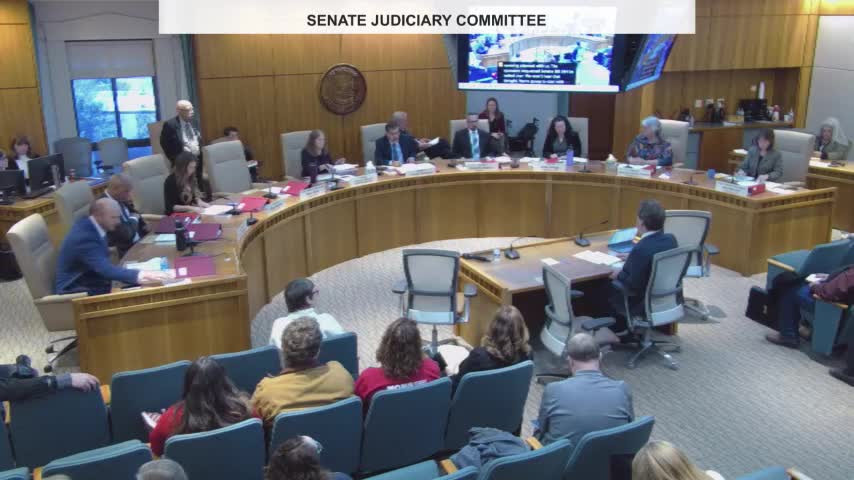
The Senate committee received a legal overview of recent U.S. Supreme Court decisions on the Second Amendment during its evening session, a presentation committee staff said would help guide consideration of potential state gun legislation.
Brandon Cummings, identified in the meeting as a member of committee staff, told the committee the Supreme Court first affirmed an individual right to keep and bear arms in District of Columbia v. Heller and later refined the test for evaluating gun regulations in New York State Rifle & Pistol Association v. Bruen. He summarized Heller as holding that the Second Amendment protects an individual right and that bans on classes of weapons are constitutionally suspect unless the weapons are “dangerous and unusual.” He said Heller relied on the court’s reading of United States v. Miller and emphasized “common use” as a central limit on bans.
Cummings told senators Bruen rejected the lower courts’ use of means‑ends balancing tests — for example, intermediate scrutiny — for many Second Amendment challenges and instead required examining whether a regulation fits the nation’s historical tradition of firearm regulation. He said Bruen focuses analysis on how weapons were historically regulated given their category and use rather than solely on a weapon’s novelty or modern lethality.
Cummings also briefed members on more recent litigation over assault‑weapon bans, citing an Illinois case (identified in the presentation as Harrell v. Raul) that produced a district‑court preliminary injunction later stayed by the Seventh Circuit. He said the Supreme Court declined an emergency request related to that case; Justice Thomas issued a separate opinion criticizing the court’s “shadow docket” practice and offering guidance on how he would expect the court to resolve such questions if the case reached full review.
Cummings concluded by saying the committee would return to its agenda and later take up state bills whose fate could depend in part on how the Supreme Court continues to interpret the Second Amendment.
The chair thanked Cummings for the background and said the committee would resume consideration of pending bills later in the evening.