Get Full Government Meeting Transcripts, Videos, & Alerts Forever!
Get email alerts on the Education.workplace Safety Reporting topic
No spam. Unsubscribe anytime.
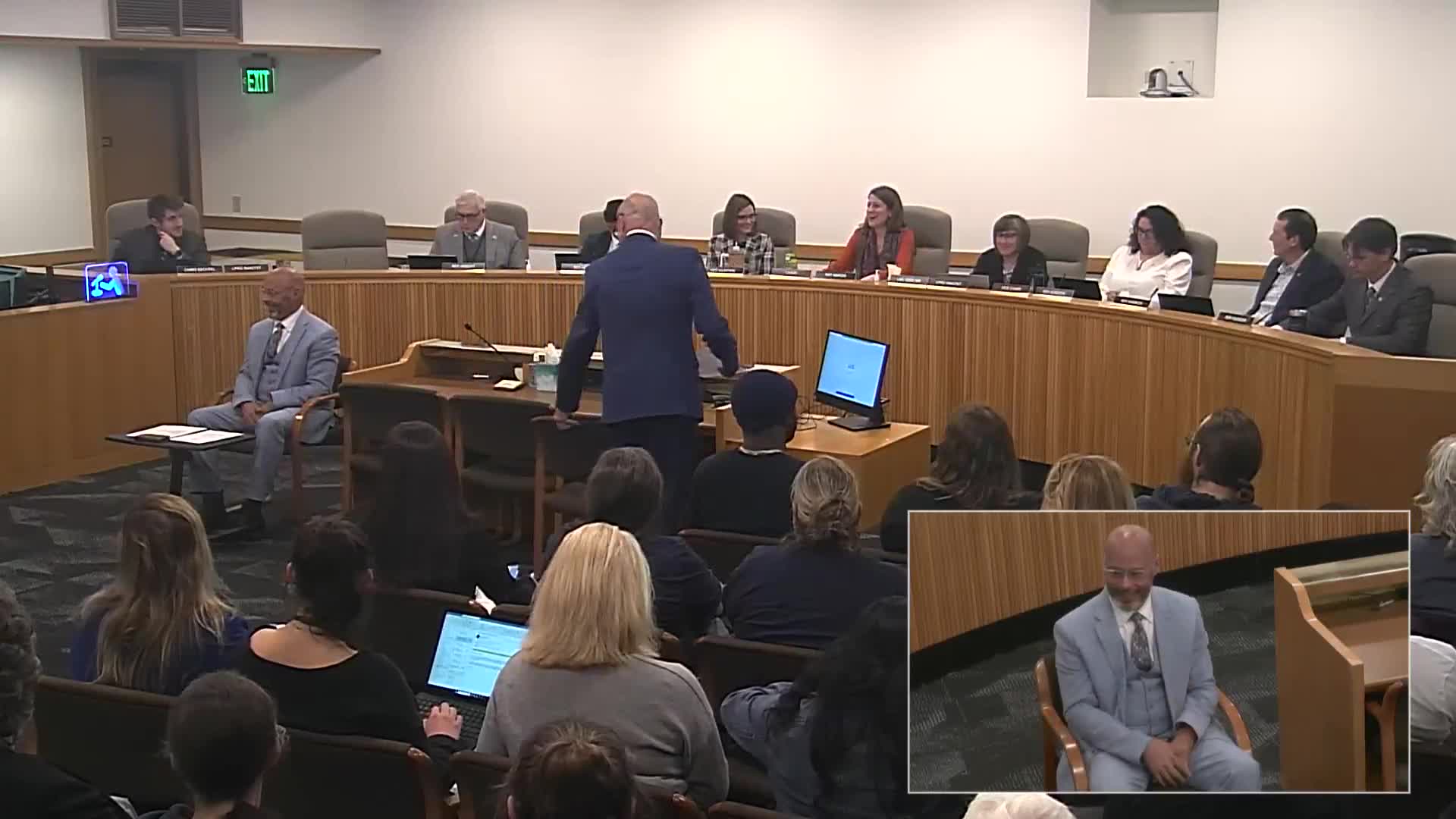
Committee hears bill to create statewide school workplace safety reporting system
Summary
Lawmakers and school employees urged creation of a standardized, public-facing online system for reporting school employee workplace incidents to collect consistent data and guide safety improvements. No vote was taken; a public hearing was held.
A House Committee on Education public hearing on March 3, 2025, focused on House Bill 3,357, a proposal to create a standardized, web-based system for reporting workplace safety incidents involving school and education service district employees.
Representative Leslie Munoz, sponsor, said HB 3,357 would direct the Oregon Department of Education, in consultation with the Department of Consumer and Business Services, to build an accessible, easy-to-use online reporting method that minimizes duplication and includes safeguards against bias. "We cannot fix what we do not measure," Munoz said, arguing the tool would provide the data lawmakers and district leaders need to identify trends and guide solutions.
The bill drew extensive testimony from classified school employees and union leaders who described barriers to current incident reporting. Terri Harris Jones, OSEA state vice president and a primary school library director in Coos Bay, told the committee that employees face time constraints, fear of reprisal, limited access to forms and inconsistent training, all of which lead to underreporting. "A quicker, easier universal system that we would be happy to help promote is an important step to gain the data educators need to analyze and craft solutions," she said.
Other witnesses said existing district processes are patchworks of paper forms or hard-to-find files on shared drives. Lisa Jenkins Easton, an OSEA chapter president and school scheduler in Eugene, said staff often lack time to find or complete incident forms and that the reporting process can feel punitive. Several speakers recommended that the definition of an incident include environmental hazards and near-miss events so schools can address risks before injuries occur.
Representatives of school administrators and school boards—Morgan Allen of the Coalition of Oregon School Administrators and Adrienne Anderson of the Oregon School Boards Association—said they support the intent but raised concerns about implementation. They said the bill, as written, creates a new statewide data collection without funding or staffing for districts or the agency that would host the system, removes a technical advisory committee in earlier drafts, and lacks a clear definition of "workplace safety incident." They also warned that public access to certain data fields could unintentionally identify students in small schools.
Iris Hodge, government relations director for OSEA, said the bill was modeled on a reporting relationship already used by the Oregon Nurses Association and the Oregon Health Authority and that proponents expect the state agency and the represented associations to receive reports. She said the goal is to reduce administrative burden by allowing the staff member who experienced an incident to file the report directly online, rather than routing paperwork through a school office.
Committee members raised follow-up questions about whether districts would receive copies of reports, how the system would minimize duplicative reporting with existing workers' compensation and OSHA forms, and how collected data would be used to design solutions. Proponents said the system is intended as a first step to develop consistent statewide data to inform future funding and policy decisions. The committee held a public hearing; no final committee vote or referral was recorded during the hearing.
The testimony record includes reports of systemic undercounting (OSEA witnesses cited anecdotal examples and barriers) and technical concerns from districts and associations about funding, definitional clarity and timelines for implementation. Committee staff indicated further conversations and likely amendments would follow.