Get Full Government Meeting Transcripts, Videos, & Alerts Forever!
Get email alerts on the Early Learning Budget topic
No spam. Unsubscribe anytime.
Committee reviews governor’s budget for Department of Early Learning and Care, highlights ERDC wait list and licensing investments
Summary
The Education Subcommittee received an informational briefing on Senate Bill 5514, the governor’s recommended budget for the Department of Early Learning and Care, focusing on the ERDC wait list, IT and licensing investments, staffing changes and new tribal funding.
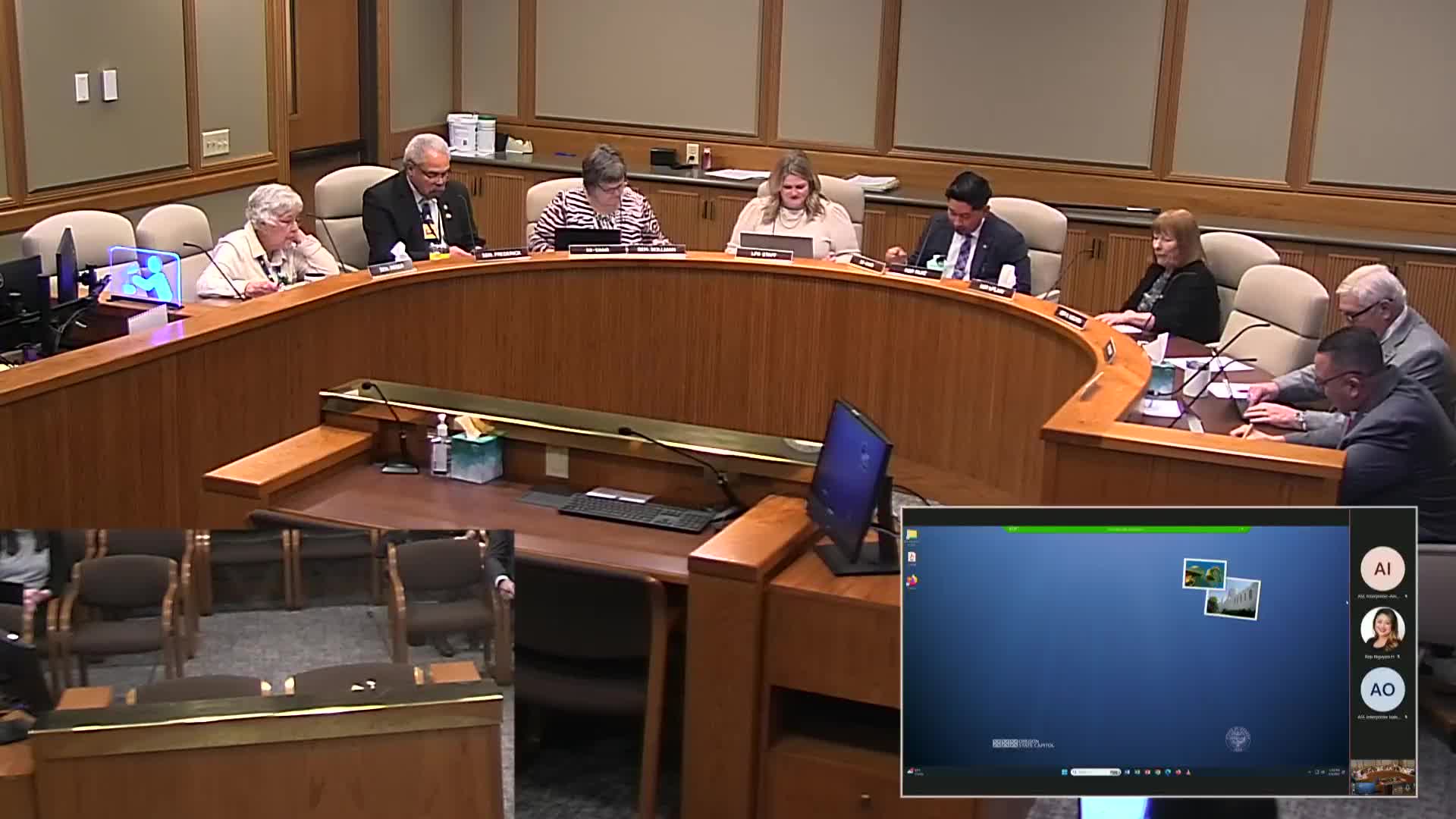
The Education Subcommittee on Monday heard an informational presentation on Senate Bill 5514, the governor’s recommended budget for the Department of Early Learning and Care (DELC), including discussion of an Employment-Related Day Care (ERDC) wait list, planned IT and licensing investments, and proposed funding for tribal early learning programs.
Mike Streepi, chief financial officer in the Department of Administrative Services, told the committee that “the wait list has grown to over 10,000 families” and that the governor’s budget does not assume immediate protocol changes for that list. He also described one-time federal funds from the American Rescue Plan Act that had been used in the current biennium and a proposed shift of some of those expenses onto ongoing general fund support in 2025–27.
The presentation placed DELC’s budget in context: general fund is projected to support roughly half of the agency’s budget, the Corporate Activity Tax (CAT) just under a third, and federal Child Care Development Fund (CCDF) dollars supply the remainder. Streepi said the current-service-level budget incorporated moving expiring CCDF carry-forward into general fund to sustain ongoing ERDC subsidy payments.
Alyssa Chatterjee, director of DELC, and Cooper Brown, deputy director of operations, outlined the department’s statutory duties since its 2021 creation and described DELC’s priorities: keeping children healthy and safe through licensing, increasing access to care and foundational literacy, and strengthening operational foundations. Chatterjee noted that DELC programs span birth through age 12 (and up to 17 for children with disabilities) and emphasized the department’s mixed-delivery approach that includes home-based care, centers, Head Start and school-based programs.
Budget staff provided specific figures: DELC reported approximately 384 total positions, a biennial agency budget cited at about $1.5 billion, annual grant-and-aid expenditures around $350 million, and roughly $187 million in annual ERDC subsidies. Linnea Whittakin, DELC budget services director, summarized revenue composition and noted that CCDF carry-forward reserves exist because federal awards can vary year to year.
Brown described DELC’s operational posture as deliberately “lean,” saying under 10% of the agency’s budget goes to operations and overhead. He outlined stand-up decisions taken when DELC was formed, including creation of new audit and data teams and staged hiring tied to operational needs. The governor’s recommended budget would add staffing and systems investments, including funding for 15 general-fund-supported positions and a federal-funds increase to support 13 licensing positions.
Alicia Gardiner, director of Child Care Licensing, reviewed why licensing matters and how licensing links to CCDF requirements. She listed required health-and-safety topics that licensing covers (sanitation, safe sleep, background checks, staff-to-child ratios, emergency preparedness, training and monitoring) and noted that licensing inspects programs, conducts background checks, maintains a complaint hotline and provides technical assistance to providers. Gardiner gave the committee a licensing budget snapshot: about $60.7 million across all funds, with roughly $41.1 million from federal funds, $14.4 million general fund and $5.1 million other funds.
The committee also heard about initiatives in the governor’s package: a $4.7 million general fund tribal learning block grant, $4.4 million for infant and early childhood mental health supports, expansion of early-literacy investments including funding for the Dolly Parton Imagination Library for 24 months, and operations funding for IT systems such as a provider management platform, ERDC payment system and a new grants management tool. Chatterjee emphasized that DELC is continuing consultation with tribes, and noted both the department’s establishment of an Office of Tribal Affairs and proposed statutory proposals to create a Tribal Early Learning Fund in future legislation.
Members asked for clarifications on vacancy savings, background-check timing and licensing pathways. Streepi explained vacancy savings as an assumed budgeting adjustment (the current-service-level assumed 5 percent and the governor’s recommendation includes additional vacancy savings informed by actual vacant positions). Gardiner said background-check processing takes about two weeks on average if fingerprints and documentation are provided promptly, and that initial licensing timelines vary depending on facility readiness and local permitting.
The presentation was informational; no motions or votes were taken during the session. Committee materials and the department’s presentation were posted to the legislative website for the meeting date, and staff indicated further sessions and public testimony were scheduled later in the week.
DELC officials told the committee they plan to return with more detailed programmatic material, including specifics on coaching and suspension/expulsion prevention efforts, quality initiatives, and further breakdowns of funding flows and CCDF compliance requirements.