Get Full Government Meeting Transcripts, Videos, & Alerts Forever!
Get email alerts on the Graduation Requirements topic
No spam. Unsubscribe anytime.
District begins work to add state-mandated personal financial literacy for class of 2028; debate surfaces over role of economics
Summary
Administrators outlined steps to add a state-required personal financial literacy semester for the class of 2028; board members expressed concern about reducing economics as a required course and asked for curriculum and staffing follow-ups.
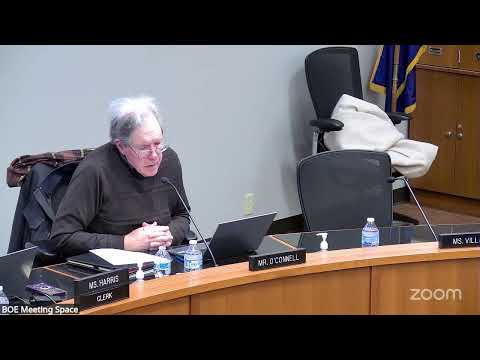
Racine Unified administrators told the board March 3 that personal financial literacy is now a Wisconsin state requirement and the district must include a semester course for the Class of 2028. The presentation prompted sustained discussion among board members about whether that change should replace a required economics course or be added without removing economics.
"Personal financial literacy is now a requirement made, by the state of Wisconsin and we have to include it for the class of 2028," the district presenter said, explaining the timeline and that the district's current freshmen (the class of 2028) will need the course. Staff said the district is evaluating options: rewriting the current economics course to avoid overlap, adopting an existing course from a partner such as Gateway Technical College, or creating a Racine Unified-specific personal financial literacy course.
Administrators told the board the new state law requires a full semester of instruction and that staffing and teacher licensing rules will affect how the course is offered. If the district adopts an existing Gateway course and wants it for college credit, the presenter said only a business teacher could teach it; a local personal financial literacy course could be taught by a social studies teacher, business teacher or other licensed staff depending on state licensure guidance.
Several board members urged preserving economics as a required course. Board member Coe said economics and personal financial literacy are not the same and argued against removing economics from the core requirement. "Personal finance... is not the same class. I think that is a horrible idea, especially after we talked in ABL about rigor," he said. Other members echoed concerns about rigor and equity and asked staff to return with schedule and credit scenarios.
Staff described next steps: the March 3 presentation is an initial step; the district will bring more detailed proposals, schedule options and a public-comment process later in the year. Staff cautioned that graduation-credit totals and schedules would affect final placement of the course and that those decisions will return to the board for review.
The board did not vote on changes March 3; members asked for follow-up information on staffing, high-school credit for middle-school coursework, and how the district will ensure equitable access to elective specialty schools and instrument rental/support for elementary instrumental programs.