Get Full Government Meeting Transcripts, Videos, & Alerts Forever!
Get email alerts on the Procurement Oregon Buys topic
No spam. Unsubscribe anytime.
Committee reviews Oregon Buys adoption; five agencies granted exceptions, SPOTS cards remain data gap
Summary
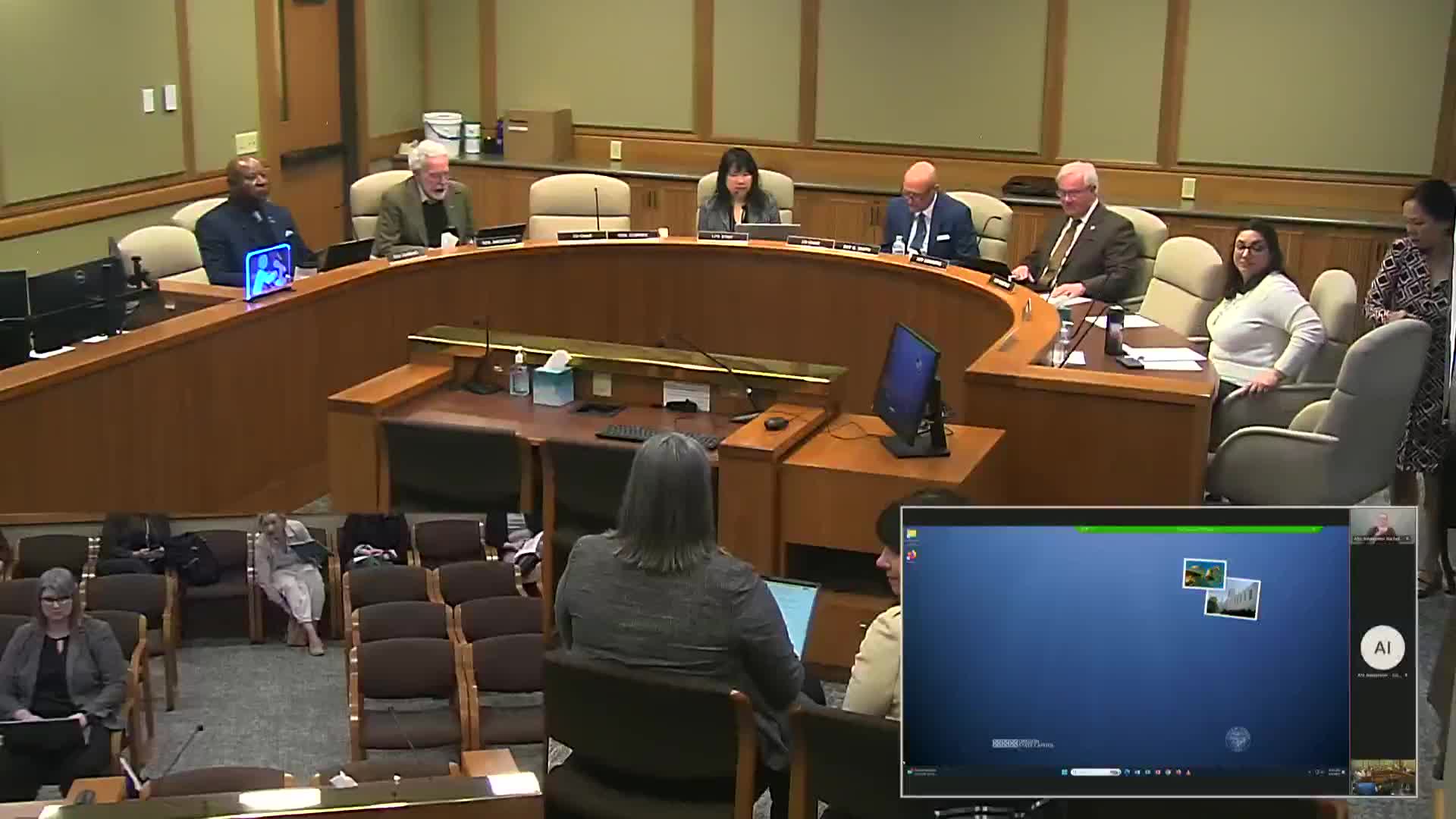
Co‑chair Smith convened an informational HB 5002 hearing March 3 on the Department of Administrative Services, where DAS officials said most state procurement activity lives in Oregon Buys but five agencies have phase‑2 exceptions and SPOTS (corporate) card transactions leave gaps in centralized spend data.
Co-chair Smith opened an informational hearing March 3 on HB 5002, the Department of Administrative Services (DAS) primary appropriation, and asked DAS officials to follow up on procurement questions about the Oregon Buys system.
Debbie Dennis, chief administrative officer and deputy director at DAS, told the subcommittee that all 80 agencies adopted Oregon Buys phase 1 (posting solicitations and contract awards) but five agencies have exceptions or delayed rollouts for phase 2 (purchase orders, invoicing, receiving and requisitions). "The last wave of agencies... we finally went completely live in the system with all of our agencies in September of 2023," Dennis said, adding that the agencies with partial exceptions either requested additional time or use specialized systems that meet their business needs.
The five agencies Dennis identified as having phase‑2 exceptions were the Oregon Department of Fish and Wildlife, the Oregon Employment Department, the Oregon Department of Transportation (ODOT), Oregon Parks, and the Department of Corrections. She said ODOT uses an industry system called AASHTOWare for highway spending and has statutory authority for some highway contracting; ODOT asked for a 12–18 month period to assess whether Oregon Buys could feasibly replace that highway contracting software. Oregon Parks will continue using its distributed inventory system for the life of that product but provides bulk price‑agreement data to DAS. The Department of Corrections will provide quarterly data extracts because its purchase‑order system is integrated with warehousing and inventory operations and would be disruptive to convert immediately.
Dennis summarized how those exceptions are being managed: written agreements with each agency require periodic data sharing and DAS steering‑committee review before exceptions are granted. "Every time that DAS has been asked for an exception, there's been a very thorough process," she said.
Committee members and DAS staff also discussed corporate payment cards, referred to in the hearing as SPOTS cards. Dennis described three principal uses for SPOTS cards: paying invoices (including some that correspond to Oregon Buys purchase orders), paying non‑purchase invoices such as utilities and travel, and incidental purchases (for example, coffee for a community meeting or tools bought in the field). She said many incidental vendors are not registered in Oregon Buys, which makes those transactions infeasible to route through the procurement platform. "We haven't dug into those quite yet, but it is on our list of data projects to be able to analyze," Dennis said of SPOTS‑card transaction data.
Committee members asked how DAS verifies SPOTS‑card transactions are for state business. Dennis described the control steps DAS expects: cardholders submit monthly statements and receipts to supervisors for review and sign‑off, and accounting then inspects transactions for anomalies. She said DAS is planning data projects to reconcile SPOTS‑card statements, external agency exceptions, and financial‑system transactions to produce a better picture of total state spend captured in Oregon Buys.
Lawmakers also asked about rebates and vendor selection for the SPOTS cards. Dennis said agencies receive their own quarterly rebates and DAS receives an enterprise rebate that is allocated into DAS business services to lower rates and assessments. On vendor selection, she said the card program was procured via formal RFP and that DAS believes the current provider is U.S. Bank Visa, but she requested time to confirm and said she would follow up with the committee on the issuer and typical card terms.
Representative Tran asked whether manual work will be required to integrate exception data; Dennis said DAS has business and data analysts and does not yet plan to charge agencies for extra data‑integration work, but that the work will increase staff time until data feeds are automated.
The subcommittee pressed for more specifics about the state's key performance measure (KPM) tracking the percent of procurement spend facilitated by Oregon Buys. Dennis said DAS can accurately report what is inside Oregon Buys now but needs time to bring in exception agency exports, SPOTS‑card transaction data, and other financial‑system overlays before reporting a reliable KPM figure.
The committee requested follow‑up documents and confirmations, including (1) written confirmation of the card issuer and typical terms, (2) ODOT's assessment result on AASHTOWare, and (3) timelines or milestones for data ingest from agencies with exceptions. DAS committed to returning with those details during the DAS presentation week.
DAS framed its approach as pursuing enterprise visibility while accomodating agencies whose specialized workflows make immediate conversion disruptive. The subcommittee did not take any formal votes during the hearing.