Get Full Government Meeting Transcripts, Videos, & Alerts Forever!
Get email alerts on the Timber Harvest Governance topic
No spam. Unsubscribe anytime.
Large public hearing on sustainable harvest-level bill exposes deep divisions over state forest management
Summary
House Bill 3103 (dash-1) drew extensive and divided testimony in a public hearing about whether the State Forester should be required to adopt a sustainable harvest level by rule and be held to manage state forests against that level.
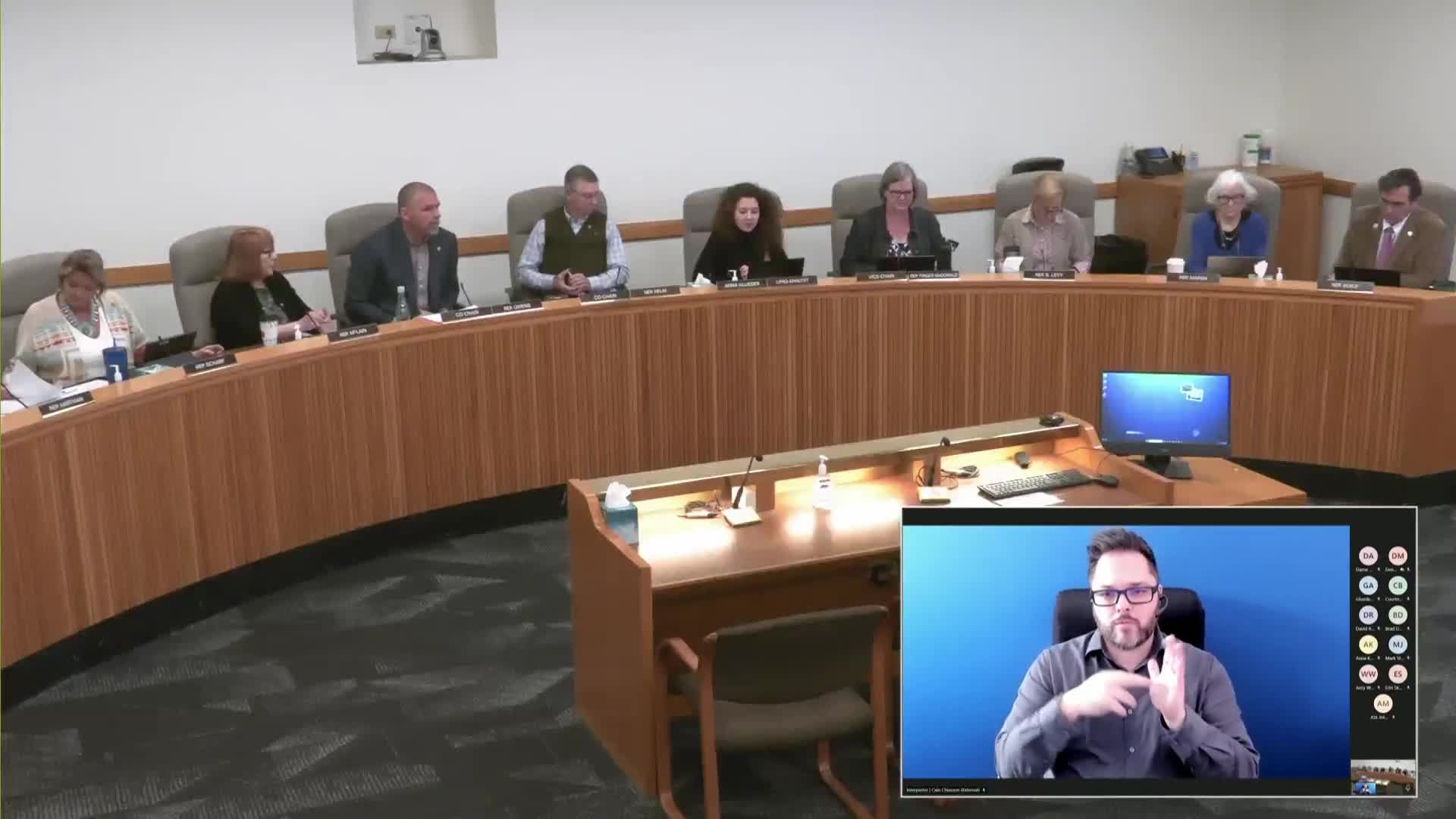
The committee held a lengthy public hearing on House Bill 3103 (dash-1), a bill directing the State Forester to adopt by rule a sustainable timber harvest level for state forests, report annually on timber sales relative to that level and provide procedures for judicial review in limited circumstances. Sponsors and supporters framed the bill as a transparency and good-governance measure that would provide counties and industry with predictable projections for budgeting and mill planning; opponents warned the bill could undermine the Board of Forestry's discretion, conflict with Habitat Conservation Plans (HCPs) and risk ecological and carbon sequestration outcomes.
Committee staff summarized the measure and the dash-1 amendment, stating the bill directs the State Forester to adopt sustainable harvest levels and manage available state lands to achieve those levels "to the degree consistent with other legal requirements." Co-chair Owens and multiple county commissioners and timber-industry witnesses described decades-long reliance on state-forest revenue. Brandon Persinger of the Council of Forest Trust Land Counties and County Commissioners Erin Skarr, Margaret McGruder and Jerry Wiley urged passage, saying counties rely on timber revenues for law enforcement, jails, schools and other public services and that harvest projections have fluctuated sharply in recent years.
Industry witnesses, including Michael Eiesen of the Oregon Forest Industries Council and Dave Kooner of Hampton Lumber, said the department has historically overpromised and underdelivered on harvest projections, harming local economies; they argued for an accountable, transparent process for setting and meeting harvest levels. Supporters emphasized the dash-1 requires the Forest Practices Act, any administrative rule and any Habitat Conservation Plan to be factored into the calculation and allows adjustments for catastrophic wildfire, disease or other large disturbances.
Opponents including representatives of conservation organizations warned that the bill could weaken implementation of the state forest Habitat Conservation Plan and reduce protections for species and carbon sequestration. Rand Schenck of MCAT said state forests recently shifted from being a carbon source to a carbon sink and warned the bill could jeopardize that trend. The Wild Salmon Center requested language changes to remove potential conflicts with the HCP and to preserve the Board of Forestry's authority; the organization and others also opposed the bill's judicial-review and standing provisions as drafted.
Committee leadership and stakeholders acknowledged ongoing negotiations: co-chair Owens said sponsors met repeatedly with proponents and opponents and that some issues have been addressed in the dash-1 amendment, but that additional clarifications remain necessary, particularly to preserve board discretion and to ensure the bill does not impede HCP finalization with federal agencies. The public hearing closed after extensive testimony; the sponsor indicated availability to continue discussions and the committee adjourned without a vote.