Get Full Government Meeting Transcripts, Videos, & Alerts Forever!
Get email alerts on the Education Freedom To Read topic
No spam. Unsubscribe anytime.
Senate committee hears 'Freedom to Read' bill to bar discriminatory book removals
Summary
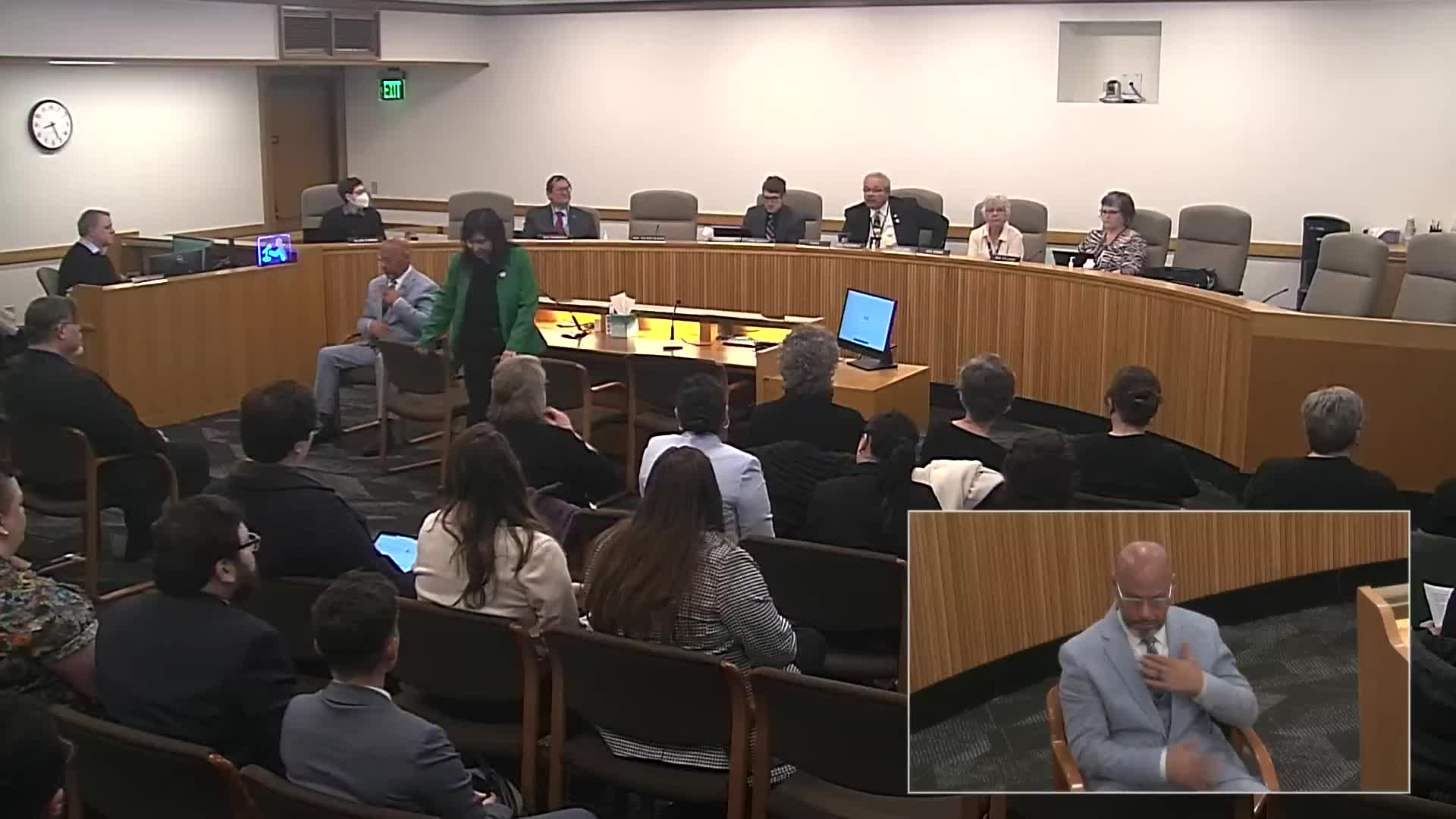
Senate Committee on Education Chair Lou Frederick on March 3, 2025 held a public hearing on SB 1098, a bill that would prohibit book and material removals based on protected characteristics and create Department of Education support for library staff confronting challenges.
Senate Committee on Education Chair Lou Frederick opened a public hearing on March 3, 2025 for Senate Bill 1098, the "Freedom to Read" measure intended to prohibit discrimination as a basis for limiting access to school library and instructional materials and to create a Department of Education position to support school librarians facing challenges.
Sponsor testimony and proponents said the bill would make explicit that removing or restricting a book because of the identities depicted or the identity of the author—race, national origin, sex, gender identity, sexual orientation, religion, disability or other protected characteristics—constitutes unlawful discrimination under state education law. Supporters also asked the committee to provide ODE with a dedicated staff position to help districts and library staff navigate challenges.
"This bill supports the freedom to read," Senator Lou Frederick said in opening remarks, arguing that school collections should not be narrowed by discrimination. Representative Travis Nelson, who testified in support, said SB 1098 strengthens existing law by making it explicit that viewpoint-based removals are discriminatory while not preventing legitimate consideration of age appropriateness or obscenity.
Librarians, teachers, students and civil-rights groups provided much of the testimony. Anne Reyes Frazee, president of the Oregon Library Association and a high-school librarian, told the committee that formal book challenges in Oregon have surged and that nearly half of recently affected libraries were school libraries. "Currently, the only support available comes from a peer-run volunteer group," Reyes Frazee said, and adding an ODE position would provide consistent professional support.
Other witnesses gave examples of disruptive local experiences. Troy Soules, an English teacher at Canby High School, described his district's 2023 experience when 34 titles were removed from shelves amid a challenge; by the end of the year most titles were returned after district review, Soules said, but the school librarian resigned and students felt marginalized during the process.
Civil-rights and advocacy groups urged passage and emphasized First Amendment concerns. Mariana Garcia Medina of ACLU of Oregon said the bill will not block legitimate review for appropriateness but will clarify that removals based on the identities involved are discriminatory. "All students have a First Amendment right to read and learn about the histories and viewpoints of all communities," she told the committee.
Speakers also recounted national data and documented trends. Finn Johnson, a Ph.D. candidate and university instructor, cited PEN America's national counts of book removals and other research linking discriminatory restrictions to higher rates of anti-LGBTQ hate incidents in states with such legislation.
Committee members asked questions and raised concerns from constituents. Senator Robinson said constituents in her district worry SB 1098 could make it harder to remove materials some parents consider "clearly inappropriate for children." Frederick and other witnesses said the bill preserves local review for age appropriateness and that parents may still request materials be withdrawn; the sponsor offered to provide specific local examples requested by Robinson to the record.
The committee closed the public hearing on SB 1098 after hours of testimony and announced the committee record would remain open for two days (48 hours) to allow additional written testimony on OLIS, the Oregon Legislative Information System. No committee vote to pass the bill was recorded at the hearing.
Supporters asked the committee to pass SB 1098 to protect students’ access to diverse materials, to reduce ad hoc local removals, and to provide state-level support for librarians and districts during challenges.