Get Full Government Meeting Transcripts, Videos, & Alerts Forever!
Get email alerts on the Economic Development And Small Business topic
No spam. Unsubscribe anytime.
Portland Diamond Project pitches 32,000-seat retractable-roof MLB stadium at Zidell Yards; project leaders seek SB 5 modernization and state support
Summary
Project leaders told the House Committee on Economic Development, Small Business and Trade that the Portland Diamond Project aims to build a roughly 32,000‑seat retractable‑roof Major League Baseball stadium at Zidell Yards and asked the Legislature to modernize SB 5 and consider public support as part of a broader public‑private financing strategy.
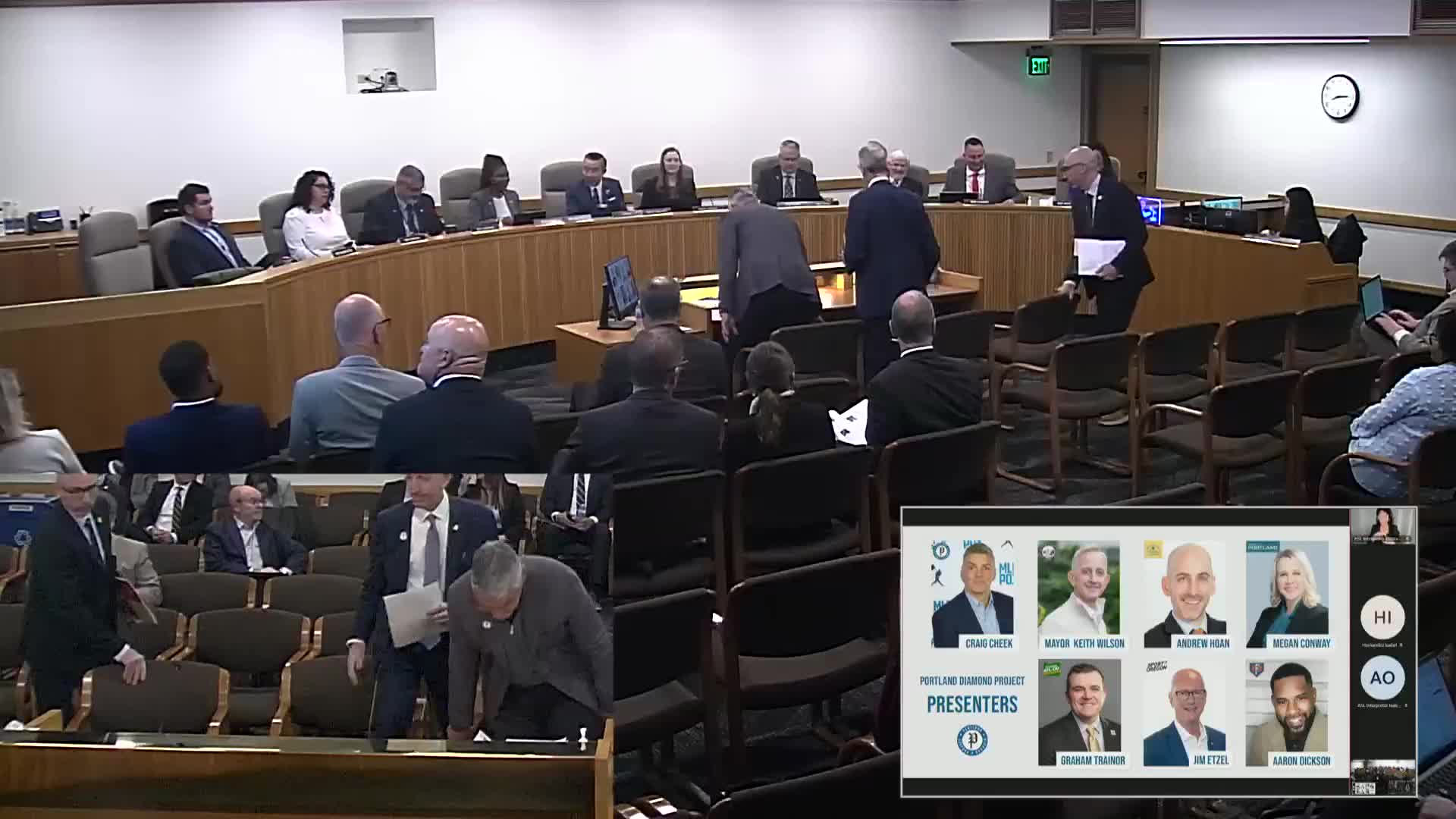
Craig Cheek, founder of the Portland Diamond Project, joined Mayor Keith Wilson and project advisers for an informational briefing describing plans to build a Major League Baseball ballpark and surrounding district at Zidell Yards in Portland.
Project overview and timeline Cheek said the proposal centers on Zidell Yards (described in the briefing as a 31‑acre site) and envisions a world‑class, approximately 32,000‑seat stadium with a retractable roof and riverfront orientation. The team shared renderings in the briefing but said detailed public renderings and a press announcement were forthcoming. Cheek said the group hopes to break ground in 2027 if site preparation and approvals proceed on schedule and believes 2025–26 are critical years for securing partnership and financing.
Costs and financing Cheek told the committee that current cost estimates for a “world class” ballpark range from $1.8 to $2.0 billion. He said the team seeks modernization of SB 5 (a 2003 statute the project described as providing bonding capacity tied to player payroll) to reflect current player salary and revenue structures; the project asked the Legislature to consider authorizing up to roughly $850 million under a modernized SB 5 to create bonding capacity. Cheek described other financing pieces under development including city infrastructure commitments, tax increment or other local financing, private capital from investors, and potential naming‑rights and team revenue streams. He said similar bonds in other cities have often been paid off early and that his group estimates an eventual payoff that would return meaningful revenue to state coffers over time.
Economic and community arguments Presenters cited third‑party analyses and sector data. The project said EcoNorthwest is preparing an economic impact analysis the group expects to share with the committee; presenters summarized their working estimate that the project could generate multibillion‑dollar regional impacts over time and produce substantial visitor spending, hotel stays and spending at retail and restaurants. Project supporters from Travel Portland, Sport Oregon and the Oregon AFL‑CIO described tourism, sports‑industry and labor benefits: Travel Portland’s CEO said 81 home dates would bring incremental visitor days, Sport Oregon cited statewide sports‑economy employment and visitor multipliers, and AFL‑CIO leadership said the project has committed to labor harmony and a project labor agreement for construction and has discussed union representation for stadium jobs.
Public safety, traffic and infrastructure questions Committee members asked about traffic, parking and public safety. Presenters said Zidell Yards benefits from existing transit infrastructure—light rail, streetcar, MAX, the Tilikum Crossing pedestrian bridge and nearby parking resources—and that project teams are meeting with TriMet, Metro, ODOT and PBOT to analyze access and mobility. The project said it aims to emphasize walkability and transit over car‑centric parking and is studying transportation and parking strategies. On safety, Mayor Keith Wilson and project representatives said they would work with law enforcement and community partners to address crime and public-safety needs and that downtown safety metrics have improved in recent years; they also discussed private‑public partnerships and enhanced service districts as tools to support safety around major venues.
Design, sustainability and use Cheek and design advisers said the stadium would aim to be among the most sustainable in North America, using cross‑laminated timber and other green building measures; they noted the retractable roof would add substantial cost (they estimated $300–$400 million more) but provide game certainty and allow year‑round programming. The team and architects (Populous was named) said the stadium would be programmed for more than the 81 home dates and they estimated the facility could host up to roughly 200 event days per year when concerts and other activities are programmed.
Labor and community organizations Graham Trainor of the Oregon AFL‑CIO described a prior commitment by the project to a labor‑harmony agreement with roughly 20 unions and said the labor movement is prepared to work with the project to secure family‑sustaining jobs for construction and stadium operations. Aaron Dixon of Friends of Baseball explained the potential philanthropic partnerships and youth programming that come with a major‑league franchise, and Travel Portland's CEO highlighted tourism benefits and the cluster of apparel and sportswear companies based in the region.
Financing competition and next steps Cheek said Utah has an approved roughly $900 million package as competition in the market and that modernizing SB 5 would be a key lever to make Portland competitive. He said the project is pursuing private capital, city infrastructure commitments and public‑private partnerships, and that Ways and Means and other agencies would see budget and fiscal details as the project advances. The committee did not take formal action on the informational briefing.