Get Full Government Meeting Transcripts, Videos, & Alerts Forever!
Get email alerts on the Economic Development Land Use topic
No spam. Unsubscribe anytime.
Senate committee approves bill creating Beehive Development Agency amid pushback over local control
Summary
The Senate Economic Development and Workforce Services Committee voted 3–2 to pass a substitute for Senate Bill 337, creating a Beehive Development Agency and a coordinated process for large-scale "significant community impact projects" while opponents warned it could bypass local land‑use authority and fast‑track costly projects.
Senate members on the Economic Development and Workforce Services Committee voted 3–2 to pass the first substitute of Senate Bill 337, which creates a Beehive Development Agency and a coordinated state process for what the bill calls “significant community impact projects.” The committee acted after public testimony that ranged from agency officials who supported the bill to municipal and conservation groups who sharply opposed it.
Sponsor Senator Cullimore said the bill is meant to help the state “respond quickly and efficiently to significant economic development opportunities” such as large manufacturing or energy facilities and to avoid applying the tool to routine developments like new subdivisions or retail stores. He described the central idea as a “limited tool for [the Governor’s Office of Economic Opportunity] to create these significant community impact projects” and said the bill would also consolidate housing policy and implementation functions now spread across multiple agencies.
The substitute establishes a Beehive Development Agency as an independent political subdivision and a coordinating council that would include statewide and local representatives and make recommendations to an advisory board and the agency. The measure defines Significant Community Impact Projects (SCIPs) as geographically defined projects that could target job creation, industry, housing, energy or capital investment, and it limits the agency to no more than three SCIPs per year. The bill also restructures the Governor’s Office of Economic Opportunity (GOEO), eliminates GOEO’s existing board, and places additional housing‑coordination responsibilities with the GOEO executive and the new agency.
Ryan Starks, executive director of the Governor’s Office of Economic Opportunity, told the committee the office supports the bill. "If we can place these tools within our tool belt, then I think we'll be able to achieve new heights as we strive to grow Utah's economy," Starks said. GOEO and sponsor remarks said the substitute removes local preemption language that had been in earlier drafts and requires local consent and a public advisory process as part of the agency review.
Opponents said the substitute does not resolve core concerns. Elaine Oakes, an elected local service district trustee speaking as a private citizen, said the proposal “transfers power from elected officials to an unaccountable private entity” and warned it would impose "taxation without representation." Zachary Frankel of the Utah Rivers Council warned the bill could be used to fast‑track multibillion‑dollar water projects and urged the committee to send the bill to interim study. Mary Anne Christensen of Utah Legislative Watch and several county and municipal associations also criticized the bill’s scope, saying it risked undermining local governance and public trust after recent large state projects.
Several local government groups told the committee the substitute had improved. The League of Cities and Towns said the removal of the preemption language moved the bill toward partnership, and the Association of Counties said members appreciated the weekend negotiations and would continue to evaluate the substitute. Brandy Grace, CEO of the Association of Counties, said counties “recognize that there are sometimes large‑scale projects where it would make sense to have a collaborative approach.”
Committee members voiced mixed views. Senator Johnson said he understood the need for coordination on major projects like critical‑minerals or energy infrastructure but said the legislature’s credibility with the public and the late timing of changes in the session made him uneasy. The committee chair and others said the substitute represented meaningful change from the original draft and that moving the bill along would let the legislature continue refining it in later stages.
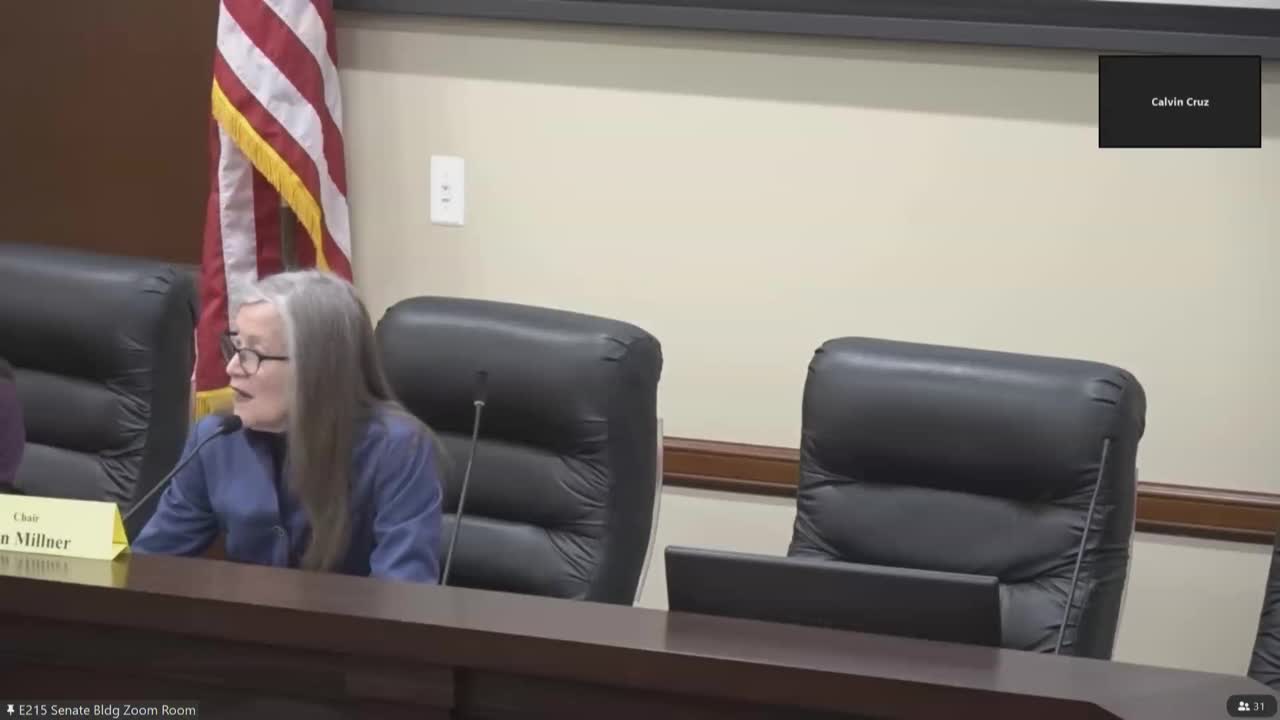
On procedure, the committee first adopted the first substitute by voice vote. Later, after discussion and public comment, President Adams moved to pass the substitute bill out of committee with a favorable recommendation. The roll call on that motion recorded President Adams voting aye, Senator Owens aye, Chair Milner aye, Senator Kwan no, and Senator Johnson no; the motion passed 3–2.
The bill includes a fiscal note the sponsor described as limited to startup costs to cover a housing director position and initial administrative costs, estimated “no more than $500,000.” Committee members and public speakers asked for further clarity on specific authorities, oversight, and how the agency would interact with existing state land uses and utility regulation.
The committee encouraged continued stakeholder work during the interim and signaled the measure will move forward to additional hearings and floor consideration where legislators said they will continue refining the scope of the Beehive Development Agency and the metrics for SCIPs.