Get Full Government Meeting Transcripts, Videos, & Alerts Forever!
Get email alerts on the Precious Metals Tax topic
No spam. Unsubscribe anytime.
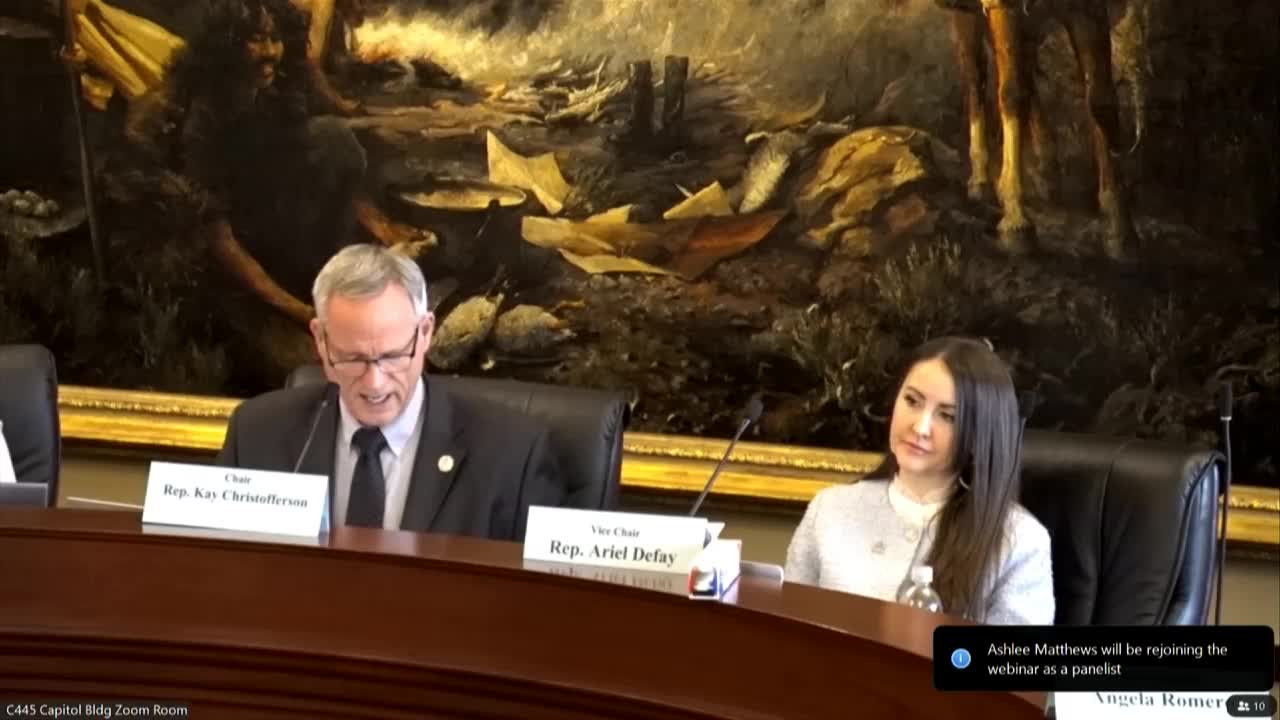
Committee approves plan allowing some miners to pay state taxes in gold; bill advances 6–4
Summary
A House committee adopted a first substitute and voted 6–4 to favorably recommend HB 528, which lets qualifying in-state precious-metal producers pay certain state taxes in investment-grade gold and receive tax credits intended to spur critical-mineral production.
A House committee on March 3 adopted a first substitute and voted 6–4 to favorably recommend House Bill 528, a measure that would allow qualifying precious-metals producers to pay specified state tax obligations in investment-grade gold and receive tax credits intended to incentivize mining activity tied to critical minerals.
Representative Ivory, the bill sponsor, told the committee HB 528 emerged from a study group and is intended to “build an income stream in precious metals” and help attract mining activity that can co-locate production of critical minerals. Ivory said the first substitute delays the bill’s effective date to Jan. 1, 2027, to give operators time to prepare and to reduce the immediate fiscal impact.
Brian Summers, president of the Utah Mining Association, told the committee that precious metals are often co-located with the rare and strategic elements on the Department of the Interior’s critical-minerals list. “Anything that we can do to incentivize the production of those underlying commodities like gold and silver … will help us to increase our critical mineral production here in the state,” Summers said.
State Treasurer Marlo Oakes told the committee the treasury can handle receipts in gold and that the bill provides credits for mining operations: a five-year credit for existing operations and a 15-year credit for new operations. The sponsor and supporters framed the package as a way to attract capital and spur production of minerals deemed important for national and economic security.
Opponents and some committee members expressed concern the bill, as drafted, could allow entities without a Utah mining presence to benefit, and that it mixes subsidy decisions with payment-format choices. Representative Thurston asked how paying the treasury in gold — or allowing gold as a payment medium — creates a production incentive; supporters responded the incentive is a tax discount available only to producers and that the measure would help build state-held gold reserves and new financing options.
Action and vote: The committee adopted the first substitute and then voted 6–4 to favorably recommend First Substitute HB 528. Roll call recorded “no” votes from Representatives Thurston, Romero, Dominguez and Chair Kaye Kristofferson; “yes” votes were Representatives Sawyer, Roberts, Peterson, Matthews, Ivory and DeFe.
Why it matters: Supporters characterized the proposal as a strategic, pro-growth step to expand domestic critical-mineral production and to create additional state-held precious-metal reserves; critics called for tighter limits to ensure credits reach Utah-based production and to avoid subsidies that could be claimed without local production.
What’s next: The bill advances to the House with a favorable recommendation. Sponsors and committee members indicated willingness to refine language on producer eligibility and foreign ownership before floor consideration.