Get Full Government Meeting Transcripts, Videos, & Alerts Forever!
Get email alerts on the Csam Law topic
No spam. Unsubscribe anytime.
Committee moves bill updating child sexual-abuse-material statutes to address streaming and cloud storage
Summary
Senate Bill 144 (second substitute) clarified and broadened definitions and elements for child sexual abuse material (CSAM) offenses, removing mandatory minimums from an alternative bill and winning unanimous committee support amid testimony from law enforcement and victim advocates.
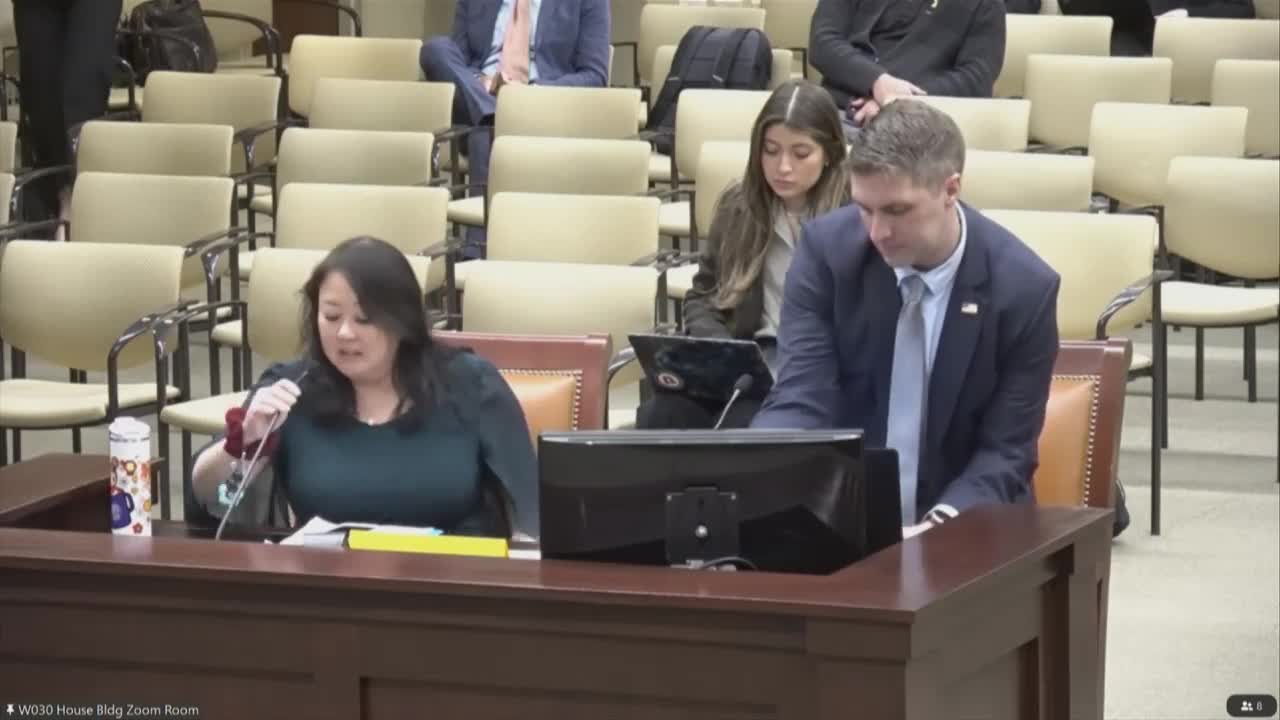
Senator Kwan and assistant attorney general Carl Holland presented a second substitute to Senate Bill 144, which amends Utah law related to child sexual-abuse material (CSAM) and related offenses. The sponsor said the substitute aligns with Representative White’s HB 207 but omits mandatory-minimum sentencing provisions so the bill could move forward without a fiscal note.
The measure updates definitions and elements to address new technologies cited by witnesses, including cloud storage and live streaming. Carl Holland of the Attorney General’s Internet Crimes Against Children Task Force said the changes are intended to close gaps that allow CSAM to be distributed via new platforms and reiterated the harms to victims that persist when material is repeatedly viewed and shared.
Multiple law-enforcement witnesses presented data showing a marked increase in tips from the National Center for Missing and Exploited Children (NCMEC) to Utah authorities in recent years; Nate Mudder, chair of the Law Enforcement Legislative Committee, reported NCMEC tip counts rising from about 1,661 in 2019 to 6,810 in 2024. Victim advocates and Utah PTA supported the bill as written; the Sentencing Commission and CCJJ signaled support for changes that do not add mandatory minimums.
One public commenter raised broad concerns about the bill’s language on intentional viewing and argued that the bill could be read to criminalize inadvertent exposure; committee members asked staff to consider that feedback, and the sponsor said the bill is a policy change intended to keep pace with evolving technology. The committee adopted the second substitute and unanimously voted to favorably recommend the bill to the floor.