Get Full Government Meeting Transcripts, Videos, & Alerts Forever!
Get email alerts on the Unemployment Insurance topic
No spam. Unsubscribe anytime.
Senate Commerce Committee advances bill tightening penalties for unemployment insurance fraud
Summary
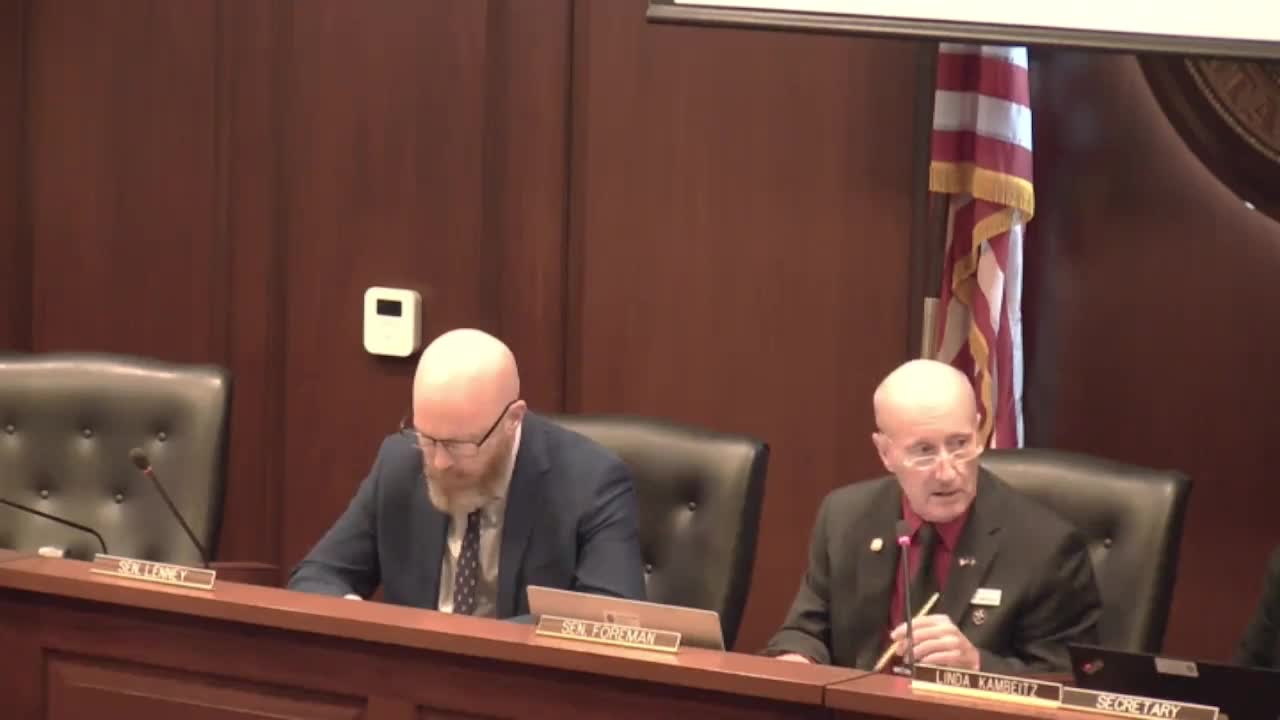
The Senate Commerce Committee voted to send House Bill 53 to the full Senate with a recommendation that it "do pass" after a presentation by Janie Revere, director of the Idaho Department of Labor.
The Senate Commerce Committee voted to send House Bill 53 to the full Senate with a recommendation that it "do pass" after a presentation by Janie Revere, director of the Idaho Department of Labor.
Janie Revere, director of the Idaho Department of Labor, told the committee the bill updates the state's statutes addressing claimants who commit unemployment insurance fraud, including moving key legal definitions into statute and strengthening penalties. "This bill identifies identity theft and makes it a crime to use stolen identity to apply for UI benefits," Revere said, adding the proposal allows for restitution to victims and creates stiffer administrative consequences for repeat offenders.
The bill makes four principal changes, according to Revere: it codifies definitions of "knowingly" and "willfully" into statute; it increases disqualification periods for repeat fraud (a second fraud would lead to a two-year disqualification, a third to three years, and so on); it creates a misdemeanor/felony distinction for fraud based on a $1,000 threshold (misdemeanor for less than $1,000, felony for $1,000 or more); and it establishes a specific crime for unemployment insurance identity theft with the ability to award up to $1,000 in restitution to victims. Revere said the department expects an estimated savings of $152,000 to the unemployment insurance trust fund in the first year as a result of longer ineligibility periods, with a projected $112,000 in later years.
Revere described the existing framework for overpayments and penalties: fraud overpayments arise when a claimant makes false statements, with existing penalties of 25% for a first fraud, 50% for a second, and 100% for a third (in addition to repaying the overpayment and interest). Using her example, Revere said a $1,000 fraudulent payment that is a claimant's third fraud would require repayment of the $1,000 plus a $2,000 penalty and a multi-year disqualification under the proposed changes.
Revere also cited outside recognition of Idaho's efforts: she said the Department of Justice COVID-19 fraud enforcement task force identified Idaho as one of two states that performed "outstanding" fraud prevention and detection during the pandemic. The director said the U.S. Department of Labor had urged states to reduce harms to victims of identity-theft claims, and that the restitution provision is intended to address that concern.
There was no public testimony on the bill. Senator Guthrie moved to send House Bill 53 to the Senate floor with a do-pass recommendation; the motion was seconded by Senator Nichols. The committee approved the motion by voice vote; no roll-call tally was taken and the chair declared the motion carried.
Background: Revere reviewed how unemployment insurance in Idaho operates as a federal-state partnership, how eligibility and weekly certifications work, and how the department handles overpayments, investigations, collections and appeals. She said claimants in Idaho are eligible for benefits that vary by weekly amount and by number of weeks based on statutory formulas and the unemployment rate, and that overpayments from the 2020 pandemic period produced elevated recovery work in subsequent years.
The committee did not ask further questions after Revere's presentation and took no amendments on the bill before advancing it to the floor.