Get Full Government Meeting Transcripts, Videos, & Alerts Forever!
Get email alerts on the School Safety Sb61 topic
No spam. Unsubscribe anytime.
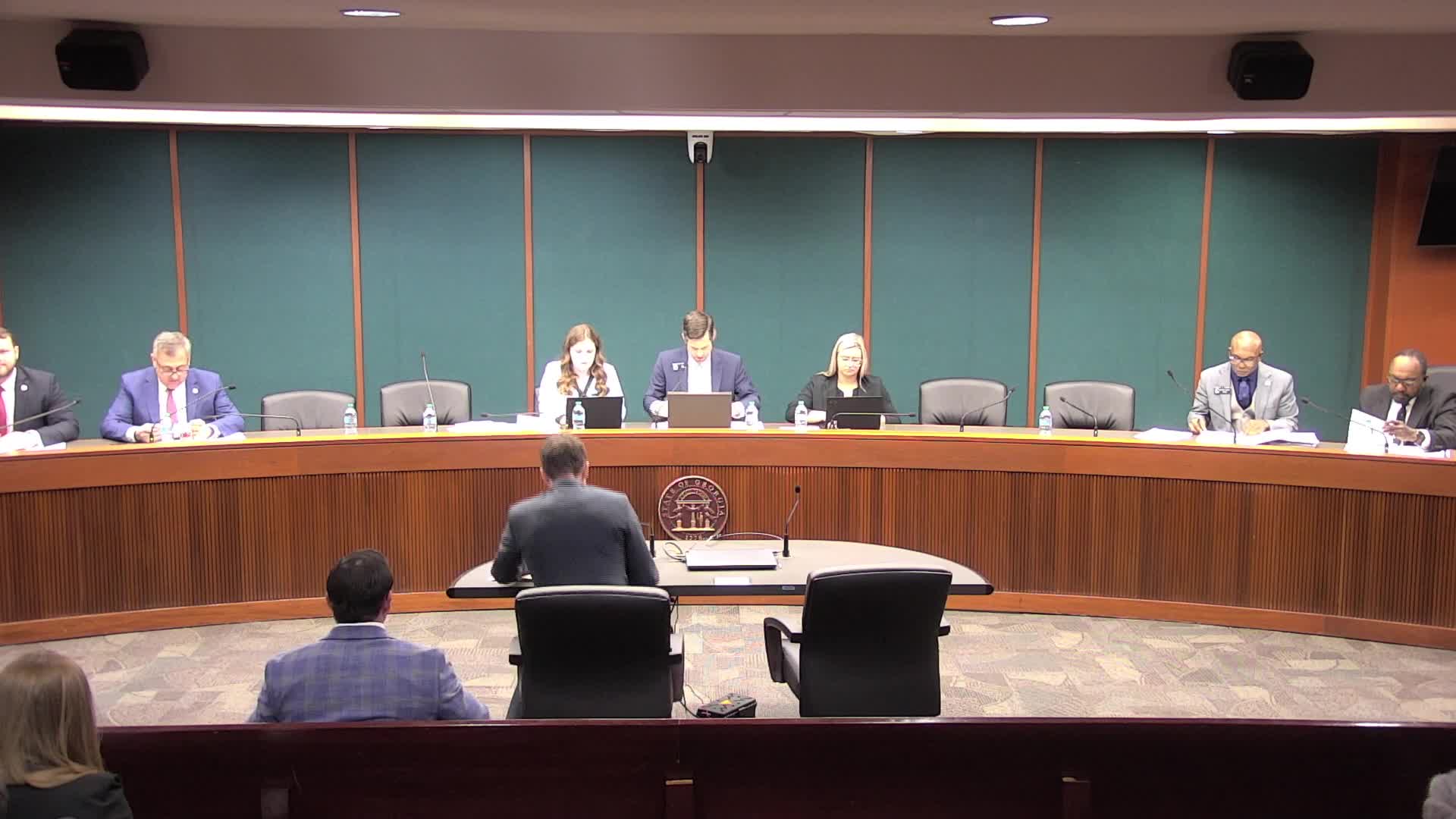
Senate committee advances school-safety bill after hours of debate on juvenile charges and threat reporting
Summary
Senators advanced Senate Bill 61 on a 7-2 committee vote Tuesday after more than an hour of testimony and public comment over new criminal definitions, information‑sharing rules and annual threat assessments for schools.
Senators advanced Senate Bill 61 on a 7-2 committee vote Tuesday after more than an hour of testimony and public comment over new criminal definitions, information-sharing rules and annual threat assessments for schools.
The substitute version of the bill, introduced on the Senate floor by Senator Dolesale, would create terroristic acts and terroristic threats aimed at public schools, expand Superior Court jurisdiction for certain aggravated assaults and aggravated batteries involving firearms, and require schools to be notified when a student is on electronic monitoring, intensive supervision or home confinement. It also directs a once‑a‑year site threat assessment — to be coordinated with the Georgia Emergency Management and Homeland Security Agency (GEMA) or an approved vendor — to inform school safety plans.
Supporters, including law‑enforcement officials and some prosecutors, said the changes would give authorities tools to intervene earlier in planning stages and to ensure consistent, annual reviews of school vulnerabilities. Senator Dolesale said the substitute narrows the original bill by leaving terroristic threats in juvenile court while reserving terroristic acts for Superior Court and by removing earlier proposals on data‑sharing and enrollment disclosures that will be carried in a companion bill.
Opponents from civil‑rights and education groups urged major changes or rejection, saying the expanded criminal definitions risk pushing students into adult court and worsening the school‑to‑prison pipeline. Iman Emdad, policy associate at the Council on American‑Islamic Relations, described a case he said would be worsened by the earlier bill text: a high‑school student who simulated a gunshot sound on a phone and initially received severe school discipline. "If SB61 was law, this incident would have been even worse for Adam," Emdad said, arguing that criminal penalties can have irreversible consequences for teenagers.
Georgia Appleseed's legal and policy director, Darlene Lynch, urged restoring a corroboration requirement in the terroristic threat language and recommended requiring behavioral threat assessments and disability carve‑outs modeled on later Tennessee amendments. Lynch said past cases show many students flagged for threats include children with autism or other disabilities, and that Tennessee’s experience required legislative correction after schools and law enforcement saw large numbers of prosecutions of impulsive or developmentally impaired students.
Department of Juvenile Justice representative Margaret K. Wood warned about operational impacts: detentions could increase because Superior Court cases can keep youth in custody longer (she said some detained youth could be held up to 180 days before indictment) and probation officers could face reporting burdens if the bill expands court reporting requirements.
Advocates for behavioral‑health services cautioned the bill does not direct referrals to mental‑health resources. Caitlin Ward of the Carter Center said criminalization rather than treatment is likely to exacerbate problems rather than reduce them.
Senate debate included technical clarifications from the author. Dolesale said the substitute removed two items — expanded data‑sharing and a parental disclosure requirement about prior expulsions — and limited the conduit of threats into Superior Court to better separate juveniles who threaten from those who commit terroristic acts. The substitute also formalizes annual updates for school safety plans based on site threat assessments.
The committee passed the substitute motion, moved by Leader Hatchett and seconded by the pro tem, by a recorded voice and hand vote of seven in favor and two opposed. The committee chair and the author signaled willingness to consider amendments to address concerns raised in testimony, including potential disability‑related safeguards and reinstating corroboration standards for certain criminal provisions.
With the committee vote, the bill will move to the full Senate for further consideration; the transcript record shows the committee asked the author to work on details and suggested potential floor amendments addressing disability exclusions and corroboration safeguards.