Get Full Government Meeting Transcripts, Videos, & Alerts Forever!
Get email alerts on the Food Safety topic
No spam. Unsubscribe anytime.
Oklahoma committee approves bill to ban certain synthetic dyes in foods, sets phased start dates
Summary
Senate Bill 4, which would prohibit specified chemical dyes and additives in certain food products and require disclosure of chemical food additives, won committee approval after extended debate over industry impacts and enforcement.
Senate Bill 4, which would prohibit specified chemical dyes and additives in certain food products and require disclosure of chemical food additives, won committee approval after extended debate over industry impacts and enforcement.
The bills sponsor, Senator Thompson, told the committee: "Senate Bill 4 prohibits any person or entity from manufacturing, selling, brewing, or distributing certain dyes and substances in food products beginning January fifteenth of 20 27. Ingestible medications beginning January eighteenth of 20 28. Senate bill 4 also requires a warning label disclosing all chemical food additives, upon enactment of this, bill." He added that "the Department of Ag will promulgate rules. Any administrative fines that would be assessed go to the local food for schools program."
Why it matters: The proposal would change what manufacturers can sell in Oklahoma and create state enforcement and labeling duties. Sponsor and supporters framed the measure as a public-health intervention, citing assessments of clinical trials and examples of other jurisdictions moving to limit dyes. Opponents and some committee members raised questions about impacts on small businesses, compounding pharmacies and charitable food providers.
Substantive debate and details
Committee members pressed the sponsor for specifics. Senator Bullard asked, "Is this more government regulation in a private business or less?" and expressed concern about government intrusion into private industry. Senator Kern raised pharmacist and compounding concerns, noting that "when they compound they have to use something with a dye in there to make sure that both ingredients are mixed properly," and asked whether the bill accounts for that practice. Senator Thompson responded the measure would give smaller compounding pharmacies time to reformulate and that he expects federal guidance will be available before the ingestible-medication effective date.
On implementation and enforcement, Senator Hicks asked about labeling provisions and penalties. Thompson said the Department of Agriculture would promulgate rules and that the bill treats each day a violation continues as a separate offense to address repeat noncompliance. When asked whether penalties apply to manufacturers or retailers, the sponsor said penalties are targeted at manufacturers.
Supporters pointed to research and examples elsewhere. Thompson cited an "assessment in 2021" that reviewed clinical trials and listed jurisdictions that have restricted dyes or additives, telling the committee: "West Virginia actually did a statewide ban just last Friday. California has done this in school lunches. We have legislation in Missouri, Illinois, Pennsylvania, New York, Iowa, Maryland, Oregon, South Dakota and Rhode Island." He argued that many manufacturers already have reformulations in place for markets in Canada and Europe.
Concerns raised
Multiple senators said they were open to continuing work on the measure. Senators asked about food-bank donations, warning that donated products could be affected; the sponsor said he had not yet spoken with food banks but was willing to collaborate. Members also asked whether banning items like sodium nitrate could bring unintended food-safety risks such as increased botulism; the sponsor acknowledged risks and said that was part of the reason she struck the bill title and wants further conversations.
Vote and next steps
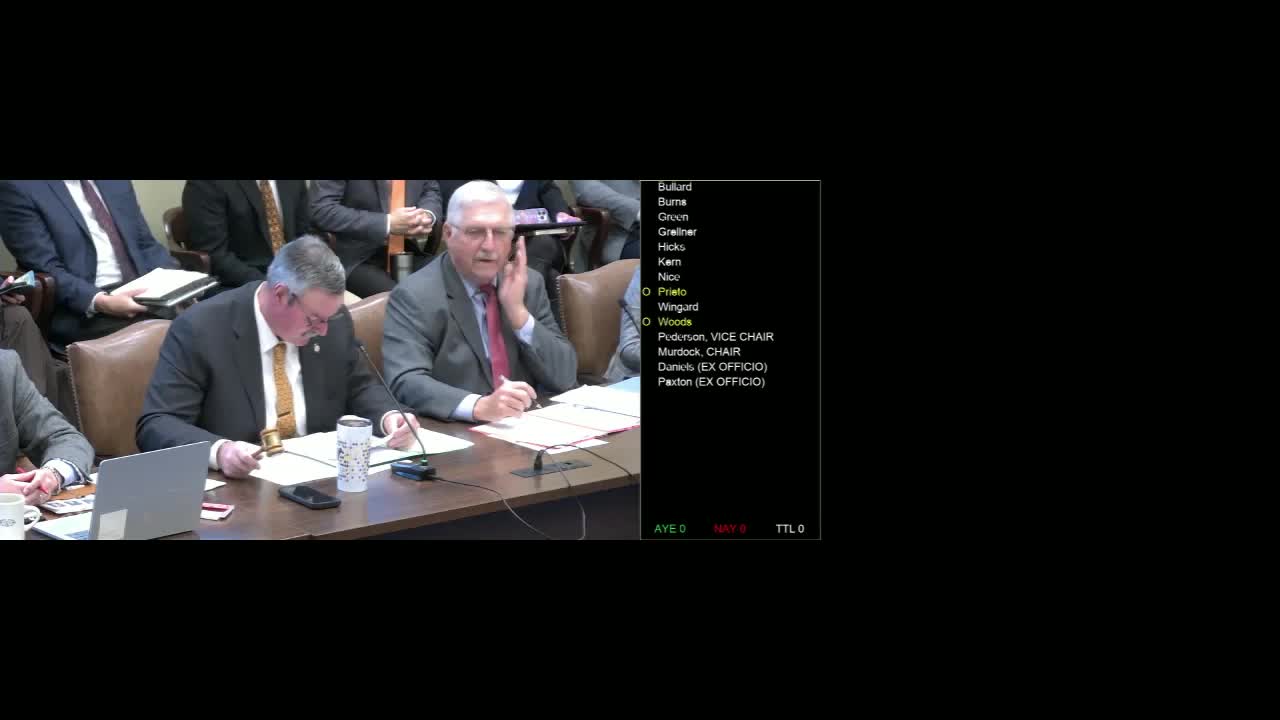
The committee recorded a "do pass" motion by Senator Peterson, seconded by Senator Green. The clerk recorded the committee vote as 10 yes, 1 no and 1 constitutional privilege; the chair declared the measure to have passed the committee. The bill as presented requires the Department of Agriculture to write rules and sets an initial effective date for food products of Jan. 15, 2027 and for ingestible medications of Jan. 18, 2028. Administrative fines assessed under the proposed enforcement would be directed to the local food-for-schools program.
Ending note
Sponsor Senator Thompson closed by reiterating he is willing to work with colleagues on adjustments and said the bill "gives Oklahomans the freedom to know what they're actually putting in their bodies." The bill now moves to the next steps in the legislative process for further consideration.