Get Full Government Meeting Transcripts, Videos, & Alerts Forever!
Get email alerts on the Healthcare Conscience Bill topic
No spam. Unsubscribe anytime.
Conscience‑protection bill for health workers fails in committee after contested debate
Summary
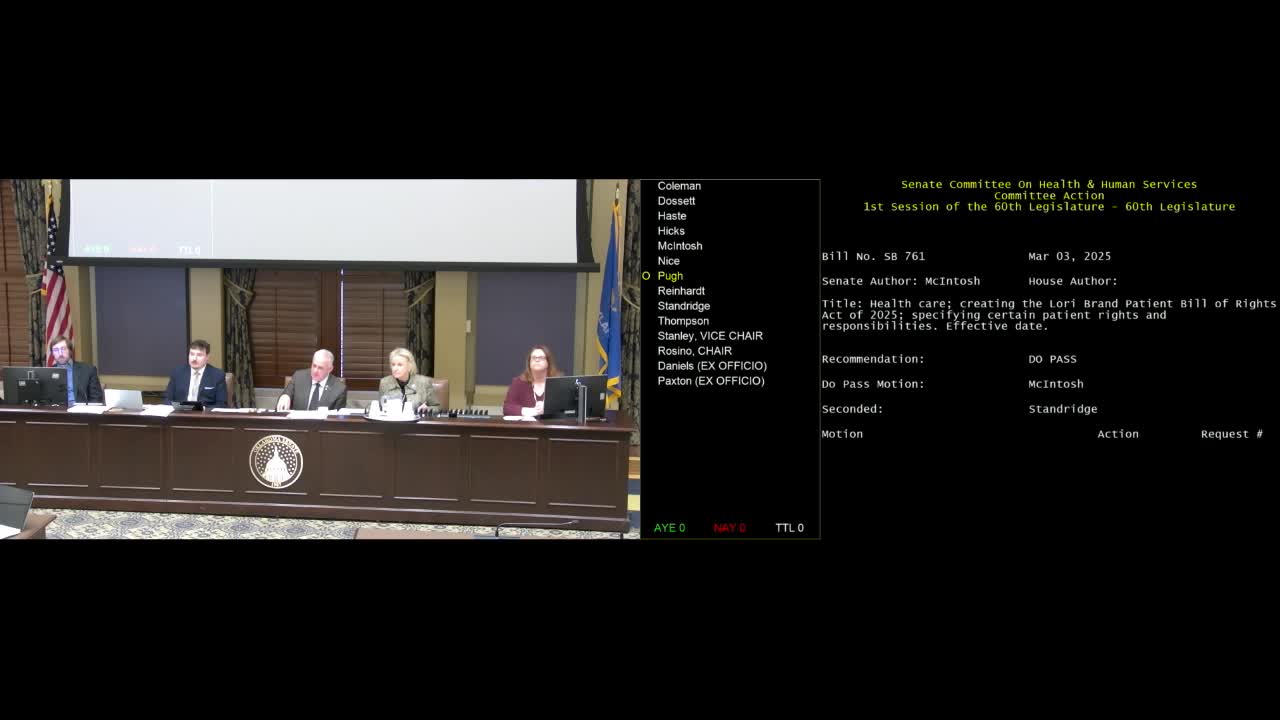
Senate Bill 9 59, which would have codified protections allowing health‑care professionals and religious institutions to decline certain nonemergency elective procedures on conscience grounds, failed in committee 5‑7 after lengthy questioning about definitions, patient access, and insurer effects.
Senator McIntosh introduced Senate Bill 9 59, which the sponsor described as protecting the "deeply held religious and ethical conscience rights of health care professionals" and allowing them to decline to perform nonemergent elective procedures that conflict with their beliefs. The sponsor said the bill seeks to put into statute protections akin to guidance in professional codes of ethics.
Committee members asked detailed questions about the bill’s language and potential effects. Senator Hicks asked where the bill’s definition of discrimination came from; the sponsor said he drew language from multiple bills and current statute. Senators pressed whether the bill would allow institutions to refuse procedures (the sponsor said a religious institution could decline to perform procedures consistent with its beliefs and asserted that "over 60% of the hospital beds in our state" are in religious institutions). Senator Reinhart asked whether insurers could use the bill to deny covered claims; the sponsor replied insurers already disclose coverage in their plan materials.
Senator Stanridge asked whether the bill aligned with generally accepted medical ethics; the sponsor cited the AMA Code of Medical Ethics and read from it, saying physicians should have latitude to act in accordance with conscience. Committee members probed examples the sponsor offered—such as gene therapy on fetuses or chimeric research—and whether access for unmarried patients with sexually transmitted diseases could be affected; the sponsor answered affirmatively in examples but said institutional religious beliefs can currently limit services.
The sponsor acknowledged the bill had supporters in religious legal groups; he asked an outside attorney to be available to answer technical questions. Several senators voiced concern about the bill’s effect on patient access and whether payers might deny coverage. At the end of debate, the clerk recorded 5 ayes and 7 nays and the chair declared Senate Bill 9 59 failed.