Get Full Government Meeting Transcripts, Videos, & Alerts Forever!
Get email alerts on the Colstrip Water Infrastructure topic
No spam. Unsubscribe anytime.
House panel backs $2 million annual set‑aside from coal severance fund for Colstrip water infrastructure
Summary
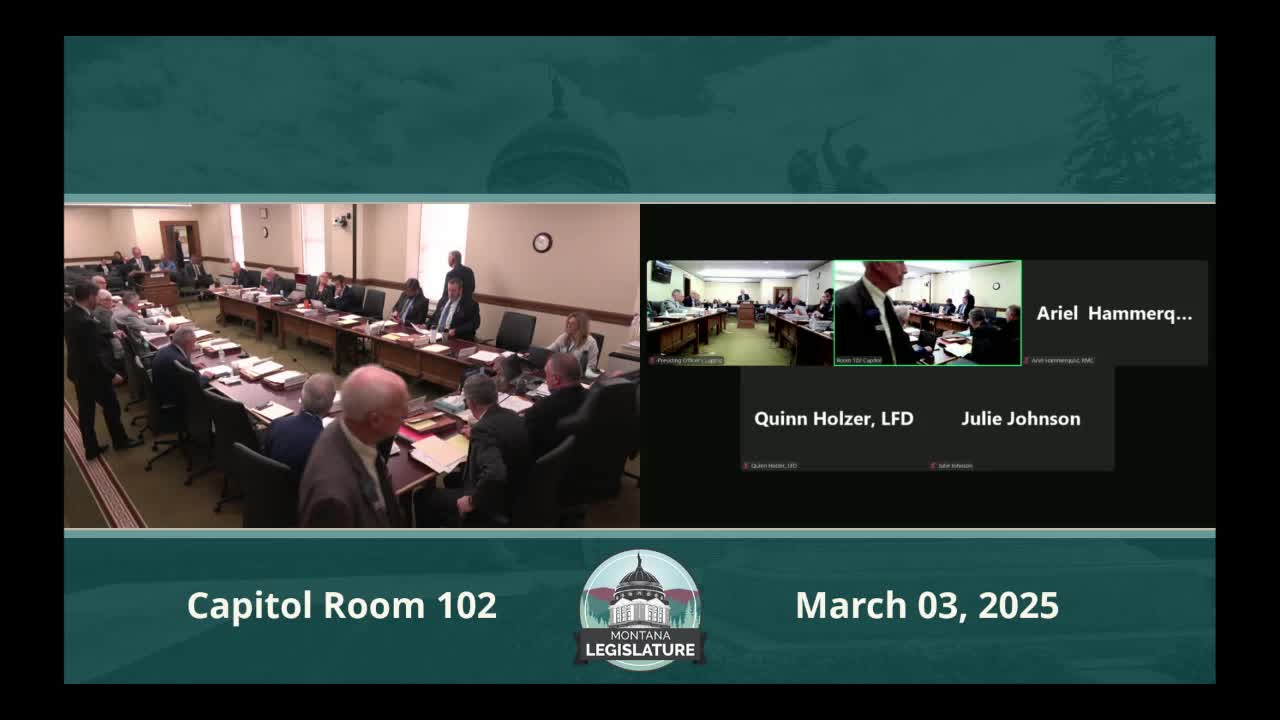
The House Appropriations Committee voted 22–1 to give House Bill 368 a do‑pass recommendation, creating a $2 million per year carve‑out from coal severance receipts to set aside funds for water and sewage infrastructure serving Colstrip and nearby areas.
The Montana House Appropriations Committee voted 22–1 to give a do‑pass recommendation to House Bill 368, which would earmark $2 million annually from coal severance receipts to a dedicated account for water and wastewater infrastructure for Colstrip and surrounding communities.
Representative Woody Perry, sponsor of House Bill 368, told the committee the proposal is intended to be proactive: rather than wait until pipelines or treatment systems fail and require “$40 to $80 million,” the bill would reserve $2 million a year from the coal severance distribution that otherwise flows to the general fund.
The bill sets aside the $2 million from the portion of coal severance receipts that would otherwise be transferred to the general fund; Representative Perry said the general‑fund remainder from coal severance totaled about $18 million in the most recent year and that the $2 million is a planned carve‑out. “What this is doing is saying, let's not wait. Let's set this aside. Let's do it right,” Perry said.
Proponents at the hearing included Mark Taylor, representing Tallon Montana, which co‑owns the Colstrip facility; Mark Baker of ABS Legal, representing Puget Sound Energy; Jim Atchison, executive director of Southeastern Montana Development; and Duane Ankney, who described the historical purpose of the severance tax for communities like Colstrip.
Mark Baker said decommissioning and long‑term remediation will take decades and that small, recurring transfers from the coal severance fund could be “manageable over the next several years” to preserve water infrastructure during and after plant operations.
Committee members pressed the sponsor on duration and source of funding. Representative Tuss asked whether the $2 million deposit continues in perpetuity; Representative Perry replied the deposit continues only while coal is being mined, and would stop once mining ceases. Representative Schillinger added that a future legislature could change the statutory allocation, distinguishing this set‑aside from constitutional trust protections.
Representative Powers asked whether the plant owners contributed money; Perry said they did not and that the proposal relies solely on coal severance tax proceeds. Perry and multiple proponents framed the transfer as an appropriate use of severance receipts because the tax revenue originates from coal production that benefited the community.
The committee completed an executive action and then took a roll‑call vote. The clerk reported 22 yes votes and 1 no vote; the motion carried.
The bill now moves on with a do‑pass recommendation from the House Appropriations Committee.