Get Full Government Meeting Transcripts, Videos, & Alerts Forever!
Get email alerts on the Civil‑rights‑and‑liberties topic
No spam. Unsubscribe anytime.
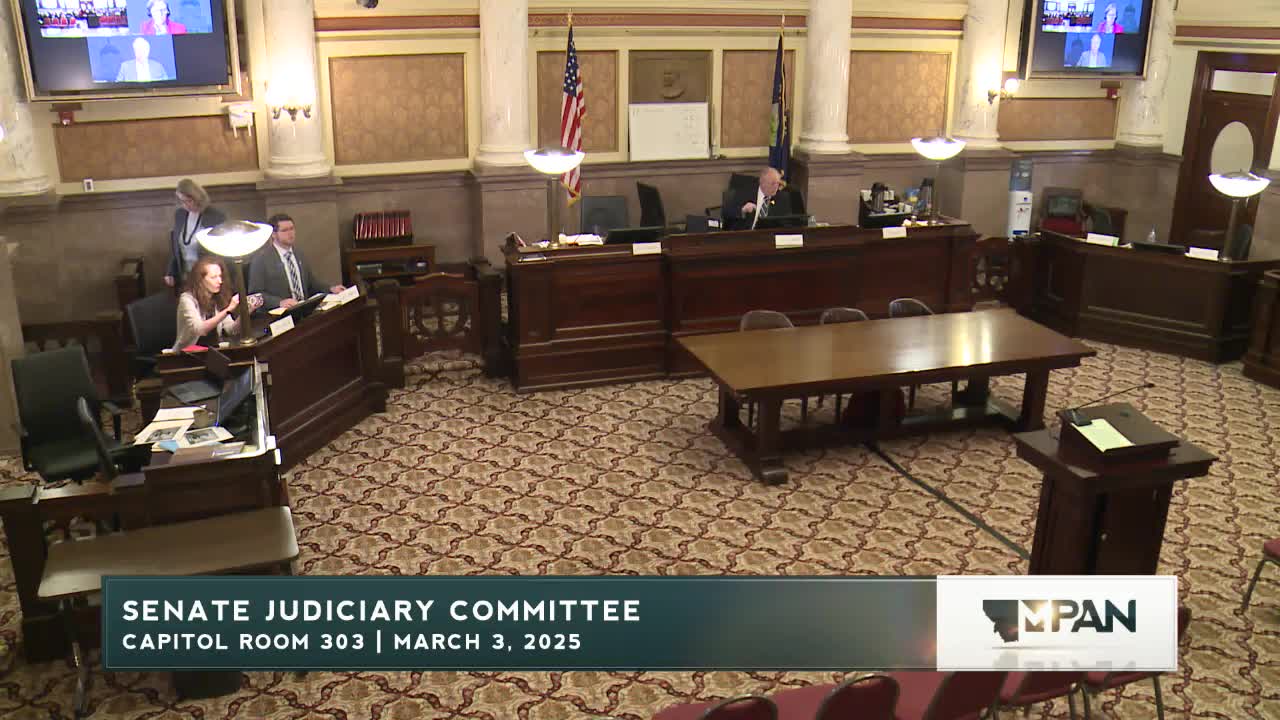
Senate Judiciary hears hours of testimony on SJ 15 urging Supreme Court to revisit Obergefell; committee tables resolution
Summary
Senate Joint Resolution 15, urging the U.S. Supreme Court to reconsider Obergefell v. Hodges and return marriage definitions to the states, drew lengthy public testimony for and against. The Judiciary Committee ultimately tabled the resolution after a failed motion to pass it out of committee.
Senate Joint Resolution 15, carried in the hearing by Senator Bob Phelan, calls on the U.S. Supreme Court to reconsider its 2015 decision in Obergefell v. Hodges and to return the question of marriage definition to the states. Phelan told the committee he views Obergefell as an "illegitimate overreach" and said that Montana voters approved a constitutional amendment in 2004 (CI‑96) defining marriage in state law.
The hearing drew a large public turnout and extensive online sign‑ups; proponents argued the resolution defends state sovereignty and longstanding understandings of marriage, while opponents said the issue is settled law, that the resolution would cause real harm, and that the committee’s time would be better spent on other policy matters.
Proponents’ remarks included constitutional arguments and personal testimony emphasizing traditional marriage and religious liberty. Sponsor Bob Phelan said Obergefell "is at odds with the Constitution of the United States and the principles on which The United States was established." Proponents cited CI‑96 (2004 Montana initiative) as evidence Montana voters had spoken.
Opponents included dozens of individual Montanans and representatives of organizations who described concrete family‑level harms and constitutional protections. SK Rossi of the Montana Coalition Against Domestic and Sexual Violence said, "This issue is settled," and urged lawmakers to reject the resolution; other opponents described the practical legal and personal consequences of revoking recognition of same‑sex marriages.
Several speakers recounted personal experiences: couples, parents and children spoke about legal and caregiving benefits that marriage provides. Some opponents noted that Obergefell relied on substantive due process precedent and warned that the resolution’s rhetoric could be used to challenge other unenumerated rights.
Committee action: After extended testimony, the committee took a motion to give the resolution a do‑pass recommendation; that motion failed on roll call. Senators then voted on a motion to table SJ 15; the motion to table passed 6–2. The chair announced the resolution is tabled.
What it means: Tabling keeps the resolution from moving forward. The hearing captured a sharply divided public and underscored the political sensitivity and legal complexity around marriage equality, federal precedent and state‑level approaches.
Vote details recorded in committee: initial motion to pass did not carry; motion to table passed 6–2.
Next steps: SJ 15 is tabled in Senate Judiciary. The public testimony is part of the official committee record but the resolution will not advance unless the tabled status is later rescinded.