Get Full Government Meeting Transcripts, Videos, & Alerts Forever!
Get email alerts on the Agriculture Forestry topic
No spam. Unsubscribe anytime.
House passes bill barring local bans on mobile sawmills operating on agricultural land
Summary
House Bill 413 passed after floor debate. The legislation prevents local governments from prohibiting mobile sawmills on agricultural property while preserving local zoning authority; sponsors said the bill supports rural economies and wildfire mitigation.
The House passed House Bill 413 on Monday, a measure that prevents local jurisdictions from enacting ordinances that prohibit the operation of mobile sawmills on agricultural land while explicitly preserving local zoning authority.
Representative David Jenkins, sponsor of the bill, said mobile sawmills allow landowners to process timber on-site, reduce waste and help rural economies. “This bill is not about removing oversight, but about ensuring that common sense agricultural practices are not hindered by unnecessary regulations,” Jenkins said.
Members questioned whether the bill preempts local control of zoning. Jenkins and supporters said the legislation does not remove zoning authority; rather, it clarifies that mobile sawmill activity is an agricultural practice where agricultural zoning applies. Jenkins said the bill references trailer-mounted and small-scale, commercial sawmills to address concerns about scale and safety.
Representative Jasmine Clark and others expressed concern about potential erosion of local land-use control. Sponsors responded that changing zoning typically involves a formal process in which property owners and local governments participate.
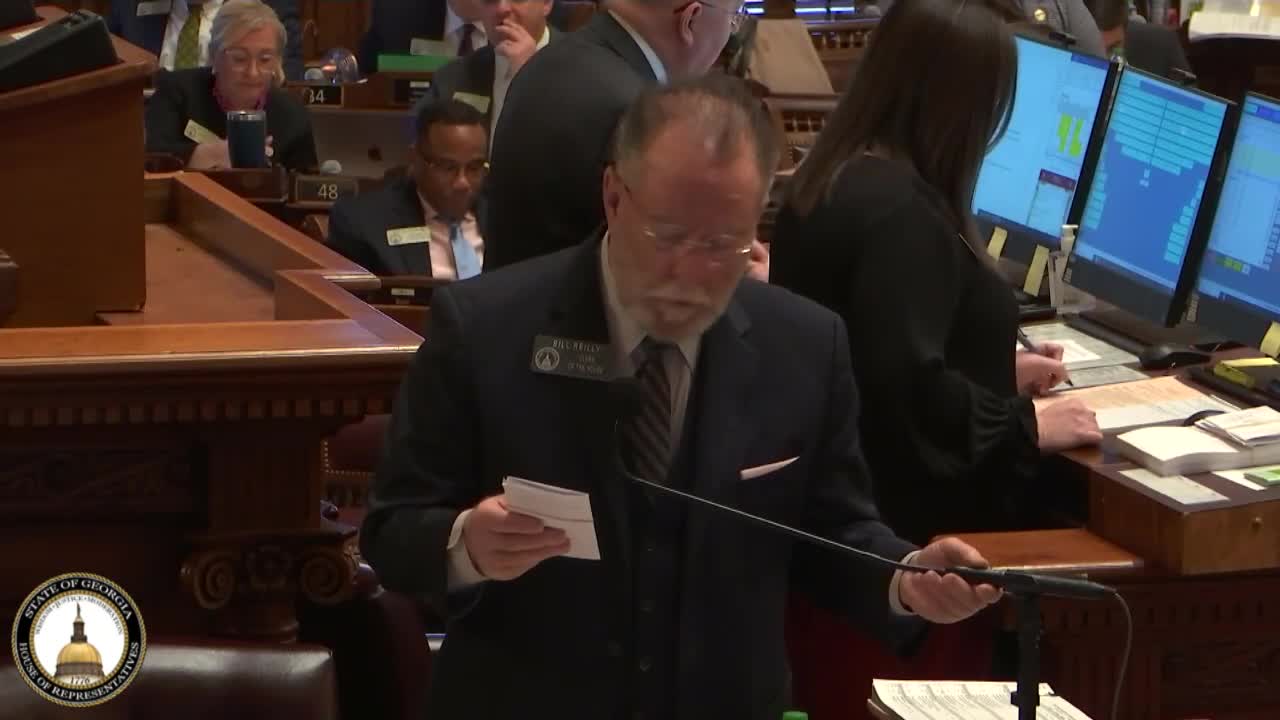
The House approved the committee substitute and then passed the bill. The clerk recorded the vote as yeas 162, nays 13; the bill passed.
Supporters highlighted ancillary benefits including wood salvage after storms, local economic opportunities for small mills and reduced wildfire fuel through removal of debris from landowners' properties.