Get Full Government Meeting Transcripts, Videos, & Alerts Forever!
Get email alerts on the Legislative Calendar topic
No spam. Unsubscribe anytime.
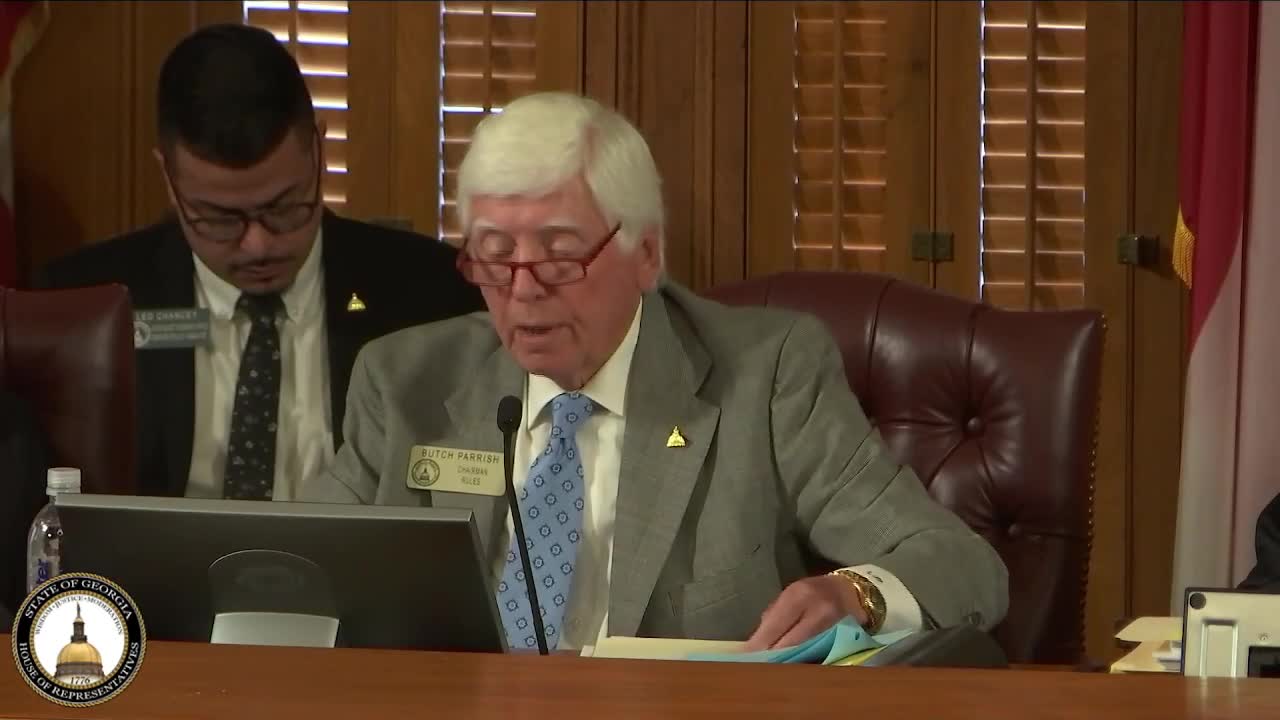
House Rules Committee adopts supplemental calendar, hears scores of bill presentations
Summary
The Georgia House Rules Committee approved a supplemental calendar and heard short presentations on dozens of bills including measures on out‑of‑state property owners, school capital funding, and organ‑transplant vaccination policy.
The Georgia House Rules Committee on Monday approved a supplemental calendar of bills for floor consideration and heard brief presentations on numerous measures ranging from housing and education to public safety and medical policy.
Committee leadership said the supplemental calendar was adopted by voice after members moved and seconded the additions; the transcript records unanimous “It’s on” confirmations and a final summary of the list, but it does not show a roll‑call tally. The committee also reviewed and set a rules calendar for the next legislative day.
Why it matters: the committee’s calendar votes determine which bills move quickly to the House floor and which remain in committee. Several bills presented in the hearing, including proposals on housing ownership registration, school construction funding, and transplant‑related policy, were highlighted during the meeting and are now positioned for expedited consideration.
Among the bills the committee heard in short presentations: - A measure to require out‑of‑state property owners who own more than 25 single‑family homes in Georgia to have a Georgia real estate broker or in‑state agent listed (HB 399). The sponsor said the bill aims to increase transparency about owners of large portfolios of single‑family homes. - A bill to establish a three‑year pilot immersive writing program and to require playgrounds in new school construction; the sponsor said the program would align with State Board of Education writing standards (HB 200). The sponsor also referenced playground requirements for new schools. - A proposal to raise the statutory maximum authorization for state capital outlay funding under the Quality Basic Education Act from $300,000,000 to $3.75 (as described by the sponsor) and to set the change to take effect in 2027 (HB 371); the sponsor described the increase as an update for construction‑cost inflation. - A measure that would prohibit organ transplant centers from discriminating against transplant recipients solely because of COVID‑19 vaccination status (HB 522); that bill prompted extended committee discussion about medical decision‑making and eligibility standards. - A bill presented as a missing‑person alert for autistic individuals to be administered through the Georgia Bureau of Investigation (HB 465). - A local‑annexation measure to add 45 small parcels into the proposed city of Mulberry; the presentation included multiple committee questions about local support and process (HB 647).
The committee also heard routine department and agency cleanup bills (for example, a Department of Education/DECAL background‑check alignment bill and a Georgia Department of Transportation housekeeping bill), professional licensing updates, and resolutions including one to seek compensation for an individual exonerated by DNA evidence (HR 130).
Votes at a glance: The transcript records the committee moving and seconding multiple calendar motions and repeatedly stating “Any opposition? It’s on,” indicating voice approval for the supplemental and rules calendars. The meeting transcript does not include a roll‑call vote or named vote tally for the calendar approvals; the committee summary at the end lists the supplemental and next‑day rules calendars. Specific floor scheduling details and the full bill lists were read aloud in the hearing and summarized by the chair.
What’s next: Bills placed on the supplemental calendar are eligible to be called on the House floor under the committee’s rules schedule. Several measures discussed will require further committee work or floor action before becoming law.