Get Full Government Meeting Transcripts, Videos, & Alerts Forever!
Get email alerts on the Hemp Cannabinoids Regulation topic
No spam. Unsubscribe anytime.
Committee holds hearing on HB 265 to restrict certain hemp‑derived intoxicants including delta‑8
Summary
The House Agriculture and Consumer Affairs Committee held a hearing on HB 265, a bill that would restrict certain hemp‑derived intoxicating cannabinoids, including delta‑8 THC.
The House Agriculture and Consumer Affairs Committee held a hearing on HB 265, a bill aimed at restricting certain hemp‑derived intoxicating cannabinoids such as delta‑8 THC.
Representative Saenz, sponsor of the bill, told the committee the substitute (LC50550501(s) in the packet) focuses on cannabinoids with the greatest evidence of psychoactive effect and that the bill seeks to address synthetic derivatives produced from hemp that produce intoxication similar to delta‑9 THC. "This bill aims to eliminate Delta 8, in, hemp products within the state of Georgia," the sponsor said.
Several witnesses testified in favor of restrictions. Michael Mumper of Georgians for Responsible Marijuana Policy explained that hemp products marketed as containing delta‑8 can actually contain very high concentrations of intoxicating cannabinoids and be readily shipped to consumers across the state; he cited an example of a 95% delta‑8 vape cartridge listed for about $60 on a retailer website. A parent, Marty Ravinda, described her son's addiction to high‑potency THC and said her son required inpatient treatment; she asked the committee to pass restrictions to reduce youth access and harms. Dr. Greg Raducah (vice president, Georgians for Responsible Marijuana Policy) and other public‑health witnesses warned that new synthetic cannabinoids can be far more potent than delta‑9 and said several other states have moved to close what they called a "delta loophole."
Catherine Russell, director of policy at the Georgia Department of Agriculture, described the department’s recent regulatory work under SB 494 (passed last year) to build a hemp inspection and testing program and said the department has started inspections and testing as of January. Russell cautioned the committee that the issue is complex: some cannabinoids may occur naturally at low levels, others are semi‑synthetic or synthetic, and banning one compound can prompt manufacturers to shift to other, less‑tested compounds. Russell said lab testing shows some products marketed as delta‑8 test as delta‑9 and that other cannabinoids (HHC, THCP) may present different safety profiles and heavy‑metal spikes in profiles used for vaping. She recommended a comprehensive approach and more study rather than incremental bans that could push consumers toward more dangerous alternatives.
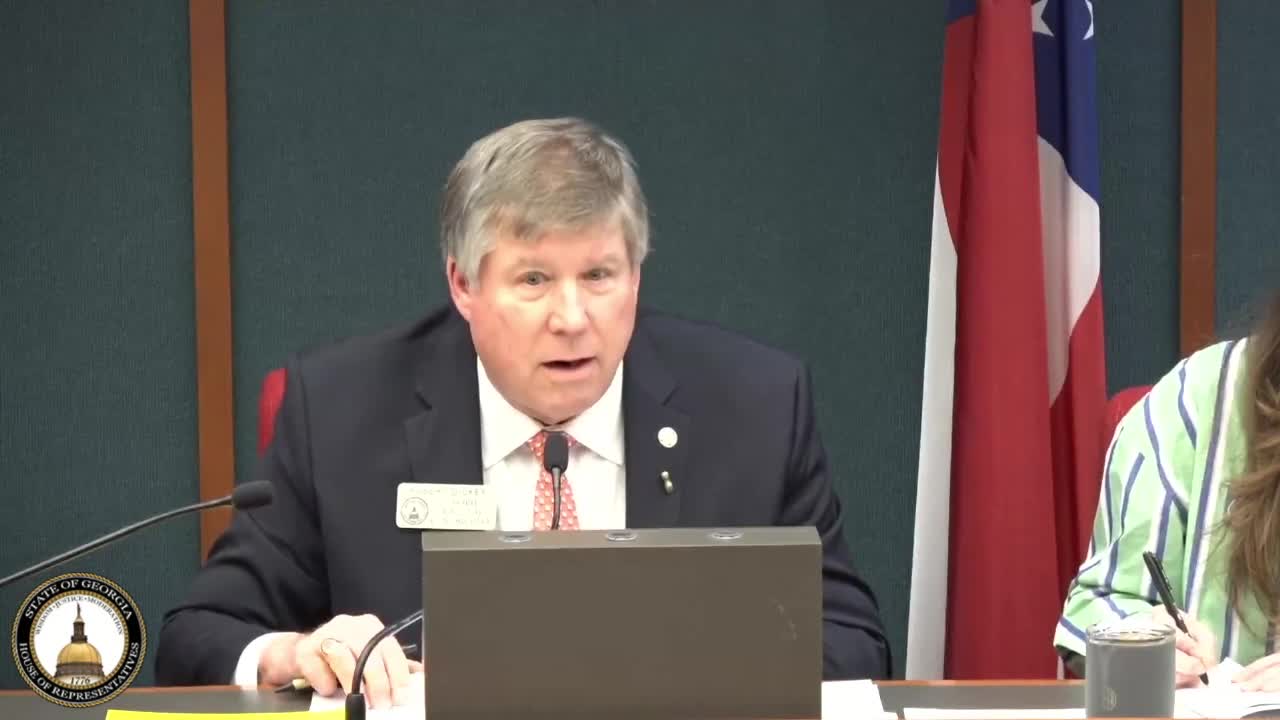
The committee did not vote on HB 265; the hearing was informational and sponsors and witnesses agreed work remains to craft targeted language. The chair said he was "open to trying to find solutions for this" and adjourned the meeting.
Next steps: Sponsors and stakeholders will continue discussions; Department of Agriculture representatives encouraged a careful, comprehensive legislative approach that considers enforcement, laboratory profiles and unintended substitution to other synthetic cannabinoids.