Get Full Government Meeting Transcripts, Videos, & Alerts Forever!
Get email alerts on the Criminal Evidence And Instructions topic
No spam. Unsubscribe anytime.
Appeals court weighs sufficiency of evidence and jury-instruction questions in gun-possession appeal
Summary
Argument in Commonwealth v. Encarnacion concerned whether evidence and jury instructions proved absence of a firearm license, and whether retrial would be barred by double jeopardy.
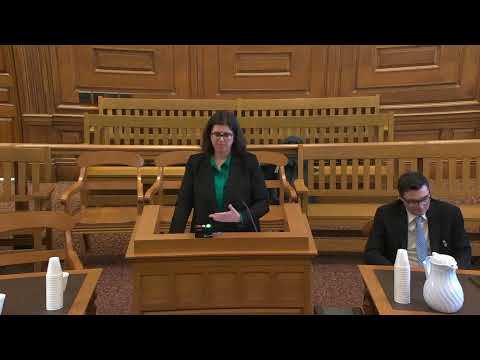
The Appeals Court heard argument in Commonwealth v. Encarnacion on whether a conviction for unlicensed possession of a firearm can stand when the trial record lacked a jury instruction tying the defendant’s age to the legal inability to obtain a license.
Dennis Toomey, representing SkyZen Encarnacion, urged the court to reverse on sufficiency grounds, saying the jury never had the legal framework to conclude the defendant lacked a license. Toomey argued the trial record did not contain the necessary proof beyond a reasonable doubt and that the absence of an instruction on how the law treats persons under 21 left the jury without the law it would have needed to draw that inference.
Assistant district attorneys and the Commonwealth urged the panel to affirm. Carrie Koehler, arguing for the Commonwealth, said the record included multiple witnesses attesting to the defendant’s youth and that the jury could reasonably infer lack of licensure. Koehler pointed to case law the Commonwealth believes supports affirmance on similar records.
The panel discussed whether the remedies should be a judgment of acquittal or remand for a new trial if the court finds an instructional error that affected the verdict. Counsel and the justices also flagged pending superior-court or SJC decisions (such as Crowder) that could determine whether a retrial is barred in similar procedural postures, and whether the Commonwealth had notice it needed to prove non-licensure and therefore should have requested a specific instruction.
No decision was issued at argument. The justices asked whether circumstances made it appropriate to wait for higher-court guidance in related cases or to rule on the record before them.