Get Full Government Meeting Transcripts, Videos, & Alerts Forever!
Get email alerts on the Firearms Licensing topic
No spam. Unsubscribe anytime.
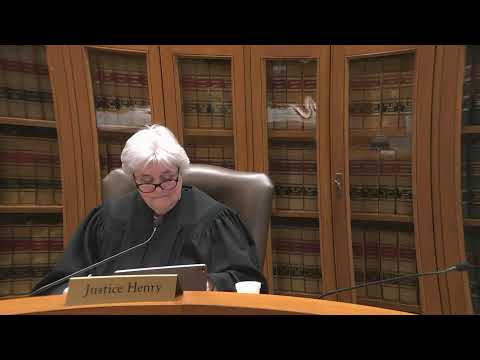
Appeals court hears challenge to Massachusetts firearms licensing regime and evidence search practices
Summary
A three-judge panel of the Appeals Court heard arguments in Commonwealth v. Remy Jones over whether Massachusetts's discretionary firearms-licensing regime was facially unconstitutional and whether the Commonwealth properly authenticated a database search used to show the defendant lacked a license.
A three-judge panel of the Appeals Court heard arguments in Commonwealth v. Remy Jones over whether Massachusetts's discretionary firearms-licensing regime was facially unconstitutional and whether the Commonwealth properly authenticated a database search used to show the defendant lacked a license.
The issue was raised by defense attorney Andrew Power, who told the court the 2021 licensing regime 'was facially unconstitutional' and urged the panel to report the question to the Supreme Judicial Court under Chapter 211A, Section 12. Power argued that, under decisions cited from Lodholt and Johnson, a defendant can press a facial challenge even without having applied for a license.
Power also pressed preservation and remedy questions: if the court found the statute unconstitutional, he said, 'the impact on this case' would be dismissal of the firearm charge. He emphasized that a facially invalid statute deprives the courts of jurisdiction to punish under it and argued the court should treat a conviction under an invalid statute as a 'substantial risk of miscarriage of justice.'
On the authentication and admissibility of the Commonwealth's certificate compiled from a state database, defense counsel argued the search lacked 'diligence,' saying the witness who ran the search (Amy Conway, identified in the record) did not sufficiently authenticate the procedure and did not verify input data such as name spelling or date of birth. Power said the record shows risks of 'garbage in, garbage out,' and that a more thorough search or cross-checks (for example, booking sheets or police reports) were required to satisfy the diligence standard relied on in some federal authorities cited in his papers.
Commonwealth attorney Ian McLean responded that the certificate itself shows the search terms entered (name and date of birth) and that the witness who ran the query testified about how the database works. McLean argued the document also qualifies as a business record: entries are required by statute to be made within 40 days of an application, and the timing here met that requirement. On the witness's role, McLean said Conway's title and duties in the agency gave her familiarity with the database and that she qualified as the custodian/keeper for the record.
Both sides debated how to read the U.S. Supreme Court opinion the defense repeatedly invoked (referred to in argument as 'Bruin'). Power contended the high court condemned 'may-issue' regimes as granting unchanneled discretion to licensing authorities and thus unconstitutional; the Commonwealth said Bruin's holding was narrow to New York's statute and that footnotes identifying other states left open whether each 'may-issue' statute was per se invalid. The parties also disputed whether Massachusetts's post-Bruin statutory amendments (removing 'may' language and adding an interview requirement) changed the analysis.
The court questioned counsel about standing, severability (whether a 'good reason' or 'may' clause could be severed from Massachusetts law), and how to reconcile differing appellate and SJC guidance. After argument the panel submitted the case for decision.
Ending: The panel did not announce a decision from the bench. The arguments focused on two core issues for the court's written opinion: whether the licensing regime is facially invalid under the cited high-court authority and, separately, whether the Commonwealth's certificate derived from a database search met the standards for admissibility and business records authentication.