Get Full Government Meeting Transcripts, Videos, & Alerts Forever!
Get email alerts on the Digital Evidence Preservation topic
No spam. Unsubscribe anytime.
Appeals court hears dispute over Snapchat image, evidence preservation and First Amendment review in Commonwealth v. Pacheco
Summary
Attorneys debated whether the Commonwealth failed to preserve a Snapchat image sent to a minor, whether that omission warranted dismissal, and whether the court may review probable cause without the photo.
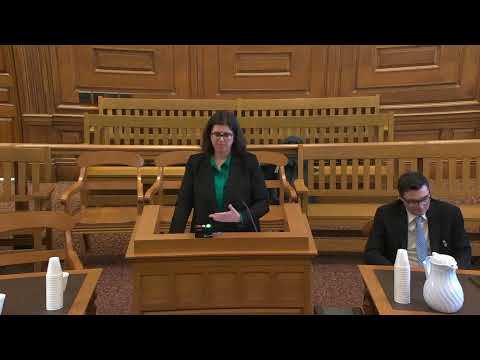
An appellate panel heard argument in Commonwealth v. Pacheco over the trial judge’s dismissal of a criminal complaint after finding the Commonwealth failed to preserve a Snapchat image allegedly sent by the defendant to a 13- or 14-year-old student.
The Commonwealth’s attorney, Steven Nato, told the court the prosecution attempted to obtain the Snapchat content—issuing subpoenas and searching devices—but that the platform’s ephemeral design and available metadata mean the images were not ‘‘in the Commonwealth’s control.’’ Nato said the judge applied the wrong legal framework in dismissing the case for failure to preserve, and asked the panel to vacate and remand. ‘‘We did our diligent best to get it when we did hear the allegations,’’ Nato said.
Defense counsel (Mr. Howard) argued the police were on notice once the victim’s parent reported the incident and that the record shows no preservation letter was sent to Snapchat before the platform’s retention window passed. Howard said the absence of any custodian declaration or Snapchat preservation is akin to cases where a third party actually possessed the evidence and the prosecution failed to take reasonable steps to preserve it.
The panel pressed both sides on legal issues that would control review: whether metadata retained by Snapchat differs from the images themselves; whether the court may consider the surrounding context when deciding whether an image ‘‘predominantly appeals to the prurient interest’’ of minors; and whether the Commonwealth could be affirmed on alternate grounds such as lack of probable cause. The Commonwealth cited cases including Minkowski, Militello and Rex as authorities supporting a contextual review in some circumstances; the defense emphasized precedent that limits review to the matter itself where appropriate.
No decision was issued at argument. The justices repeatedly questioned whether detectives took the preservation steps (for example, sending a preservation letter or subpoena to Snapchat within the platform’s retention period) after the complaint was filed, and whether the record developed below was sufficient for appellate review. The panel also discussed the standard of review—de novo versus abuse of discretion—for the trial judge’s evidentiary rulings.
Because the argument focused on contested legal standards and record sufficiency, the court did not announce a ruling from the bench at the close of oral argument.