Get Full Government Meeting Transcripts, Videos, & Alerts Forever!
Get email alerts on the Literacy topic
No spam. Unsubscribe anytime.
Committee backs ban on 3‑cueing in early reading instruction, with carve‑out for certain IEP cases
Summary
Senate Bill 93, which would prohibit use of "3‑cueing" (guessing from pictures/contexts) as a method of teaching word reading and require teacher‑prep alignment with evidence‑based reading practices, passed the committee with an amendment clarifying use for nonverbal students under IEPs.
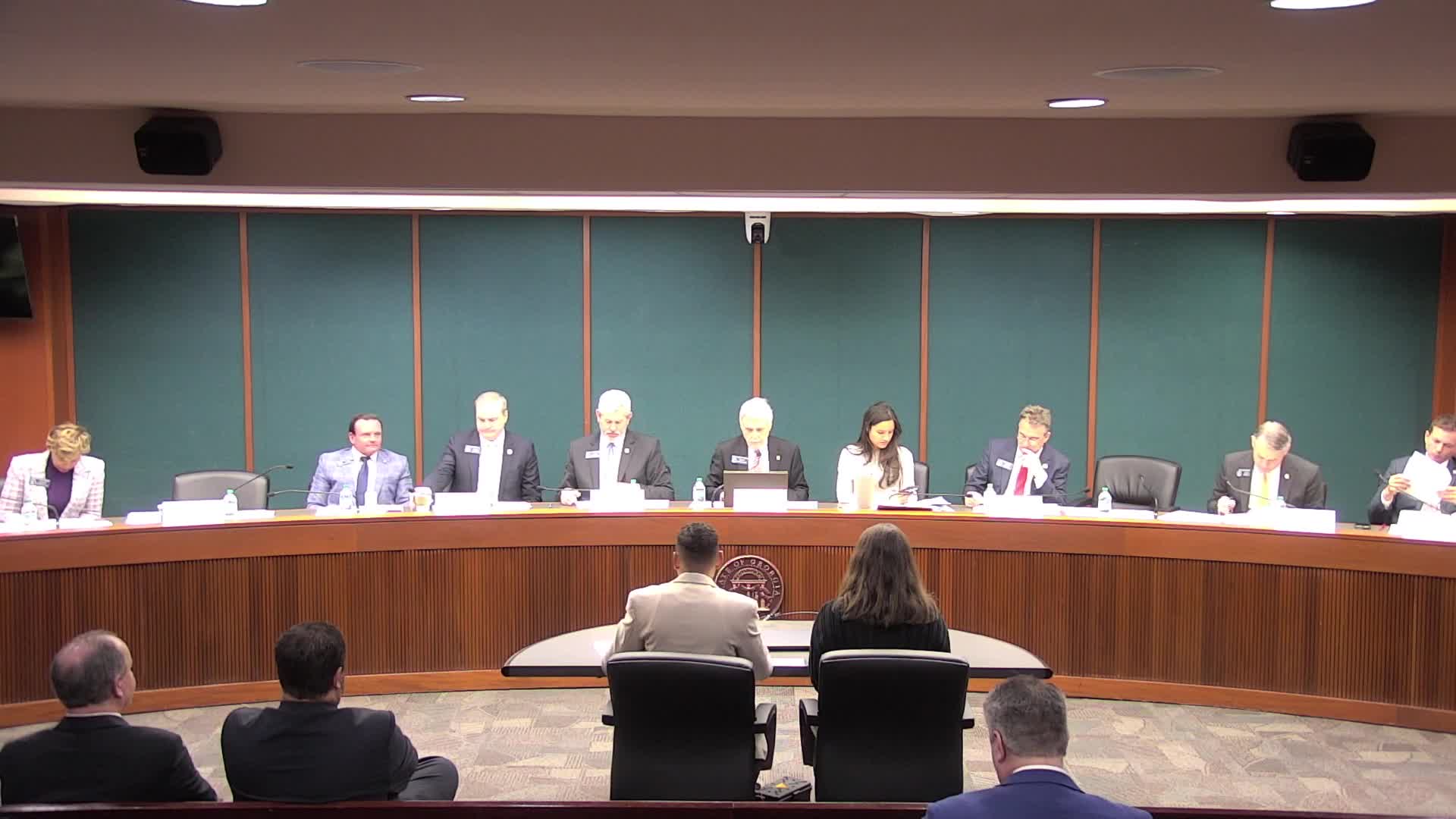
Senate Bill 93 (LC492279S), aimed at strengthening the Georgia Early Literacy Act and banning the widely criticized "3‑cueing" method of teaching word reading, passed the Senate Education Committee after stakeholder testimony and an amendment addressing students with individualized education programs (IEPs).
Sponsor Senator Rashawn introduced the measure as a reinforcement of the science of reading, saying existing practice had left "70 percent of our children not reading on grade level." The bill would define and prohibit use of 3‑cueing — described in testimony as teaching students to guess words from pictures or context instead of decoding — and require teacher preparation programs to align with evidence‑based reading instruction.
Parents, special education advocates and literacy groups supported the bill but urged careful language on IEPs. Chelsea Hutchings, a parent, urged the committee to reconsider an exception allowing 3‑cueing in IEPs, saying her child with a disability needed evidence‑based instruction. Beth Haynes of Decoding Dyslexia and Megan Swingle, parent of a child with dyslexia, said 3‑cueing had caused harm for children with reading disabilities and that using pictures to support communication differs from using pictures to teach word reading.
Committee members and counsel negotiated a clarifying amendment narrowing the IEP exception. The committee adopted substitute language that added a specific carve‑out for nonverbal students and required express agreement by a parent or guardian when pictures or visual supports are used as part of an IEP: counsel proposed language to read in effect as "except as expressly agreed to by a nonverbal student's parent or guardian as part of such student's individualized education program." The amended substitute passed the committee by voice/hand vote.
The committee and advocates repeatedly emphasized that the bill was intended to promote explicit, evidence‑based decoding instruction and to align teacher preparation with the state’s early literacy rules. The bill will advance with the substitute and the IEP clarification.