Get Full Government Meeting Transcripts, Videos, & Alerts Forever!
Get email alerts on the Charter Schools topic
No spam. Unsubscribe anytime.
Senate committee advances bill to incentivize local approval of charter schools
Summary
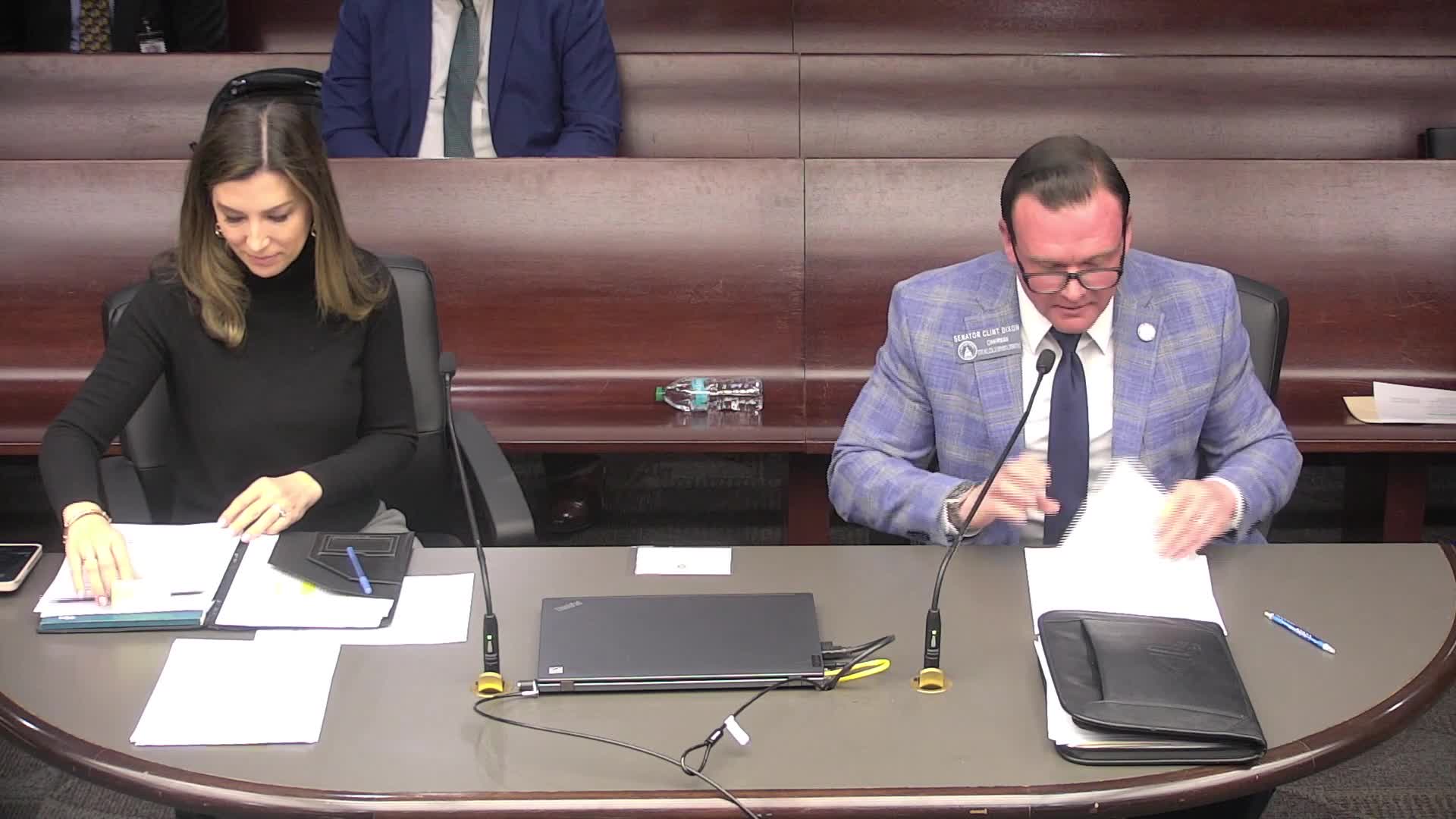
Senate Bill 82, the Local Charter School Authorization and Support Act (LC499003S), moved out of the Senate Education Committee on a committee substitute after testimony from charter founders, parents and education advocates.
Senate Bill 82, the Local Charter School Authorization and Support Act (LC499003S), moved out of the Senate Education Committee on a committee substitute after public testimony and questions from committee members. The measure would create capital-outlay and per-pupil financial incentives for school districts that locally authorize charter schools, require local boards to explain denials publicly, and add penalties for districts that repeatedly deny petitions that later win state approval.
The bill’s sponsor, Senator Dixon, told the committee the legislation responds to what he called an imbalance between state‑level and local authorization: "there's currently 21,000 students on charter school waiting lists throughout the state of Georgia," and, he said, "in the past 5 years, only 1 school has been approved locally, while at the state level, there's been over 30." He described the bill’s incentives: additional capital outlay entitlement credits in years a local district approves a charter and $250,000 per year for three years after approval, with accountability steps for repeated local denials.
Bonnie Holiday of the Georgia Charter Schools Association described state practice and outcomes for state‑authorized schools, saying state‑authorized petitions first go to local districts and that, among the schools the commission authorizes, "85% of all the schools they authorize are outperforming the districts they serve." Local and charter school leaders and parents testified in support. Dr. Matthew Tyson, principal of Tapestry Public Charter School in DeKalb County, told the committee his school repeatedly was denied local authorization despite data showing better outcomes for students with disabilities. Dr. Adams, founder of Dominion Purpose Academy in Muscogee County, and several parents and educators testified that local denials had blocked community demand for new options.
Committee members raised financial and operational questions: which districts the bill would cover, the cost to districts of absorbing students, and whether larger districts have reserves and economies of scale to support locally authorized charters. Senator Sims asked about affordability and was told the bill targets the largest 36 districts (those serving more than 10,000 students) to limit impact on smaller systems. Committee members also discussed the state’s fiscal role when a charter is authorized at the state level and local incentives intended to reduce a perceived local tendency to deny petitions because the state will assume costs.
After a series of supporting public commenters and questions, the committee moved and approved the bill as a committee substitute. The transcript records committee action as "do pass by committee substitute." Individual roll‑call tallies were not recorded in the committee transcript provided.
Votes at the committee hearing were taken by raised hands; the committee approved the committee substitute and advanced SB 82.
The bill now moves toward the next steps in the legislative process.