Get Full Government Meeting Transcripts, Videos, & Alerts Forever!
Get email alerts on the Homelessness Shelter Policy topic
No spam. Unsubscribe anytime.
Crowd urges alternatives to camping bans as council forms 2‑by‑2 to study emergency shelter guidelines
Summary
Dozens of public commenters urged the City Council to reject criminalizing public camping and called for humanitarian sheltering options. Council appointed Council members Contreras Deloshe and Fernandez to a two‑member working group to craft guidelines for authorized emergency shelter opportunities.
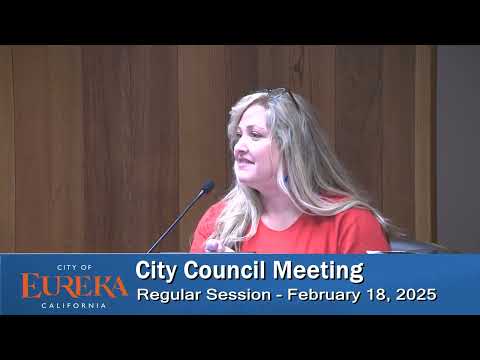
A lengthy public comment period at the Eureka City Council meeting focused on homelessness policy, with many speakers urging the council not to criminalize camping and asking for expanded shelter and housing options.
Commenters described repeated confiscation of personal property, aggressive enforcement during bad weather, and lengthy waits for behavioral health and housing services. Speakers urged the council to pursue humane responses, to hold accountable organizations that manage program funds, and to develop locally administered, staffed encampments or campground‑style sites rather than enforcement.
After public comment, the council approved forming a working group of two councilmembers to meet monthly with staff — the city manager, police chief, building official and development services director — to develop guidelines for authorized emergency shelter opportunities, including campsites and other alternatives. Council Member Castellano moved to appoint Council Members Contreras Deloshe and Fernandez; the motion carried on a 5‑0 vote.
Why it matters: Speakers said enforcement (towing, confiscation of tents, removal of belongings) has left unhoused residents without shelter or basic items in winter storms; others urged city leadership to coordinate regionally and to create low‑barrier sanctioned camping or shelter options. Councilmembers described the work group as an early, collaborative step to explore feasible, administrated emergency shelter models and to improve coordination with county and nonprofit partners.
Next steps: The council directed the two‑member group to meet monthly with staff to develop operational guidelines and return recommendations to the full council; staff will report back on potential sites, operations and coordination with the county and service providers.