Get Full Government Meeting Transcripts, Videos, & Alerts Forever!
Get email alerts on the Comprehensive Plan topic
No spam. Unsubscribe anytime.
City staff unveils Version 2 of Envision Evanston 2045; commission reopens hearing and sets review timeline
Summary
City planning staff presented a revised draft of the Envision Evanston 2045 comprehensive plan, highlighting new chapters, engagement metrics and an implementation approach with annual work plans and five‑year checks. The Land Use Commission reopened the public hearing and tentatively scheduled focused chapter review sessions in March and April.
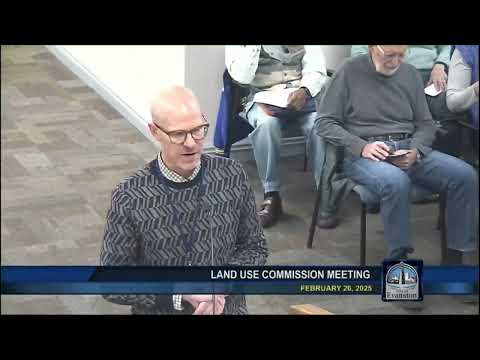
Evanston planning staff presented Version 2 of the city’s comprehensive plan on Feb. 26, saying the draft incorporates public feedback collected in Phase 1 and adds new chapters and metrics to guide land use and implementation.
Neighborhood and land use planner Megan Jones introduced the document at the Land Use Commission’s public hearing, saying the second draft “has been adapted heavily to reflect that community engagement.” She told the commission the city had recorded about 5,700 website visits, more than 2,500 survey responses and 79 public engagement activities during Phase 1.
The revised draft adds several chapters and appendices and tightens cross‑references, staff said. New chapters include an introduction, “What We Heard and Vision Statement,” “Community Systems,” “Health and Well‑Being,” and an implementation chapter. Staff also said they streamlined the transportation chapter and strengthened links to the Climate Action and Resilience Plan (CARP).
Staff described the draft’s approach to treating the comprehensive plan as a “living” document. Planning manager Liz Williams said the plan envisions an annual staff‑and‑commission work plan plus a five‑year check‑in on metrics (demographics, housing, workforce indicators) to track progress and consider amendments. “Really, you should think of the comprehensive plan as a living, breathing document that we’re actively revisiting on an annual basis,” a staff presenter said.
The commission voted to reopen the public hearing so residents and boards could offer more comment on the new draft. Chair Chay Linwal proposed a schedule of additional meetings: the commission will begin focused chapter reviews in March (tentatively March 12 and March 19) and aim for further sessions in April to compile redline language and recommendations to forward to city council.
Commissioners and staff emphasized process details for public participation. Alison Leifsiger, policy and intergovernmental affairs manager, said staff will accept written comments through the Land Use Commission comment form on the city website and can receive larger attachments by email. Staff also said limited in‑house GIS capacity can produce working maps if commissioners identify which maps they need, but a consultant would be required for polished cartography.
On process questions, staff said the zoning code update that would implement parts of the comprehensive plan is not being considered concurrently: the zoning chapter update will follow the comprehensive planning process. Staff also noted that some types of updates—like adding a new historic district—could be handled administratively rather than by a formal amendment process.
The commission and staff set a tentative review approach: split the plan into manageable chapter sets for focused meetings, request that boards and commissions provide chapter‑specific feedback, and have staff prepare suggested text edits where possible for the commission to deliberate. The public hearing was formally continued to March 12 at the meeting’s close.
Why it matters: The comprehensive plan sets citywide goals that guide later zoning decisions and capital investments; how the commission frames objectives, metrics and the plan’s amendment rules will shape the next phases of zoning code updates and implementation.
What comes next: Staff and commissioners will collect written comment, solicited chapter‑by‑chapter feedback from other boards and commissions, and convene the scheduled March sessions to start working through specific language changes and priorities.