Get Full Government Meeting Transcripts, Videos, & Alerts Forever!
Get email alerts on the Education Governance topic
No spam. Unsubscribe anytime.
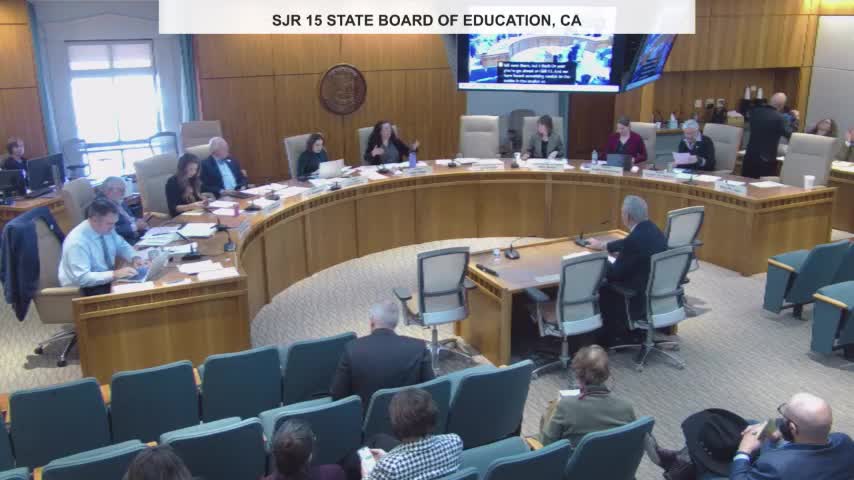
Senate panel advances SJR 15 to create appointed state board of education after extended debate
Summary
SJR 15, a constitutional amendment to create a nine-member appointed state board of education, advanced out of the Senate Rules subcommittee despite opposition from education groups and some senators who urged interim study.
A Senate Rules subcommittee voted to give SJR 15 a due pass after extended debate and testimony from education agencies, charter-school groups, chambers of commerce and teachers’ organizations.
Sponsor remarks described the measure as a way to depoliticize education governance by replacing the current executive-led structure with a nine-member stakeholder board appointed from education-related organizations and governmental offices. The sponsor said the Public Education Commission (PEC) would remain in place to oversee charter authorizers, while the new state board would include representatives such as a legislative member, a governor’s appointee, and representatives of school boards, unions, superintendents, tribal nations and charter schools — with final details to be specified in enabling legislation if voters approve the constitutional change.
Opponents included the Public Education Department (represented by Assistant Secretary Gregory Frostad), Public Charter Schools of New Mexico (Matt Paul), New Mexico KIDSCAN (Amanda Aragon), the Greater Albuquerque Chamber of Commerce (Terry Cole), Teach Plus New Mexico (Hope Morales), and civil-society witnesses such as Meredith Machen (League of Women Voters). Opposition arguments cited the lack of research that a state board would improve student outcomes, potential disruption to cross-agency collaboration (for example, with HED and ECECD), concern about insufficient detail on appointment processes, and the risk of adding bureaucracy.
Supporters and some senators said the proposal could reduce politicization in elected local-school-election cycles and restore a governance model used in the past. Several senators voiced frustration with current education outcomes and turnover in education leadership and said SJR 15 offered a potential governance alternative worth advancing to the ballot or studying further.
The subcommittee considered and rejected a motion to table. Following roll-call, the committee recorded a due-pass recommendation with five votes in favor and three against. The resolution will proceed for further legislative steps; if passed by the Legislature, it would appear on the ballot and enablement language would determine appointment and operational details.