Get Full Government Meeting Transcripts, Videos, & Alerts Forever!
Get email alerts on the Hbim Digital Twin topic
No spam. Unsubscribe anytime.
Capitol commission hears update on digital ‘HBIM’ twin, phased glass-floor repairs and landscape work
Summary
At its March 3, 2025 meeting, the Michigan State Capitol Commission heard an update from Executive Director Rob Blackshaw on a digital historical building information model (HBIM) and several preservation and operations projects, including a five‑phase replacement of the rotunda glass floor, work on the landscape master plan to remove hazardous trees, and the pending Fourth Floor ceiling contract bids.
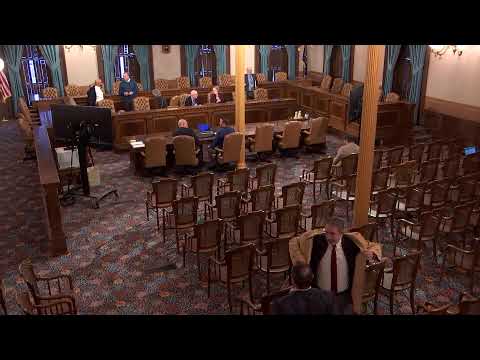
LANSING, Mich. — At its March 3, 2025 meeting, the Michigan State Capitol Commission heard an update from Executive Director Rob Blackshaw on a digital historical building information model (HBIM) and several preservation and operations projects, including a five‑phase replacement of the rotunda glass floor, work on the landscape master plan to remove hazardous trees, and the pending Fourth Floor ceiling contract bids.
The commission was shown the HBIM — described by staff as a “digital twin” built in Autodesk Tandem — which combines architectural drawings, laser scans, photographs and live building systems data so staff can view mechanical and electrical systems, preservation records and maintenance histories in one place. Blackshaw said the model is being piloted in the governor’s suite and will be expanded over time. “We are creating our HBIM with the use of Autodesk Tandem, which is now called a digital twin,” Blackshaw said.
The HBIM links multiple databases and tools, staff demonstrated, including: live temperature and humidity “heat maps” tied to the building management system, mechanical and electrical (MEP) drawings exposed “behind the walls,” photographic condition records for decorative ceilings, and work‑order histories for equipment in the essential utility plant. Blackshaw said the model helps prioritize inspections and reduces the time crews spend locating problems: staff can see hot or cold spots on the heat map and then investigate specific equipment rather than searching the whole building.
Access to the HBIM is currently limited. Commissioner Bauer asked, “Who has access right now?” Blackshaw said Quinn Evans Architects (the architect of record) and a small internal team can navigate and edit the model; “we have myself and four other people on‑site have access to it to navigate and learn,” he said. He and commissioners discussed security and public access; Blackshaw said Autodesk’s platform does not yet offer the firewalls and filters required to safely expose the full model to the public, though the commission is considering limited public‑facing videos or guided navigations in the future.
Blackshaw also reviewed active preservation projects. The rotunda glass‑floor repair is divided into five phases, each roughly two months long; the first two weeks of each phase involve removing the glass and cutting out the grout back to bare metal before painters refinish the underside. Blackshaw said Lucid Glass is manufacturing the replacement panes at an estimated rate of about 70 pieces every four to six weeks; installation will proceed as new glass arrives. Because the grout cutting created heavy noise, contractors will perform the loudest work at night after 5:00 p.m. going forward, he said.
Commissioner Star thanked staff for adjusting the glass‑floor schedule to reduce daytime disruptions, particularly for sergeants stationed outside the chamber. Blackshaw confirmed the change was made in consultation with contractors and legislative offices.
On grounds work, Blackshaw said the commission will present a first‑phase plan to remove several large, hazardous trees along Capitol Avenue and later replant according to the 2023 landscape master plan update. He told commissioners he will return with a detailed list of trees proposed for removal and replanting plans so the commission can approve the work before crews proceed.
Staff are also preparing to accept bids for the Fourth Floor ceiling restoration; Blackshaw said three decorative‑painting contractors are bidding and the selection will consider both price and craftsmen availability. He said the team will focus on securing painters with the necessary historic‑preservation skills.
Blackshaw reported visitation and events operations: the capitol opened one Saturday per month and staff tested that schedule over recent weekends. He said the most recent Saturday drew “over 260 visitors” and that the monthly Saturday openings will continue for an initial six‑ to twelve‑month evaluation. He also reviewed operations for the governor’s State of the State event: moving credentialing into Heritage Hall and using the Evolv security system helped flow nearly 835 people through the entrance between 3:00 and 9:00 a.m. and more than 4,000 visitors to the building across the full day, Blackshaw said.
Commissioners asked several operational questions, including whether the HBIM could support public education needs. Commissioner Hobbs said she would like to see the tool used externally for school access and programming; Blackshaw said the office will consider video and simulated navigations as a first public option before wider access is possible. Commissioners also praised the team’s social media outreach and asked staff to continue evaluating the Saturday openings.
No formal votes on contracts or removals took place at the March 3 meeting. The commission confirmed April 7 as the next meeting date. Commissioner Bauer moved to adjourn; Commissioner Star supported the motion and, with no objection recorded, the meeting was adjourned.
Why it matters: The HBIM centralizes decades of preservation documentation and live building data into a single, searchable tool that staff say will reduce response times, lower repair costs and improve preservation planning for high‑value historic fabric. Decisions on tree removals and the schedule for glass‑floor work will return for formal commission approval. Continued attention to cybersecurity and controlled public access was a recurring theme of the discussion.